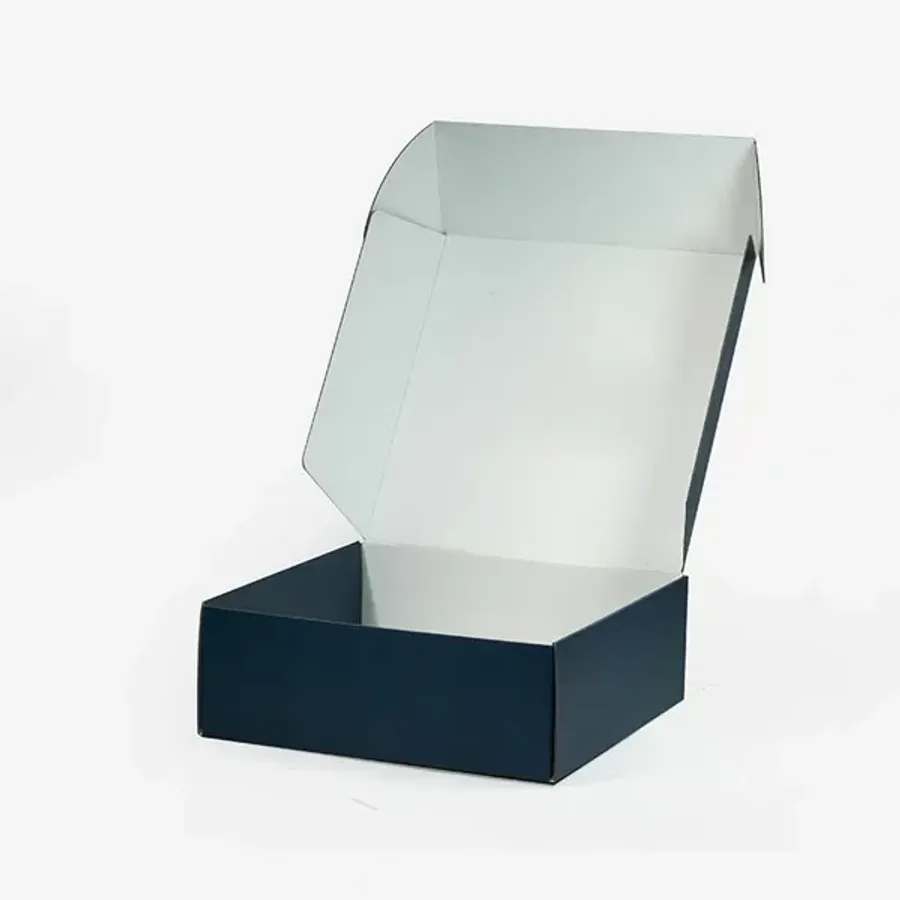
Built around a folded shirt, not a guess
Most shirt boxes fail for one reason. The box was picked from a stock list before anyone folded the shirt.
A heavyweight tee folds thicker than a fitted cotton tee. A dress shirt with a collar stand needs more height at one end than at the other.
We size your mailer from the folded garment you actually sell. That keeps the shirt from sliding, bunching or crushing its collar in transit.
The result is a box that feels made for the shirt inside it. Customers notice when a garment sits square and flat as the lid lifts.
One box or several for your size run
A single box for every size keeps ordering and storage simple. The trade-off is that a small shirt can shift inside a box cut for an XL.
Some brands split the run into two depths instead. Our guide to choosing mailer box sizes explains how to group sizes without overbuying stock.
The table shows the four setups we quote most often for clothing sellers.
| Approach | Works well when | Watch out for |
|---|---|---|
| One box for all sizes | Your shirts are lightweight cotton | Small sizes sliding in a big box |
| Two depths | You sell standard and heavyweight blanks | Packers grabbing the wrong box |
| Size-specific boxes | You sell premium or tailored shirts | More artwork files to manage |
| Bundle box | You ship multi-shirt packs or team orders | Weight, which may call for B-flute |
Board choice for one shirt or a stack
A single tee weighs very little. An 18–24 pt SBS or kraft paperboard mailer often handles it well and keeps the parcel light.
Corrugated E-flute at 1.5 mm adds crush protection when the box rides in a carrier sack beside heavier parcels. B-flute at 3 mm is the safer call for bundles of three or more shirts.
Weight is only half the question. Ask yourself how much the box itself is part of the product, since corrugated holds a crisper edge after a rough trip.
Still undecided on board? Our corrugated versus paperboard explainer sets out the trade-offs for apparel.
Printing that suits clothing brands
Apparel buyers notice print. A logo on the lid is the starting point for most shirt labels.
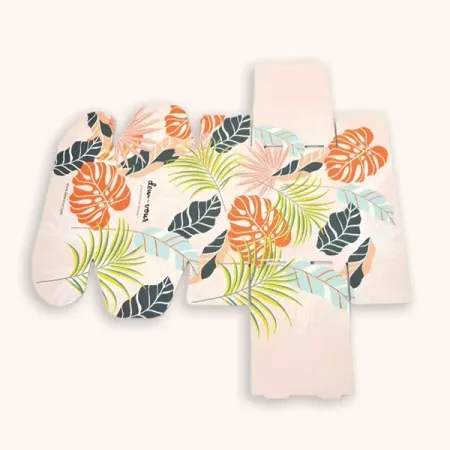
Many shirt brands also print a repeating pattern or a short line inside the lid. That inner face is the first thing a customer sees after opening.
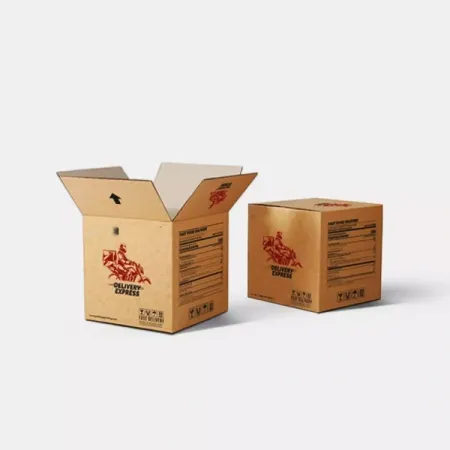
On kraft board, white ink keeps a logo crisp against the brown surface. On white board, full color CMYK reproduces brand colors and photo prints cleanly.
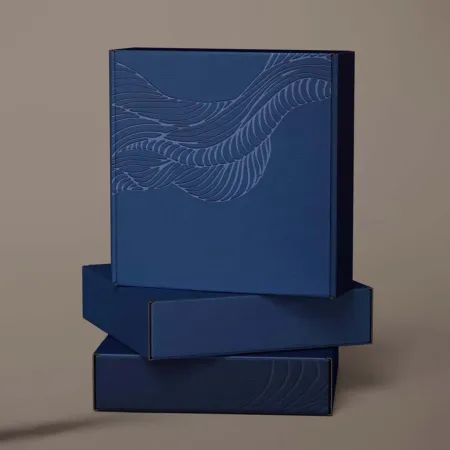
A soft-touch lamination on the lid suits labels selling premium cotton.
Your shirt box sits next to hang tags, neck labels and your website. Send the Pantone references you use for labels or screen printing. We match the box print to them on the proof.
If you also ship caps or beanies, our custom hat shipping boxes can carry the same artwork in a deeper format.
Tissue, stickers and the unboxing order
Shirt brands usually layer the opening. Box lid, then tissue, then a sticker seal, then the shirt with a thank-you card resting on top.
Plan the box depth with that layering in mind. A card and two sheets of tissue can push a snug box past the point where the lid closes flat.
Our unboxing experience guide covers how to order those layers so the garment is the final reveal.
Keep the folded shirt facing the same way every time. A logo or graphic that greets the customer upright looks deliberate.
Closures and packing speed
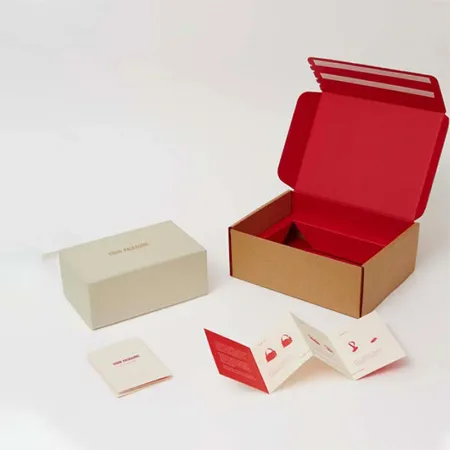
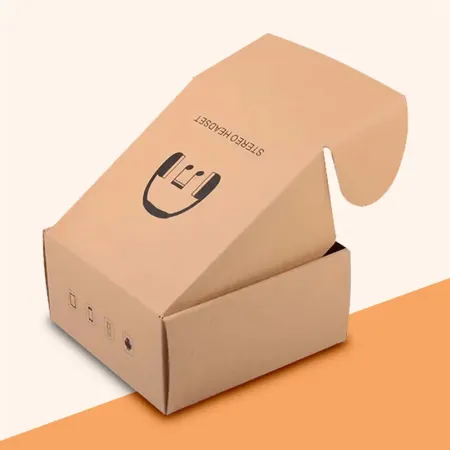
Roll end tuck front mailers are the common pick for shirts. The lid opens like a book cover and shows the whole folded garment at once.
High-volume apparel shops often add a peel-and-seal strip so packers can skip the tape gun. For that option, see our self seal mailing boxes with built-in adhesive.
A tear strip helps customers open the box without pushing scissors toward the fabric. That small detail protects the shirt you just shipped.
Tuck top styles also work for shirts. They suit brands that want a box which reads cleanly from the top with no front flap.
Planning boxes around drops and restocks
Clothing sales come in waves. A new collection, a holiday push or a team order can triple your shipping volume for a week.
Order shirt mailers before the drop, not during it. Production takes 4–6 business days and transit adds a few more. Two weeks of lead time leaves room for a proof revision.
Flat boxes store well, so a larger run kept on a shelf costs you little space. Store them somewhere dry and shaded so the liners keep an even tone.
Some labels print one core box and change the insert card for each collection. That keeps the box artwork stable while each drop still feels new.
Mistakes we see on shirt mailer orders
Most problems trace back to sizing or artwork placement. These are worth checking before you approve a proof.
None of them are expensive to fix at the proof stage. All of them are frustrating to discover once a full run is sitting on your shelf.
Printing inside the lid? Review both faces, as shown on our double sided printed mailer boxes, before approving.
- Measuring a shirt pressed flat instead of folded naturally
- Forgetting collar height on dress shirts
- Placing a logo across the lid fold line
- Choosing dark ink on kraft without checking contrast
- Leaving no room for tissue or an insert card
From proof to your packing table
Send your logo and folded shirt measurements. Our team returns a free digital proof showing the dieline, print and lid layout.
Revise it as many times as you need before anything is printed. Shirt box production begins once you approve and runs 4–6 business days.
Finished mailers reach you 2–3 business days later, with free shipping to the US, UK, Canada and Australia.
When your measurements are ready, use our shirt box quote request form to start the order.