Originals Need a Different Box Than Prints
A rolled or flat print weighs very little. A stretched canvas has a wooden frame, a framed piece may have glass, and a painted panel has hard edges that act like a lever when dropped.
That is why an artwork carton is deeper, stiffer and padded on all six sides. For paper prints that ship flat, our flat boxes for unframed art prints are the lighter choice.
The risk also changes with value. A torn print can be reprinted, but a dented original is a loss you cannot undo.
- Painters selling originals through their own site or social accounts
- Framers returning finished work to clients
- Galleries sending sold pieces to collectors
- Artists shipping work to juried shows and exhibitions
Inserts That Hold the Piece Away From the Walls
The goal is a piece that never touches the outer carton. Corrugated corner blocks slide onto each corner and take the shock of a drop.
A flat spacer pad covers the painted face so nothing presses into the surface. Another pad behind the stretcher bars stops the back from flexing.
Inserts are cut from the same corrugated board as the carton. They fold flat, so they store easily next to the boxes until you need them.
- Four corner blocks for frames and stretched canvas
- Face pad cut a little smaller than the frame opening
- Edge strips for panels with sharp sides
- Divider slots when two small pieces ship together
Shipping Framed Work With Glass
Glass is the weak point in any framed piece. Tape a large X across the glass with low-tack tape before packing so it holds together if it cracks.
Then wrap the frame in a soft layer of your choice and fit the corner blocks over it. A snug carton with no movement matters more than extra board thickness.
Very large glazed pieces are often safer with acrylic instead of glass for shipping. That is a choice to make with your framer before the box is ordered.
Mark the glass side on the carton so the person unpacking opens from the back first.
Small framed items like mirrors and ceramic tiles follow the same rules. For lighter breakables sold in volume, see our padded mailer boxes for fragile items.
Choosing the Board for the Weight
Most canvases and framed pieces ship in B-flute corrugated. It is thicker, stacks better in a sorting center and resists punctures from other parcels.
Small panels and miniatures can ship in E-flute, which prints with sharper detail. Read more about how flute size changes protection before you decide.
Weight also matters to your carrier. A heavy framed piece in a thin board can bow at the bottom when lifted by one end.
| Piece type | Suggested board | Insert focus |
|---|---|---|
| Small panel or miniature | E-flute | Face pad and edge strips |
| Standard stretched canvas | B-flute | Corner blocks and face pad |
| Gallery depth canvas | B-flute | Deeper corner blocks |
| Framed work with glass | B-flute | Corner blocks, back pad, taped glass |
| Two small pieces together | B-flute | Center divider |
Branding a Carton That Collectors Keep
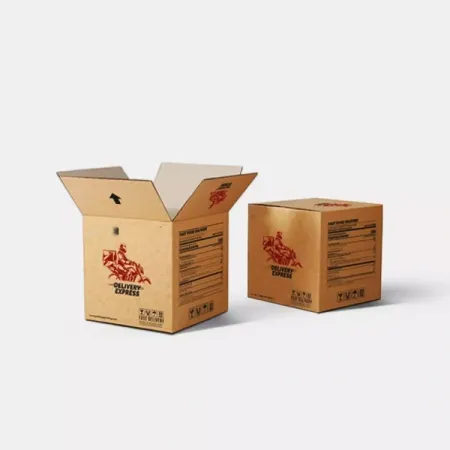
Collectors often keep the box to store or reship the work. A clean logo and your studio name on kraft board looks considered without costing much ink.
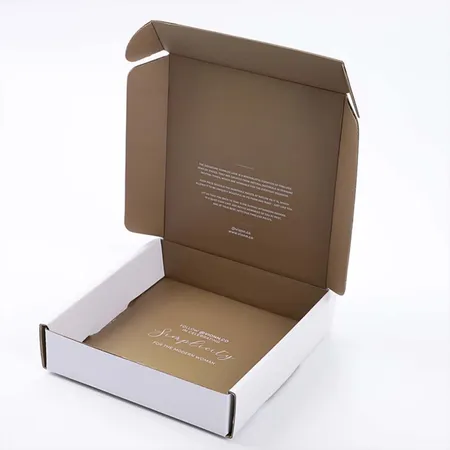
If you want the inside to feel special, print a short note on the inner flap. Our guide to planning the unboxing moment covers what to say and where to put it.
Plain kraft with a single color logo is also a good choice for galleries that ship for many artists. The box stays neutral and the work takes the attention.
Labels and Handling Marks
Printed handling marks help sorting staff treat the parcel with care. Common choices are an up arrow, a fragile line and a do not lay flat note.
Leave a clear panel for the shipping label so it never covers your logo. A second smaller panel can hold a title and inventory number for your records.
Handling marks do not replace good packing, but they do help. Parcels marked fragile tend to get a little more thought at each scan point.
Packing Steps for Your Studio
Build a routine so every piece leaves the same way. It also makes it easier to train a helper during a busy show season.
Before a big launch, pack one test piece and send it to a friend across the country. Check the corners and the face when it arrives.
Keep corner blocks, pads and tape in one bin beside the cartons. A complete kit at hand stops anyone from skipping a step.
- Photograph the front and back of the work for your records.
- Cover glass with tape and wrap the piece in a soft layer.
- Fit corner blocks and the face pad.
- Lower the piece into the carton and add the back pad.
- Close, seal and add the label to the clear panel.
Carton Proofs and Delivery to Your Studio
Send the dimensions of the pieces you ship most and your logo file. We return a free digital proof that shows the carton layout and the insert plan.
Ask for as many changes as you like before you approve. Production then runs 4 to 6 business days, and free shipping to the US, UK, Canada and Australia takes about 2 to 3 business days in transit. Our delivery and shipping details page lists the specifics.
The proof also shows where the label panel and handling marks sit. Check that they will not end up on the side that faces down in your packing routine.
Cost Factors for Artwork Cartons
Artwork shipping boxes are priced by quote, starting from $0.30 per unit for simple sizes. Large deep cartons with several inserts cost more because they use more board.
Board type, print coverage and quantity all move the number. If you want to price a few sizes at once, use our quote form for artwork cartons and list each one.
Ordering cartons for your two or three most common sizes is usually the most cost effective plan. One-off pieces can then use the nearest larger carton with an extra pad.
If Something Arrives Wrong
Check your boxes when they arrive, before you pack a valuable piece in one. Report any misprint or transit damage within 10 days and we will reprint or refund.
Questions about a tricky piece, like a sculpture base or an oversized panel, are easier by phone. Call or WhatsApp (503) 461-4788, or send photos through our contact page for packaging questions.
Keep a few spare cartons for returns and exchanges. A buyer who has to send a piece back will do it more safely in the original box.