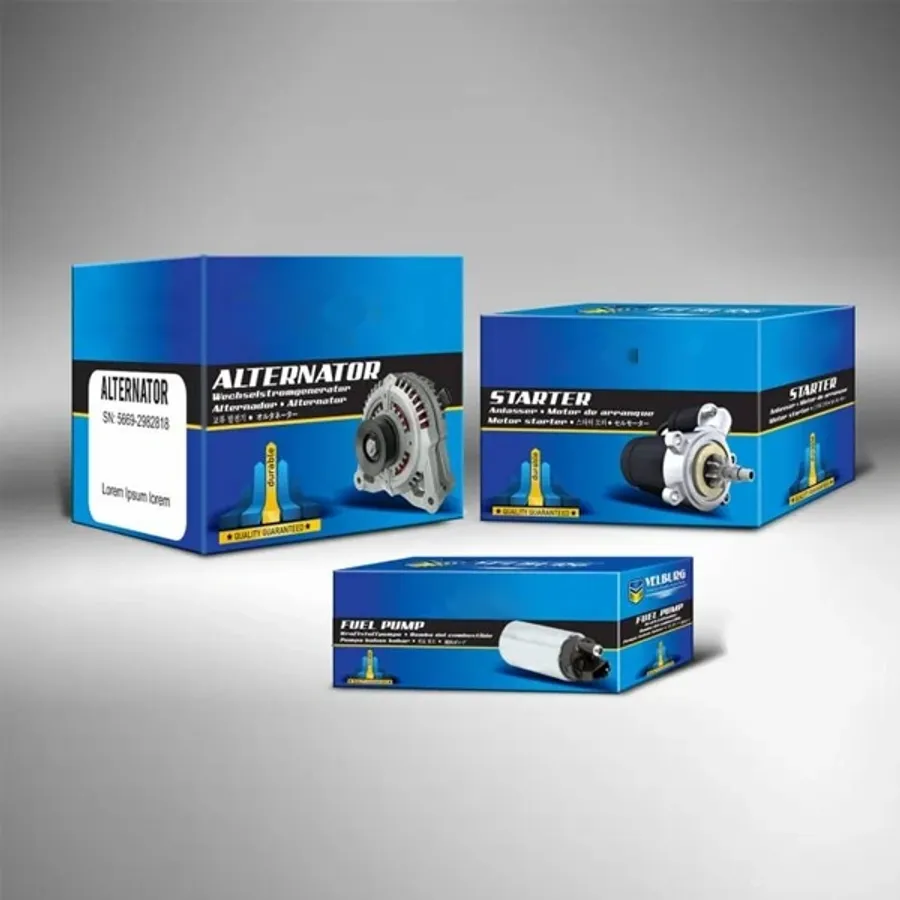
Parts Sellers Who Need a Tougher Carton
A brake pad set weighs far more than its size suggests. Put it in a light box and the corners split before the parcel leaves the first depot.
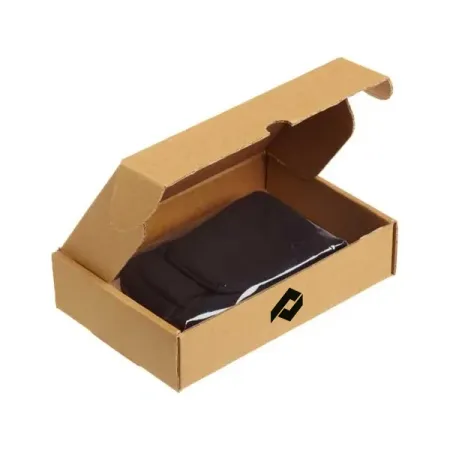
These cartons are for sellers whose products are dense, long or awkward. They focus on strength and clear labeling first, and on looks second.
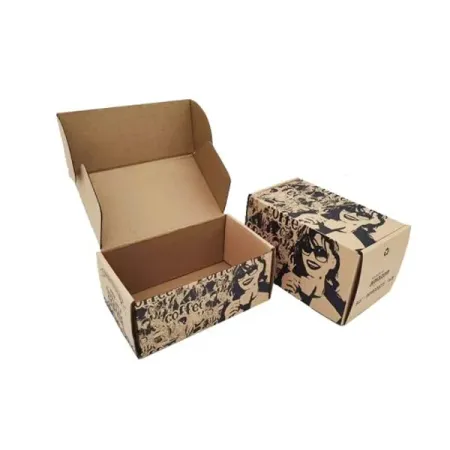
If you sell car care kits or small accessories for gifting, a printed tuck-front is a better fit. Our printed mailers for car care kits cover that side of the market.
- Online parts stores and marketplace sellers
- Aftermarket brands selling lighting, trim and performance parts
- Remanufacturers who ship parts out and take cores back
- Repair shops sending parts between locations
Matching the Box to the Part Shape
Parts come in three broad shapes, and each one suits a different carton. Getting this right matters more than any print choice.
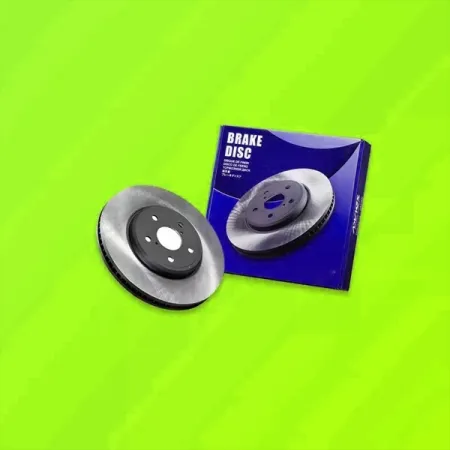
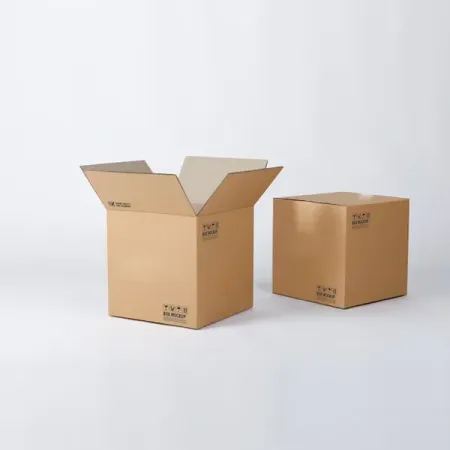
Compact, heavy parts like pads, rotors and pumps need a small cube with thick walls. Long parts like wiper blades, light bars and trim strips need a side loading box. Flat or fragile parts like sensors and lenses need inserts that hold them still.
If you are unsure which shape your range falls into, measure your five best sellers first. They usually cover most of your shipping volume, and our box size measuring guide shows how.
| Part shape | Examples | Suggested style | Board |
|---|---|---|---|
| Compact and heavy | Brake pads, filters, pumps | Tuck top | B-flute |
| Long and narrow | Wiper blades, light bars, trim | Side loading tab lock | B-flute |
| Small and sensitive | Sensors, bulbs, switches | Tuck top with partition | E-flute or B-flute |
| Kits of mixed parts | Gasket sets, fitting kits | Roll end tuck front | E-flute |
Why Long Parts Use Side Loading Boxes
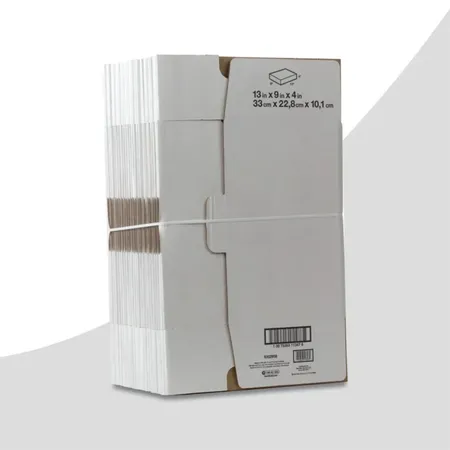
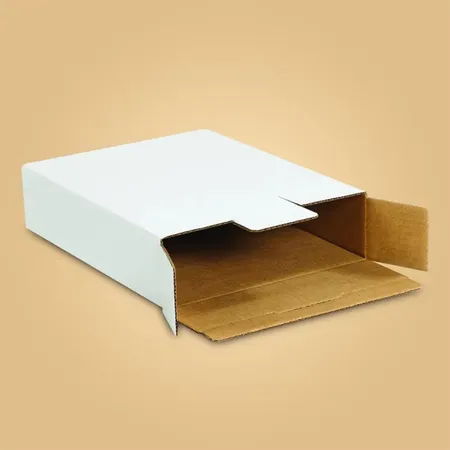
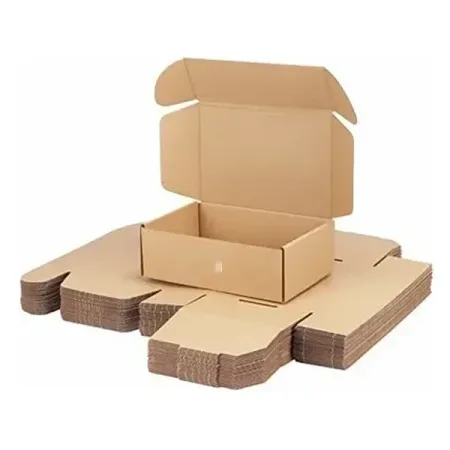
A side loading tab lock box opens at the narrow end. You slide the part in lengthwise, then lock the tab closed.
That suits light bars, wiper blades and trim pieces, which would need a huge lid on a standard mailer. It also packs quickly, because the box stays flat until the very end.
See more about this build on our page for side loading tab lock boxes.
Leave a little extra length so a gloved hand can pull the part out. A tight end makes unpacking awkward and can damage the part's packaging sleeve.
Dealing With Weight and Sharp Edges
Dense parts push on the bottom panel and the corners. B-flute resists that better than thinner board, and a snug fit stops the part from building speed inside the box.
Sharp edges on brackets or castings can cut through board. Fold a corrugated pad over those edges or add end caps before you close the carton.
Tell us the packed weight of the heaviest part in each size. It helps us suggest the right board, and our comparison of E-flute and B-flute board explains the difference.
- End caps for parts with pointed ends
- Folded pads over cast or stamped edges
- Partitions so pairs of parts do not knock together
- Snug sizing so nothing slides on a drop
Oil, Grease and Clean Packing
Used or remanufactured parts may carry traces of oil or grease. Board absorbs it, and a stain spreads through print and labels.
Bag any part that may weep before it goes in the carton. An aqueous coating on the outside helps the box shrug off greasy handling in a workshop.
Keep new and returned parts in different boxes. A box that held a dirty core should not go back out to a new customer.
A small printed line such as keep upright or contains a used part helps staff at your own returns bench sort boxes quickly.
Planning for Core Returns
Many remanufactured parts are sold with a core charge, and the old part comes back in the new part's box. That box needs to survive two trips.
Choose a tuck top or a tear strip opening that the customer can close again with tape. Print short return steps on an inside flap so the core arrives in the right place.
Our packaging return and reprint policy covers your box order itself, while your core return rules stay on your own site.
Branded or Plain Kraft
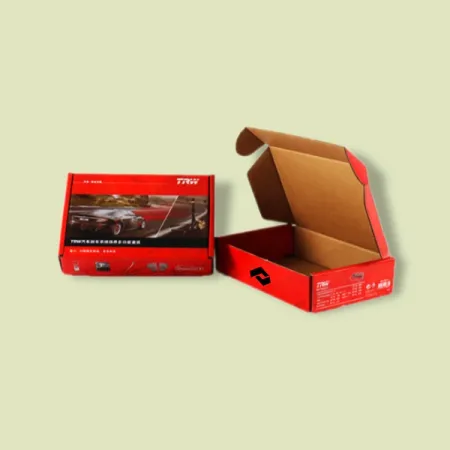
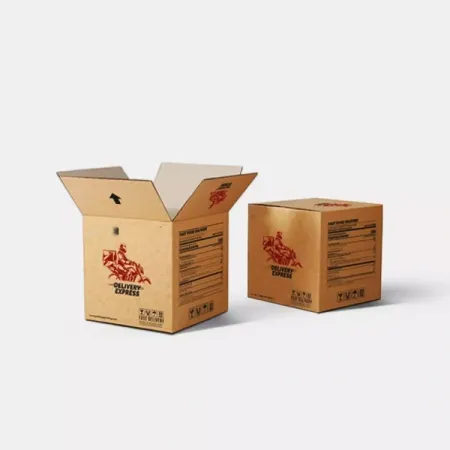
Many parts sellers keep the outside plain kraft with a single color logo. It looks professional, hides scuffs and suits the workshop setting.
Aftermarket performance brands sometimes go further with full color print on white board. Racing stripes and a bold logo make a carton easy to spot on a shelf.
If you sell through retail counters too, a printed box can double as shelf packaging. That saves you from ordering a separate retail box.
Whichever you choose, keep the logo away from the edges that rub on conveyor belts. Corners and edges wear first.
You can compare kraft, white and printed looks on our box color and finish options page.
Stacking and Storing Parts Cartons
Parts warehouses stack boxes high on shelving. Cartons for heavy parts need square corners and full-height walls to hold that weight without bowing.
Use the same footprint for parts that share a shelf. Even stacks are safer and easier to count during stocktakes.
Keep spare flat cartons off the floor in a dry spot. Damp board loses much of its stiffness, and a soft box will not protect a heavy part.
- Same footprint for parts that share a shelf
- Heaviest cartons on the lowest shelves
- Part number panels facing outward
- Flat stock stored dry and off the floor
Ordering, Proofs and Timing
List each part or part family with its dimensions and packed weight. Add your logo and any label panel positions you already use.
You receive a free digital proof for every carton size, and changes are unlimited. Once approved, production takes 4 to 6 business days, and free delivery to the US, UK, Canada and Australia arrives in about 2 to 3 business days.
Our quote form for parts cartons accepts several sizes in one request.
How Parts Cartons Are Priced
Automotive shipping boxes are quoted from $0.30 per unit for small simple cartons. Long side loading boxes and heavy B-flute sizes cost more because they use more board.
Print coverage, inserts and quantity also shape the quote. A plain kraft carton with a one color logo is usually the most economical choice for high volume parts.
If a delivery arrives misprinted or damaged, report it within 10 days. We will reprint or refund the affected cartons, and our team is on (503) 461-4788 for questions.