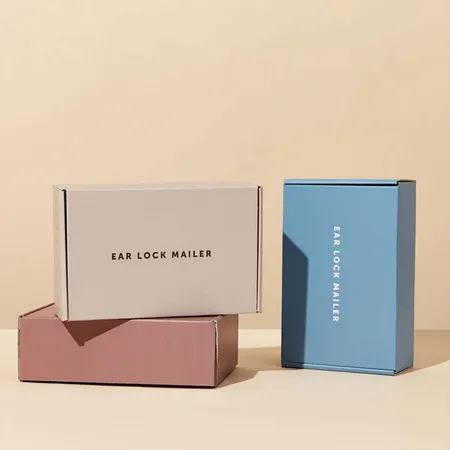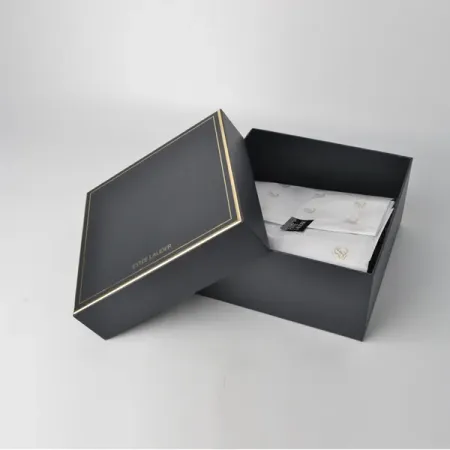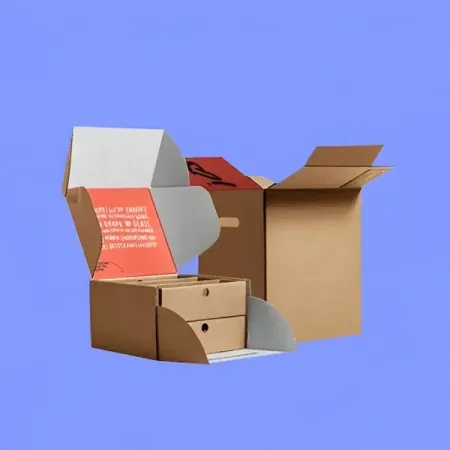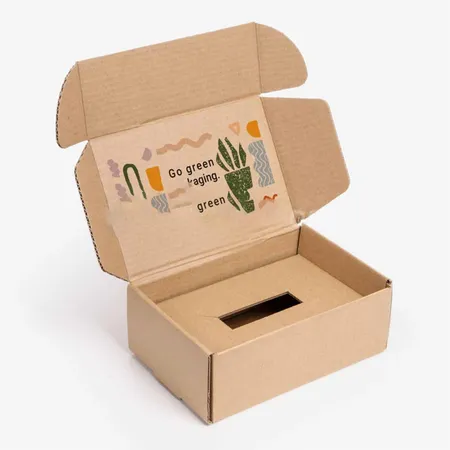
How a rigid mailer is put together
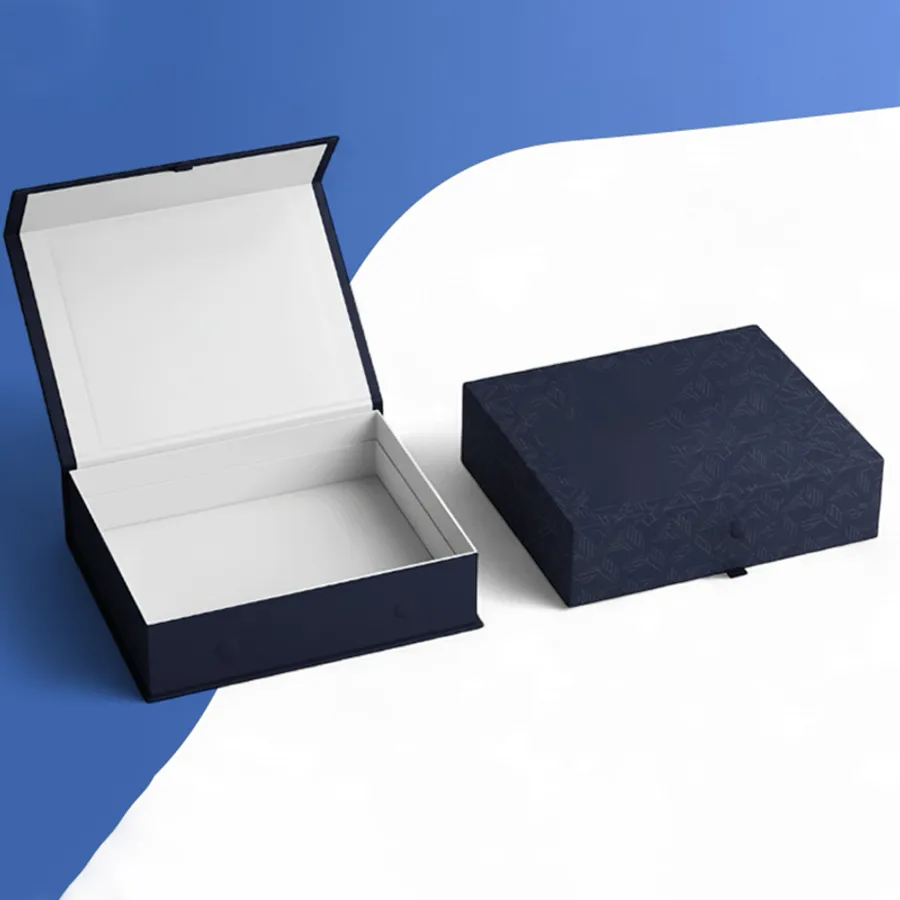
A standard mailer folds up from one flat sheet of board. A rigid mailer starts as thick chipboard panels that are formed into a box and then wrapped in printed paper.
The wrap carries all of your artwork. It covers the chipboard edges and corners, which gives the clean, tight lines you see on premium gift boxes.
Because the walls do not flex, the box feels heavy and solid. That weight in the hand is a big part of why brands choose it.
The chipboard also resists crushing far better than thin paperboard. A stack of rigid boxes will not sag the way folding cartons can.
Who orders rigid mailers
These boxes suit products where presentation matters as much as protection. The box is part of what the customer pays for.
Brands use them for launches, gift sets and anything sold at a premium. Agencies and marketing teams use them for kits sent to press, creators and key clients.
What links these buyers is a small, high-value order. They send fewer boxes, and each one has to impress the person who opens it. Compare the wider luxury mailer box range if you want premium print on folding board instead.
- Jewelry, watch and accessory brands
- Fragrance and skincare gift sets
- Product launch and influencer kits
- Corporate gifts for clients or staff
- Limited editions and collector sets
- Stationery and keepsake bundles
Rigid mailer versus folding mailer
The two look alike in photos but behave very differently in your stockroom and in the mail. Use this table to decide which one your product needs.
Most brands that pick rigid do so for the unboxing and the second life of the box. If neither matters much, a folding mailer usually makes more sense.
Some brands use both. A rigid box goes to press and top clients, while regular orders ship in a printed folding mailer with matching artwork.
| Factor | Rigid mailer | Folding corrugated mailer |
|---|---|---|
| Material | Chipboard wrapped in printed paper | E-flute or B-flute corrugated |
| Feel in the hand | Heavy and solid | Light and firm |
| Arrives at your door | Built up, ready to fill | Flat, folded at packing |
| Storage space | Takes full box volume | Stacks flat |
| Sent through the mail | Inside an outer carton | Often on its own |
| Life after opening | Often kept for storage | Usually recycled |
Planning storage before you order
Rigid boxes keep their shape, so they cannot be stored flat. A run of rigid mailers takes far more shelf space than the same count of folding boxes.
Measure your storage area before you settle on quantity. Many brands order in smaller batches timed to launches or gifting seasons.
Keep them in their shipping cartons until you need them. That protects the wrap from dust, sunlight and dents.
Think about who packs them too. Rigid boxes are filled, not folded, so packing is quick once the boxes are on the bench.
Getting a rigid mailer through the mail
The wrap paper is the box's face, and it scuffs if it rubs on conveyors. Most brands send rigid mailers inside a plain corrugated carton.
The carton takes the knocks and the label. The rigid box arrives clean, and the customer opens a second, more special layer.
Leave a little space around the rigid box inside the carton. A layer of paper fill keeps it from sliding into the carton walls.
Print the outer carton plainly or not at all. A quiet carton draws less attention on a doorstep, which matters for a valuable gift.
For the outer layer, look at our corrugated shipping cartons for transit sized to fit your rigid box.
Decorating the wrap paper
The wrap takes print and finishes well, because it is smooth paper laid over a firm surface. Small details stay sharp.
Soft-touch lamination is a popular choice on rigid boxes. It gives a velvet feel and a low sheen that suits dark colors.
Foil stamping on a logo or a thin border adds contrast. Embossing or debossing gives the lid texture you can feel with a finger.
Dark wraps show fingerprints and scuffs more than light ones. A protective lamination keeps them looking new through packing and gifting.
Our finishes guide for printed boxes shows how each one looks up close.
- Soft-touch lamination with a foil logo
- Matte wrap with a debossed mark
- Solid color wrap with spot UV pattern
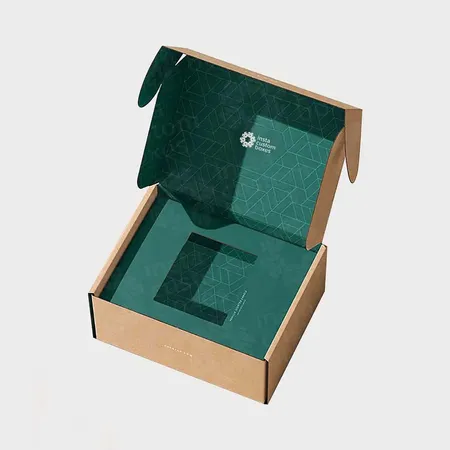
- Printed inside wrap for a hidden reveal
Inserts that present each piece
A rigid mailer almost always has an insert. Products in a premium box should sit in place, not roll around.
Paperboard inserts can be wrapped to match the box. Corrugated inserts work for heavier pieces like bottles or candles in glass.
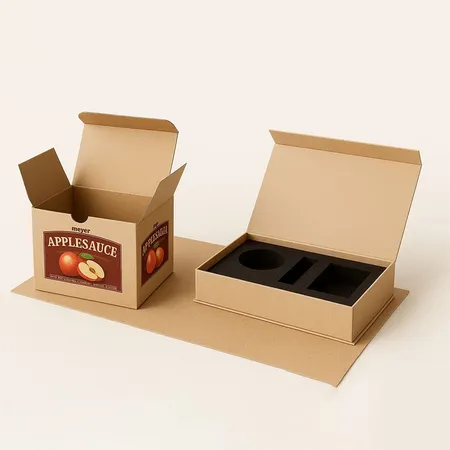
Cutouts can hold several items in a set layout. A launch kit might hold the product, a card and a small sample, each in its own pocket.
Think about lift as well as hold. A finger notch cut into the insert helps the customer take the product out without tipping the box.
See mailer boxes with fitted inserts for layout ideas that also work in rigid builds.
Ordering steps for a rigid build
Rigid boxes have more parts to agree on than a folding mailer. Following these steps keeps the proof stage short.
Send photos of the pieces with your sizes. They help us judge insert depth and spot items that need extra support.
- Measure each piece that will go in the box.
- Decide how the lid opens and what the customer sees first.
- Choose wrap color, print and finishes for outside and inside.
- Plan the insert layout for every item in the set.
- Confirm the outer carton you will use for shipping.
- Approve the digital proof with all parts shown.
Common rigid mailer mistakes
Most problems with rigid boxes appear after delivery, in storage or in the mail. Avoid these and the box will look its best when opened.
Each of these is cheap to fix before printing and costly after. Ask us about any of them while the proof is open.
- Sending the rigid box with no outer carton
- Ordering more than your shelves can hold
- Placing fine text across a wrap fold line
- Skipping the insert for a set of loose items
- Choosing a pale wrap with no protective finish
Rigid mailers as a second-use box
A rigid box rarely goes straight in the bin. People keep it for jewelry, letters, cables or craft supplies.
That long life gives your logo many more views. A tasteful outside design works better here than heavy promotional text.
Choose colors that will still suit a dresser or desk next year. Seasonal artwork dates a box that people would otherwise keep.
Some brands print a short note inside the lid that still makes sense months later. A simple thank you or a care line ages well.
For more ideas on that moment of opening, read the unboxing experience planning guide.
Quote, production and delivery
Send piece sizes, your artwork and the finishes you want through our rigid mailer quote request. Rigid builds are priced on size, wrap, finish and quantity, from $0.30 per unit.
Your proof covers the wrap layout, inside print and insert together. After you sign it off, the boxes take 4 to 6 business days to build and about 2 to 3 business days to reach you.
We send rigid orders free to the US, UK, Canada and Australia. Because the boxes come built up, clear some floor space for the cartons on delivery day.