Who orders a paper-based transit carton
Wholesale sellers moving cases of goods to stores are a big group. So are refill brands that send bulk pouches, and home goods shops shipping heavier items like ceramics or linens.
What they share is volume and weight. These parcels get thrown, stacked and conveyed, so the carton has to carry the load first and look good second.
They also want the whole parcel to stay paper. A strong corrugated carton with paper pads inside can replace bubble wrap and plastic air pillows in many packs.
Subscription brands with bulky quarterly drops order them too. A box of refills or pantry goods is heavier than a monthly sample kit and needs a carton rather than a light mailer.
Shipping carton or printed mailer
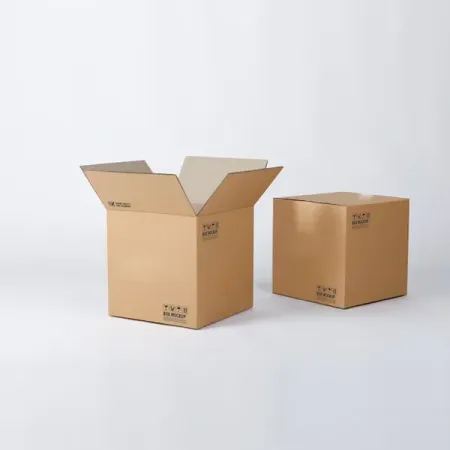
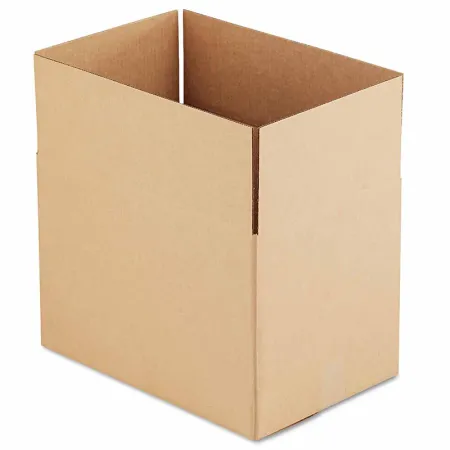
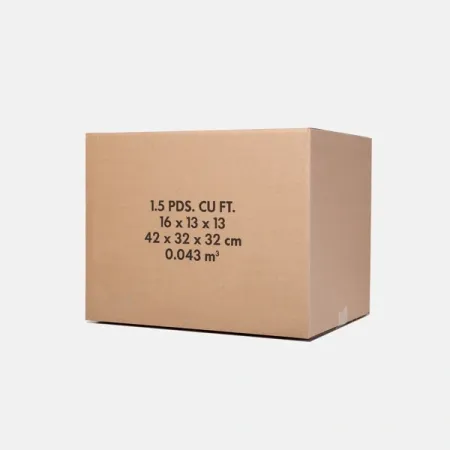
A shipping box is the outer layer that takes the knocks. It closes with tape or flaps and usually carries the shipping label. Branding stays simple because the box is built for transit, not presentation.
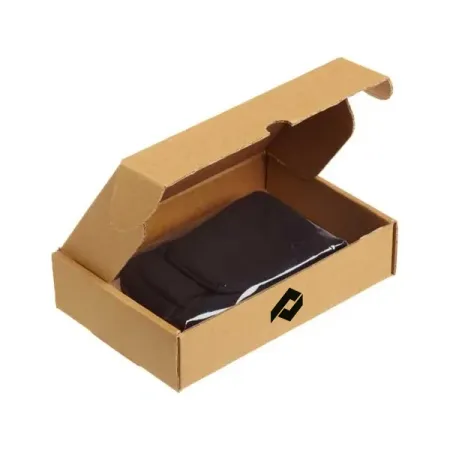
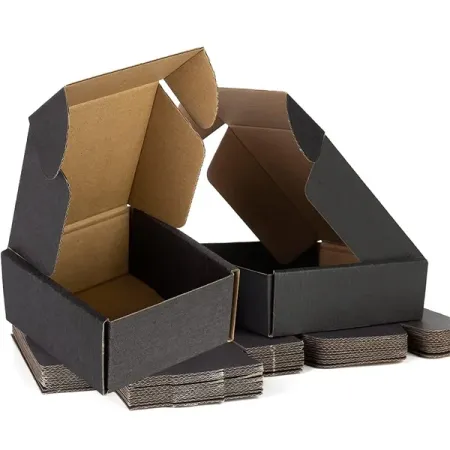
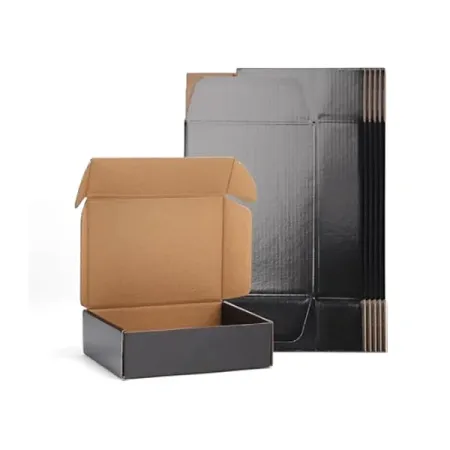
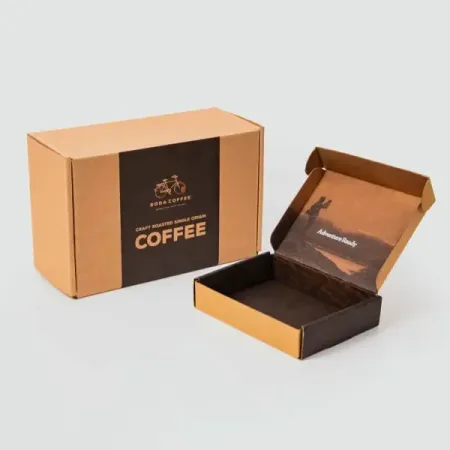
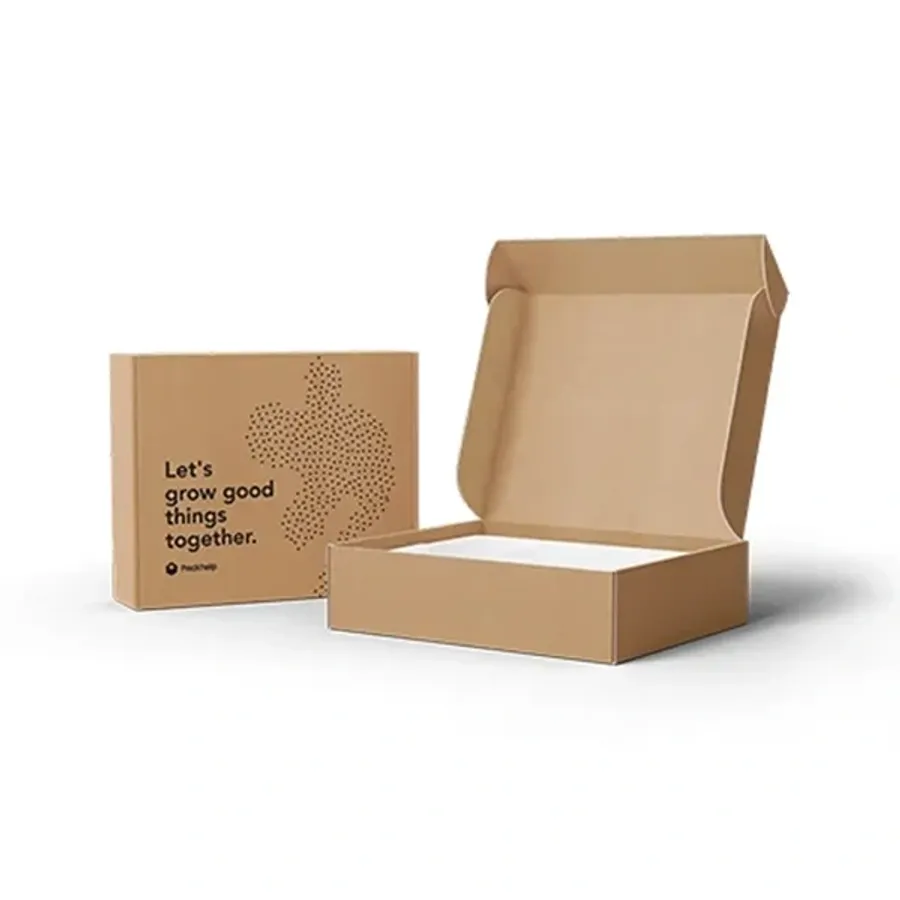
A mailer is a printed tuck front box that customers open like a gift. It suits lighter, single items where the unboxing moment matters more than load strength.
Many brands use both. If the inner layer is what customers see, our paper-based eco friendly mailer boxes can sit inside this carton.
If you only ship one layer, decide which job matters more. Heavy, awkward or breakable goods point to a carton. Light, giftable items point to a mailer.
Some brands print the carton lightly and keep the mailer plain. That flips the usual setup and works well for wholesale orders opened by store staff.
Picking the flute for weight and stacking
Flute is the wavy layer between the two liners. Taller flute adds cushioning and stacking strength, while thinner flute folds tighter and prints sharper.
Use this table as a starting point. We confirm the right board on your quote once we know the contents and packed weight.
When in doubt between two boards, tell us how the parcel travels. A carton that rides on a pallet to a store needs more stacking strength than one dropped on a porch.
| Contents | Suggested board | Why it fits |
|---|---|---|
| Bulk refill pouches | B-flute (3 mm) | Handles weight without bulging |
| Ceramics or glassware | B-flute with corrugated pads | Extra crush resistance |
| Folded textiles | E-flute (1.5 mm) | Light load, tidy folds |
| Store wholesale cases | B-flute (3 mm) | Stacks on pallets and shelves |
| Small accessories | E-flute (1.5 mm) | Compact and easy to tape |
Paper inside the carton too
The carton can be all corrugated, but the parcel is only as green as what goes inside. Corrugated pads, dividers and wrap-around inserts hold goods in place without plastic.
Dividers work well for sets of jars or bottles. Pads protect the top and bottom of heavier items where most crush damage happens. Both can be cut from the same board as the carton.
For a deeper look at board types, read our guide comparing corrugated board and paperboard for boxes. It explains why corrugated is the default for transit.
Ask for dividers in the same kraft liner as the carton. When the customer opens the box, everything inside matches and reads as one paper pack.
Simple branding that suits a transit box
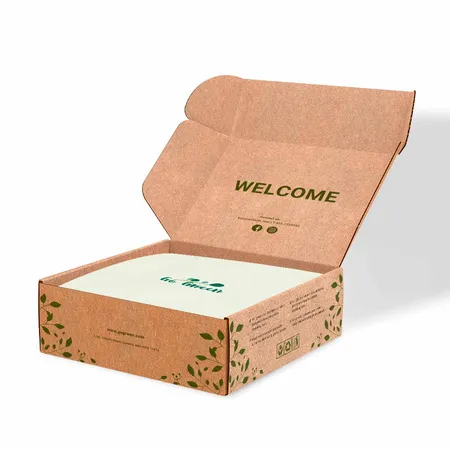
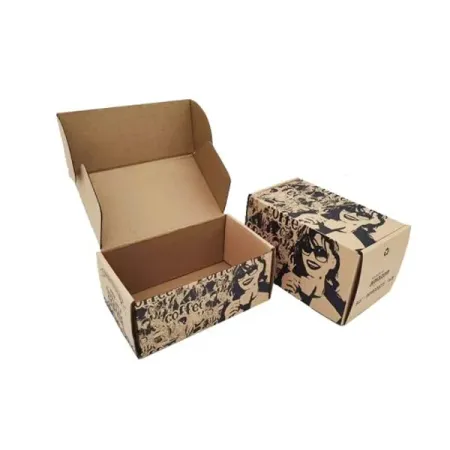
Most of our eco carton buyers print one color on natural kraft. A dark logo on brown board looks clean and stays readable after a rough journey. Heavy full-color wraps scuff on conveyors anyway.
White ink on kraft is a popular second option. It gives a softer, more modern look without adding coatings or film.
Leave a clear panel for the shipping label. Carriers need a flat, unprinted area for barcodes to scan cleanly, and a busy pattern underneath can cause misreads.
Our range of shipping and subscription boxes shows how other brands balance a light print with plenty of plain board.
What to print on the panels
Transit boxes have more panel space than most brands use. A few useful lines can save customer emails and returns. Keep the wording short and factual.
- Your logo and website on the top panel
- Flatten and recycle where paper is accepted
- This side up arrows for fragile goods
- Open here guide near the tape line
- A contact line for damaged deliveries
Packing table swaps that keep it paper
The carton is one part of the change. Paper tape seals the box without adding plastic, and it stays with the board in many recycling programs. Ask your tape supplier about water-activated paper tape.
Swap plastic air pillows for crumpled kraft paper or our corrugated pads. Swap plastic label sleeves for labels printed directly on the box or on paper stock.
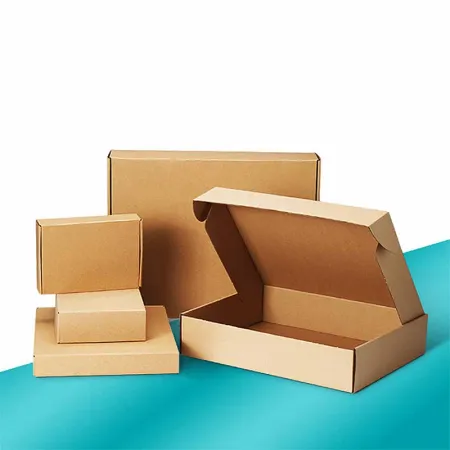
If you send multiple carton sizes, our mailer and shipping box sizes guide helps you group products into fewer box sizes. Fewer sizes mean simpler storage at the packing station.
Write the new packing steps on a card at each station. Staff fall back on old plastic supplies quickly when a shift gets busy.
How cartons hold up in storage
Corrugated board takes on moisture from damp air. Store flat cartons off the floor and away from loading doors where rain blows in. Damp board loses stacking strength quickly.
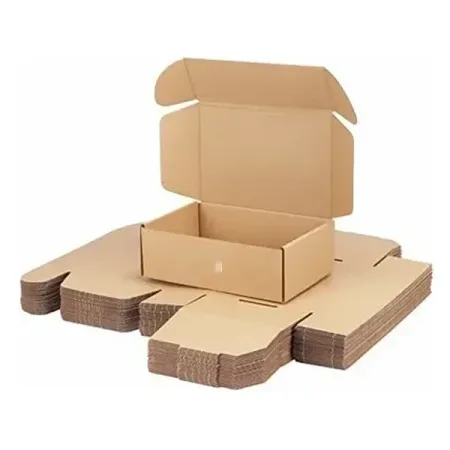
Cartons arrive flat, which saves storage space. Fold only what you need for the day so the creases stay crisp and the boxes stay square.
Keep stacks of flat cartons under even weight. Leaning stacks warp board and make folding slower when it is time to pack.
Check a sample carton against your heaviest order before your first busy week. A quick drop test from waist height tells you more than any spec sheet.
Kraft or plain cartons in other colors
Natural kraft is the usual choice for an eco carton. If you prefer a sturdier unprinted look, our plain and printed kraft shipping boxes cover the same board in more styles.
White liner suits brands with bright packaging inside. It costs a little more ink to match colors but keeps a crisp, store-ready appearance on wholesale shelves.
A colored liner is another route, but it moves the box away from the natural look most eco buyers want. Many stick with kraft outside and save color for the inner packaging.
Ordering timeline and quote details
Send product sizes and weight, and we prepare a free digital proof with the dieline. Revisions are unlimited, so take your time getting the panel layout right.
Once you approve the proof, cartons are produced in 4–6 business days. They reach you in a further 2–3 business days, and we cover shipping to the US, UK, Canada and Australia.
Eco cartons are quoted from $0.30 per unit, depending on size, flute, quantity and print. Our shipping policy for box orders explains delivery in detail.