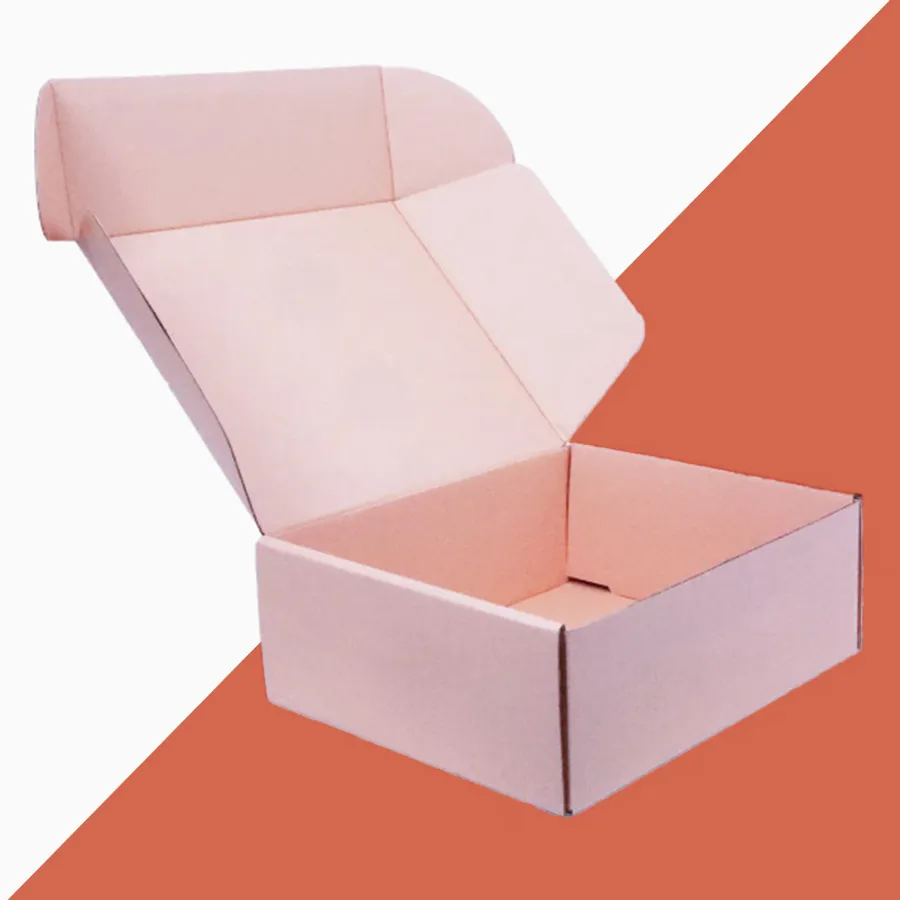
Sellers short on storage space
Home-based sellers feel storage limits first. A spare room fills up quickly when every box arrives already built.
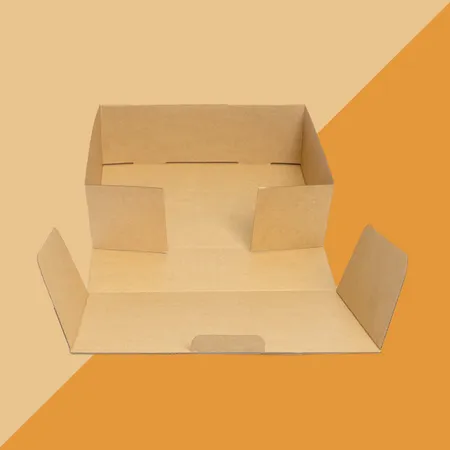
Foldable mailers solve that. A stack of flat sheets that would make a wall of built boxes fits on one closet shelf.
Market traders and pop-up shops like them for the same reason. They carry a bundle in the car and fold boxes at the table as buyers pay.
Small warehouses use them too. Flat bundles sit on a pallet rack, and packers fold only what the day's orders need.
Seasonal sellers get the most out of the format. You can order ahead of a busy period without giving up a room to empty boxes.
Brands that move house or share a studio like it as well. A few flat bundles travel in a car boot, while built boxes would need a van.
How a flat sheet becomes a locked box
Each sheet is die cut and scored along every fold line. The scores tell the board where to bend, so corners come out square.
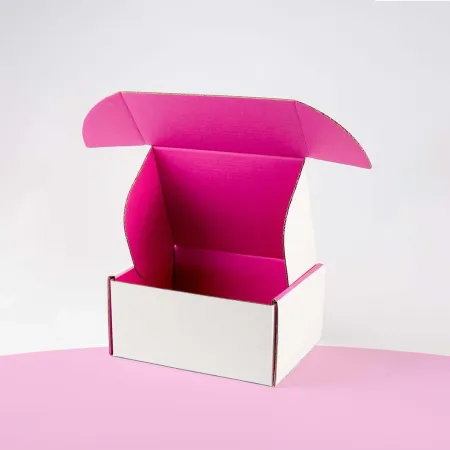
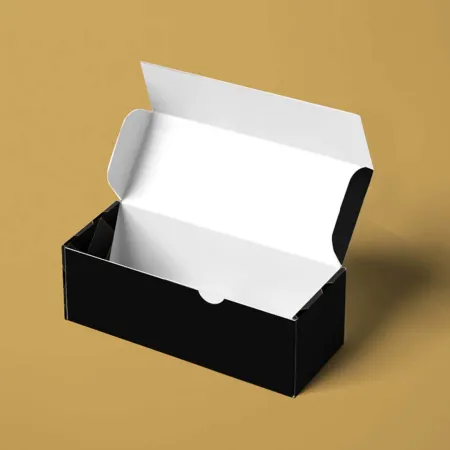
No glue is applied at the factory. The box holds its shape through interlocking tabs and a tuck flap that slides behind the front wall.
Your packers learn the sequence once. After a few boxes it becomes a habit they can repeat without looking at instructions.
We print the fold order on your proof sheet. Pin a copy above the packing table for new staff or holiday helpers.
- Lay the sheet printed side down with the lid farthest from you.
- Fold the two side walls up along their scores.
- Roll the double-thick front and back walls over the side walls and press the locking tabs into their slots.
- Fold the dust flaps inward at the lid hinge.
- Close the lid and slide the tuck flap behind the front wall until it sits flush.
Picking a fold style for your packing routine
Different styles fold in different ways. The right one depends on how fast you pack and how often a box gets opened.
A roll end tuck front feels sturdy and opens like a lid. Our roll end tuck front mailers page covers that style in more depth.
| Fold style | How it locks | Good fit |
|---|---|---|
| Roll end tuck front | Rolled walls plus front tuck | Gift sets and subscription drops |
| Ear lock | Side ears tuck into the walls | Quick packing at volume |
| Tuck top | Top flap tucks into one end | Slim, light products |
| Self seal version | Peel-and-seal strip on the lid | Parcels that should show tampering |
Corrugated or paperboard sheets
Corrugated sheets fold into stronger boxes. E-flute at 1.5 mm handles most apparel, beauty and accessory orders.
B-flute at 3 mm is thicker and folds with a slightly rounder corner. Pick it for heavier goods or boxes that travel long distances.
Paperboard at 18 to 24 pt folds crisply and suits small, light items. If you are unsure, our guide to corrugated versus paperboard board choices explains the tradeoffs.
Thicker board needs firmer folding. Ask for a sample sheet so your team can feel the difference before you commit.
Kraft or white outer liners fold the same way. The choice changes the look, not how the box goes together.
Artwork that wraps across fold lines
A flat sheet shows every panel at once, which makes layout easy to misjudge. Some panels end up upside down once folded.
Our die line marks each panel with its final orientation. Place text with that in mind, so the brand name reads the right way on the lid.
Keep small type and logos away from score lines. A fold through a letter cracks the ink and makes it hard to read.
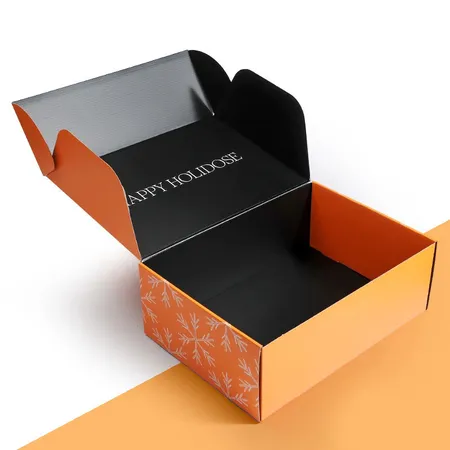
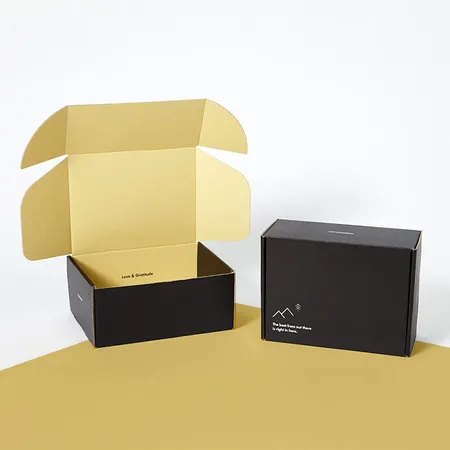
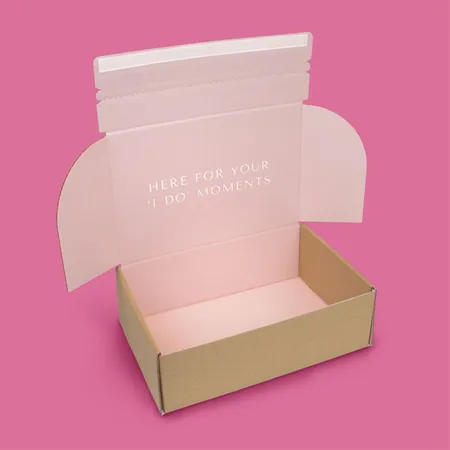
Inside printing is popular on this style because the lid opens wide. Our walkthrough on how to design a mailer box shows where interior art lands.
- Leave clear space around every score line.
- Run background color past the cut edge for bleed.
- Check which panels face up when the lid is closed.
- Put the return address on the panel your labels will not cover.
Setting up a fold-as-you-go packing station
Keep the flat bundle at hip height beside your packing table. Reaching down for every sheet slows the routine.
Fold a small batch at the start of a shift rather than one box per order. Ten built boxes on a side shelf keep the line moving.
Put tissue, cards and fill within arm's reach of the folding spot. The box goes from flat to packed without being carried.
Think about the order your customer will see things in. Our unboxing experience planning guide helps you decide what goes on top.
A clear table edge also helps. Many packers press each score against the edge to start a clean fold.
Folding mistakes we see on first orders
Most problems come from folding against the score. The board resists, the corner bulges and the lid will not sit flat.
Another common slip is forcing the tuck flap in front of the wall instead of behind it. The box looks closed but pops open in transit.
If a fold still feels wrong after a few tries, send us a photo. Our team on the contact page for packing questions can usually spot the step that is out of order.
- Folding the sheet with the printed side facing up.
- Skipping the dust flaps, which leaves gaps at the lid corners.
- Packing a product taller than the inside height.
- Storing flat sheets next to a heater or in damp air.
Storing flat bundles between orders
Flat sheets keep best lying down on a dry shelf. Standing them on edge for weeks can bow the board.
Keep bundles away from direct sunlight, which can fade printed colors over time. A closed cupboard or a covered rack works well.
Use the oldest bundle first. That keeps every batch fresh and lets you spot any print change on a reorder quickly.
Keep the bundle strap on until you need the sheets. Loose sheets slide, scuff and pick up dust on the printed side.
When a glued box is the better pick
Foldable boxes are not right for every order. If you pack hundreds of parcels a day, a pre-glued style can save folding time.
Very heavy or oddly shaped products may also need a different build. You can compare every option in our full range of mailer box styles before you choose.
We are happy to suggest the better fit. Tell us your product, your weekly volume and your storage space, and we will point you to a style.
Customers who refold and reuse the box
Because nothing is glued, a buyer can unfold the box and store it flat. Many keep it for gifts or returns.
That makes a printed inside lid worth the effort. A short thank-you line or care tip keeps your brand in the house longer.
If you accept returns, a self-seal strip helps. Ask about self seal mailing boxes with a second strip so the parcel can go back without tape.
Getting a folded sample before the full run
We send a free digital proof that shows the flat sheet and the folded box side by side. You can request changes as many times as you need.
Your flat sheets are printed and cut within 4 to 6 business days of proof sign-off. The strapped bundles then spend 2 to 3 business days with the carrier, and we cover delivery to the US, UK, Canada and Australia.
Prices start from $0.30 per unit and depend on size, board, quantity and finish. Send your dimensions through the quick quote request form and we confirm the exact figure.