Who orders kraft cartons
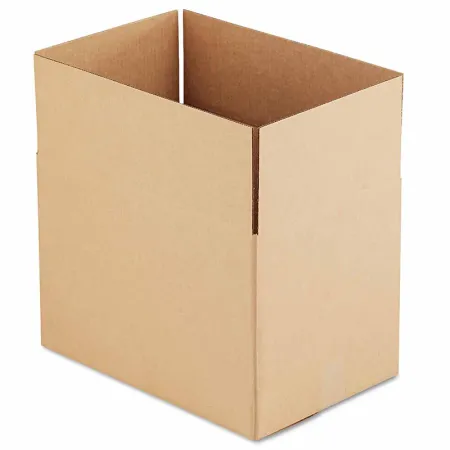
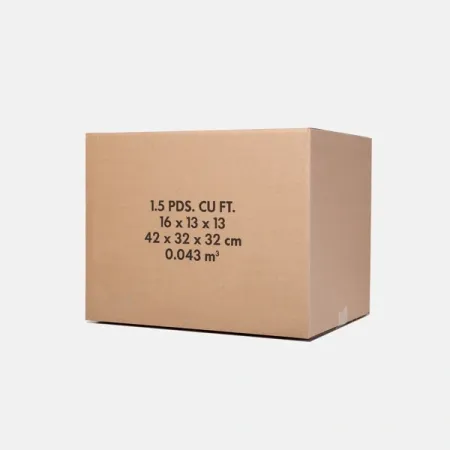
Ecommerce warehouses order them in several sizes to cover most orders. Wholesale suppliers use them to send cases of stock to shops.
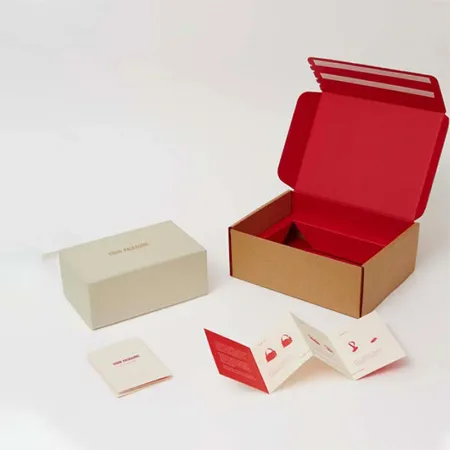
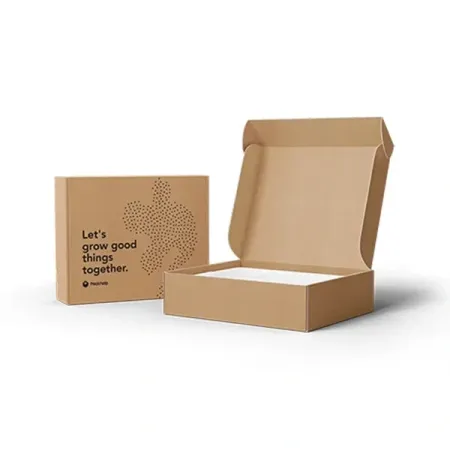
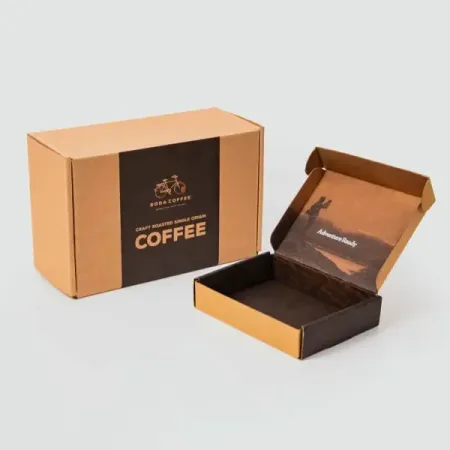
Makers who sell both online and to stores use them as outer cartons. The branded mailer goes inside, and the kraft box protects it.
Home goods, book and hardware sellers rely on them for heavy or awkward items. Printers and stationery suppliers ship paper stock in them.
Subscription services also keep a stock of kraft cartons for oversized add-ons. When a member orders extras, the whole lot ships together in one strong box.
Repair shops and makers of spare parts use them to send items back to customers. A plain brown carton travels without drawing attention to what is inside.
- Online stores with heavy or bulky orders
- Wholesale cases going to retailers
- Outer cartons around printed mailers
- Replacement parts and equipment shipments
- Books, paper and stationery stock
B-flute or E-flute for your weight
B-flute corrugated is 3 mm thick and resists crushing. It suits heavy contents, stacked cartons and long routes with many handoffs.
E-flute is 1.5 mm and lighter. It works well for medium orders where the box will not sit under heavy loads.
If you are torn, think about the worst point of the trip. A carton at the bottom of a cage of parcels needs B-flute.
Weigh a few of your heaviest packed orders before you decide. The figure helps us suggest a board, and it shows whether one carton can do every job.
| Contents | Board | Note |
|---|---|---|
| Books or paper stock | B-flute | Dense and heavy for its size |
| Case of jars or bottles | B-flute with dividers | Stops glass knocking together |
| Folded apparel bundle | E-flute | Light but bulky |
| Outer carton for one mailer | E-flute | Adds a protective layer |
| Tools or hardware | B-flute | Corners take impact |
Dividers and pads for cases
Wholesale cases of jars, candles or bottles need cell dividers. Each item sits in its own pocket so nothing touches.
Corrugated pads on the top and bottom add a cushion against drops. They also stop the top layer from rubbing on the lid.
Plan inserts at quote time, since they set the inside size. Our page on candle shipping boxes with dividers shows a typical layout for glass jars.
For bottles of oil, sauce or lotion, a bag or wrap inside each pocket adds a second barrier. It keeps a rare leak from soaking the whole case.
Printing on a working carton
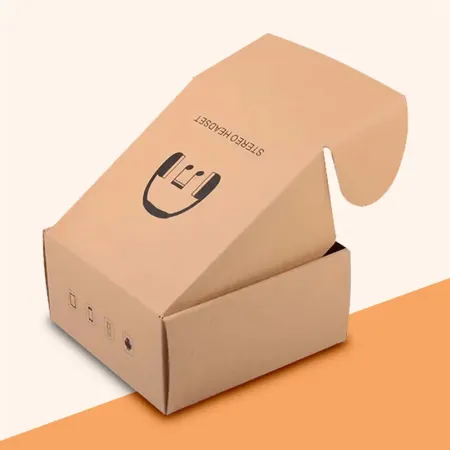
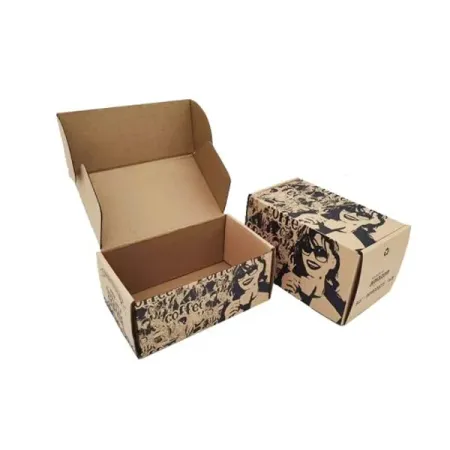
Transit cartons do not need heavy art. A one-color logo, a web address and maybe a short line on the side panel are usually enough.
Black ink on kraft is crisp and economical. White ink gives a modern look on brown, and a Pantone spot can match your brand color.
Printing the logo on two sides helps it stay visible after the shipping label goes on. Handling notes like fragile or this way up can sit on the ends.
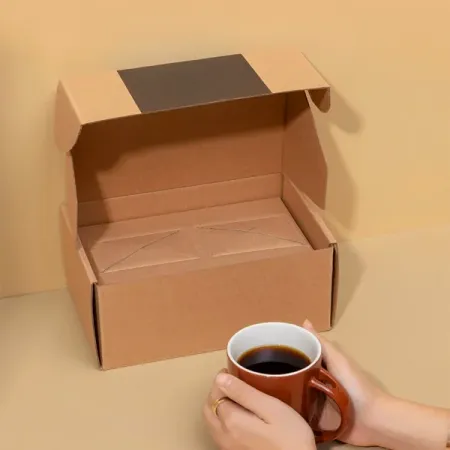
Many brands print a line inside the lid too. A simple thank-you or a reorder link is a low-cost way to add a personal touch to a plain box.
See how ink and coatings compare in our printing and finishes guide if you want more than a single color.
Closing, labeling and opening
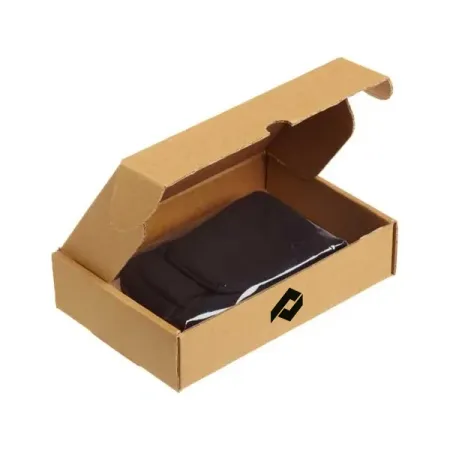
Tape across the seam is the usual closure for heavy kraft cartons. A tuck front with tape gives a clean edge and strong hold.
For lighter orders, a self seal strip removes the tape step. A tear strip lets the receiver open the box without a blade, which protects contents.
Leave one plain panel for labels. Shipping labels and packing slips stick best on unprinted kraft.
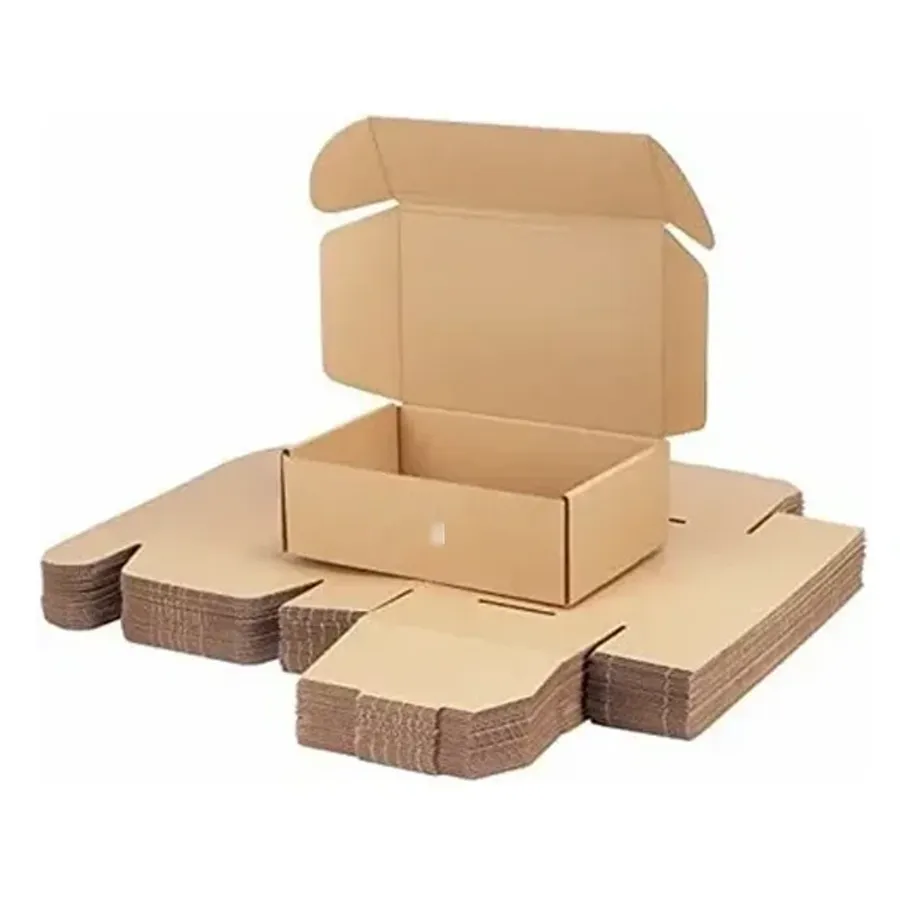
- Fold the carton and add any divider or pad.
- Pack the product and fill small gaps only.
- Close with tape or the self seal strip.
- Place the shipping label on the plain panel.
- Stack finished cartons squarely, heaviest at the bottom.
Mistakes that lead to crushed cartons
Using E-flute for heavy cases is the most common error. The box looks fine when packed but folds in once others are stacked on it.
Over-sizing is the second. Extra air inside means the walls take impact without support from the contents.
The third is storing flat cartons in damp areas. Corrugated loses strength when wet, so keep stock off floors and away from loading doors.
Some sellers also tape only the center seam. Heavy cartons hold better with tape along the edges as well, so the flaps cannot lift.
Kraft cartons and recycling
Plain kraft corrugated is widely accepted in curbside paper recycling. Simple ink and no lamination keep it easy to process.
Your customers can flatten and reuse a sturdy carton, which many do for storage or moving. Only make environmental claims on the box that your own supply chain supports.
For more options with a lower-impact focus, see our eco-friendly shipping box page.
Avoid plastic tape on cartons you want to promote as easy to recycle. Paper tape keeps the whole parcel in the paper stream.
Pairing a carton with your printed mailer
Ship-in-own-container works when the inner box is strong enough alone. When it is not, a kraft outer keeps the printed box pristine.
Size the carton a little larger than the mailer and add a thin pad. Our printed kraft mailer boxes share the same brown look for a matching set.
This two-box approach suits fragile, high-value or international orders. For local orders of sturdy goods, the printed mailer alone may be enough.
Keep the outer plain or print only your logo. The surprise should stay inside for the customer to find.
Ordering, timing and support
Send sizes, board choice and logo through the kraft carton quote form. Pricing starts from $0.30 per unit, and the quote sets the final figure for your size and quantity.
Design help and the digital proof are free, with as many changes as you need. Once you sign off, your kraft cartons take 4 to 6 business days to produce.
Delivery takes 2 to 3 business days and costs nothing to the US, UK, Canada or Australia. Call or WhatsApp (503) 461-4788 or email info@shopmailerboxes.com with questions.