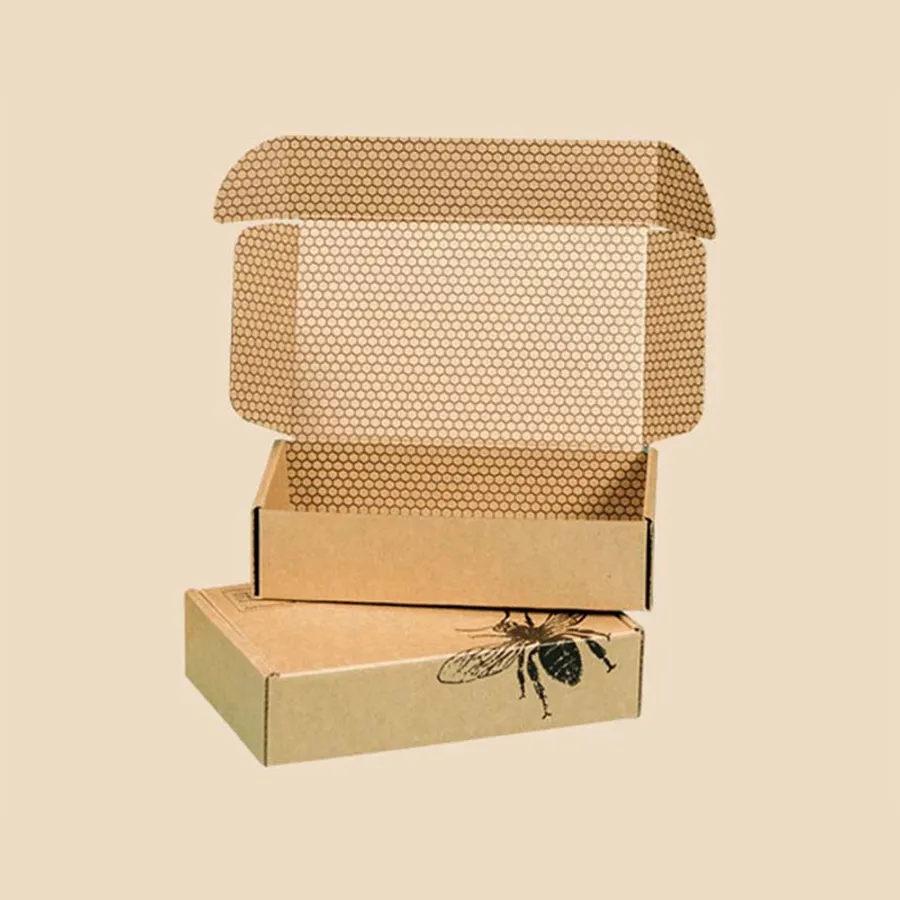
Products that slide in from the end
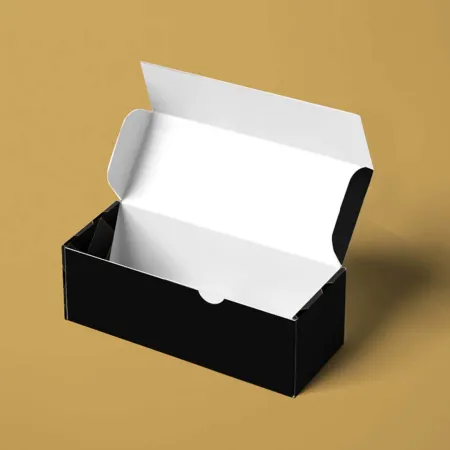
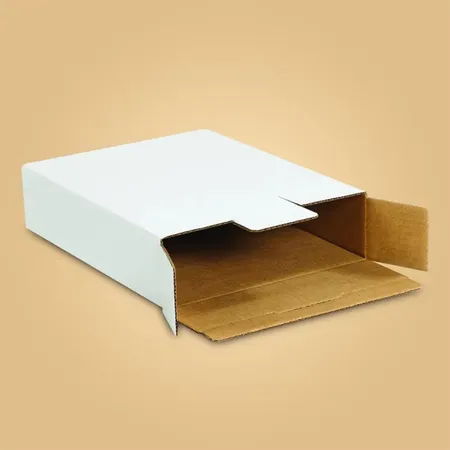
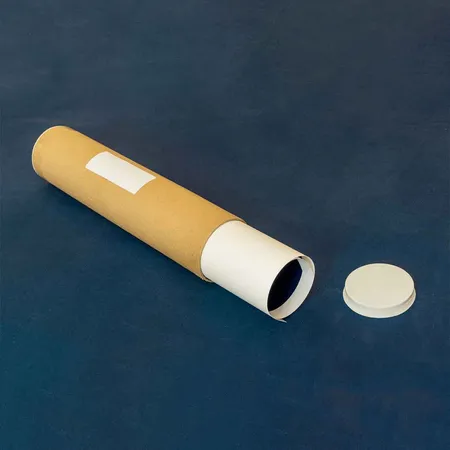
End loading makes sense when a product is much longer than it is tall. Dropping it into a top-opening box wastes space and leaves it rolling around.
Sliding it in from the end keeps it straight and snug. The box wraps tightly around the product along its full length.
Brands also pick this style when they pack the same item hundreds of times a day. Sliding is faster than lowering a product into a tray and folding a lid over it.
The shape also suits narrow gift sets, where several slim items line up end to end. One sliding motion places the whole set.
- Calendars, planners and slim notebooks
- Rolled or flat prints and posters
- Hair tools such as straighteners and brushes
- Packs of socks or a rolled tie
- Chocolate bars and long snack packs
- Tools, knives and kitchen utensils in sleeves
How it differs from a tuck front mailer
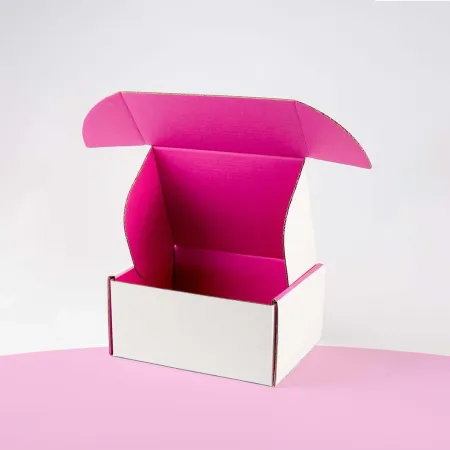
A roll end tuck front opens along the long side like a lid. The customer sees the whole product at once. That makes it the usual choice for gift-style unboxing.
An end open mailer reveals the product bit by bit as it slides out. The reveal is quieter, but packing and storage are often easier.
If you want the lid-style opening instead, see our roll end tuck front mailer boxes. The table below compares the two styles.
End open boxes also suit retail pegs or shelves when a product sells in stores as well as online. The end panel faces outward like a book spine.
| Feature | End open mailer | Roll end tuck front |
|---|---|---|
| Opening | Short end | Long front lid |
| Packing motion | Slide in | Drop in, fold lid |
| Best product shape | Long and slim | Square or shallow |
| Unboxing reveal | Gradual, slide-out | Full view on opening |
| Main print area | Two long panels | Lid top |
One open end or two
Most orders use one opening end. The other end is closed and glued at the factory, so the box is ready to fill as soon as you fold it.
Two open ends help when you push products through from either side or need to check contents at both ends. Some shops use it for long items that are easier to load with both hands.
Two-ended boxes take slightly longer to close. If speed matters most, stick with one open end and a quick closure.
Tell us how your packing table is laid out. If staff load from the right, we can set the open end and tuck direction to match.
Choosing the closure on the open end
A tuck flap is the simplest end closure. It folds in and holds by friction, and customers can close it again after opening.
A self seal strip adds a peel-and-seal adhesive across the flap. It stops the end from popping open in transit and shows if anyone has opened it.
A tear strip next to the end lets the customer open the box cleanly. Our self seal mailing boxes with peel strips show how the strips look finished.
Pick the closure based on what happens after delivery. Products that live in the box, like planners, suit a reusable tuck, while one-time shipments suit a sealed end.
Getting the artwork orientation right
End open boxes trip up a lot of first-time artwork. The long panels become the front and back, and text must read in the right direction when the box lies flat. Use these steps when you prepare files.
The most common error is upside-down text on the back panel. It happens when artwork is laid out on the flat dieline without picturing the fold.
- Decide how the box will sit: lying flat or standing on its end.
- Place the logo on the long panel that faces up in that position.
- Run text along the length of the panel, not across it.
- Put a small logo or product name on the opening end.
- Keep important elements clear of the end flaps and glue area.
- Check orientation on the folded mockup in your proof.
Using the end panel as a label
When end open boxes stand in a row, the end panel is all anyone sees. Shops that stack boxes on shelves treat that end like a spine.
Print the product name, size or color there. Customers who keep the box for storage, such as planners or tools, find it easier to pick out later.
Our guide on how to design a mailer box layout covers panel planning and safe zones in more depth.
Color coding the end panel works well for ranges with several variants. A different stripe per scent, size or color lets staff and customers sort boxes at a glance.
Board choice for long boxes
Long boxes flex more in the middle than short ones. A long paperboard box can bow if the product is heavy or the box is not well filled.
For heavier items or long journeys, E-flute corrugated keeps the box straight. It also protects the ends, which take knocks when parcels slide on conveyors.
Light, flat products such as calendars or socks travel well in 18–24 pt paperboard. It prints sharply and keeps the box slim for letterbox-friendly parcels.
Kraft paperboard is another option for light items with a natural look. White ink on kraft keeps logos readable on the long panels.
Slide-in trays for small parts
Some products come with small extras, such as brush heads, clips or a care card. A slide-in paperboard tray holds these in place and comes out in one movement.
The tray also stops the main product sliding toward the opening end in transit. Customers pull the tray and see everything laid out in order.
Ask for a pull tab on the tray end. It makes removal easy for customers without fingernails catching on the flaps.
Trays also make returns tidier. Customers slide everything back in order, so returned items come back complete.
Other side- and end-loading styles
End open mailers are one of several loading styles. If your product is wider than it is long, a side-loading box may work better.
Our side loading tab lock mailers open along the long side with locking tabs. They suit flat items like apparel and prints that need wider access.
Tuck top boxes are a third option for deeper products. They open from the top panel and suit items that need to stand upright.
Storing and stacking end open mailers
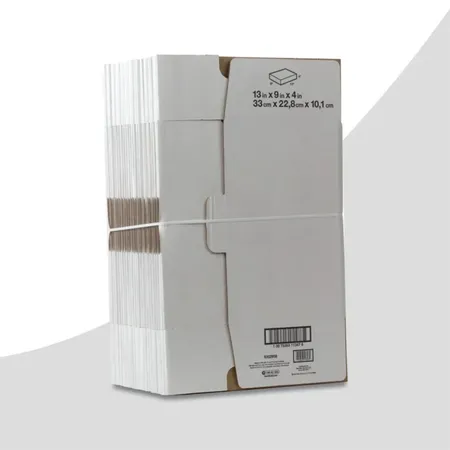
Flat end open mailers stack neatly because they are long and even. Keep bundles flat on a shelf so the long panels do not bow before folding.
Packed boxes stand well on their ends, which saves space at a busy packing station. Line them up spine-out, like books, ready for labeling.
If you are still choosing between loading styles, our full set of mailer box styles and closures shows each one folded and open.
Ordering and timelines
Send your product length, width and height, plus any extras that go in the box. We draw the dieline and send a free digital proof.
Change the proof as often as you need. After approval, end open mailers take 4–6 business days to produce. They reach you 2–3 business days later, shipped free in the US, UK, Canada and Australia.
Quotes for this style start from $0.30 per unit and change with length, board, quantity and finish. Request yours through our end open mailer quote form.
Measure the product with any wrap or sleeve on. Even a thin layer of tissue changes how easily a long item slides in.