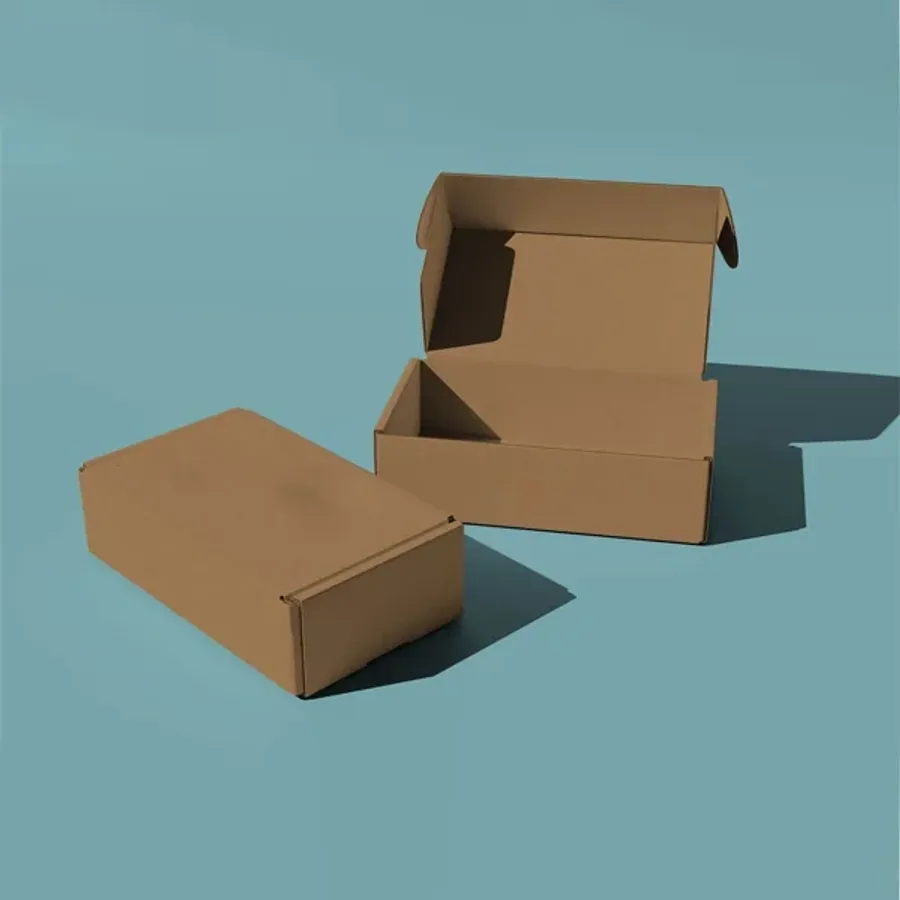
What makes a mailer corrugated
Corrugated board has a wavy inner layer, called the flute, glued between two flat liners. Those arches give the board its stiffness and cushioning.
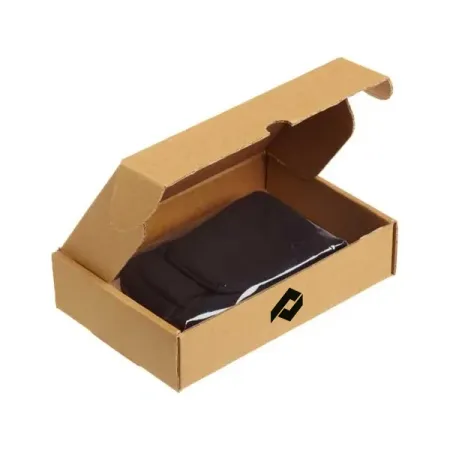
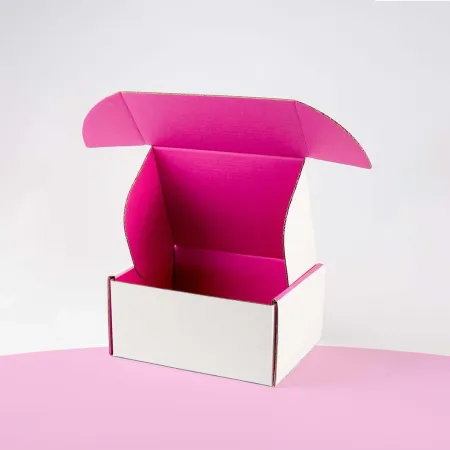
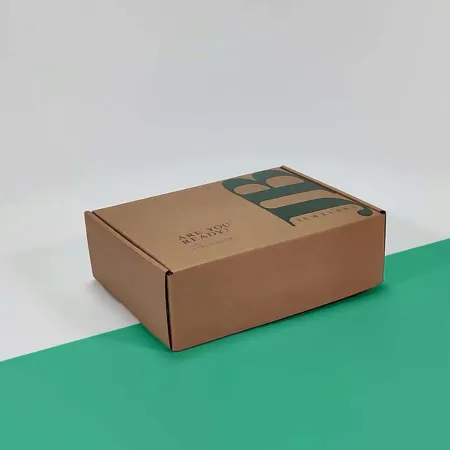
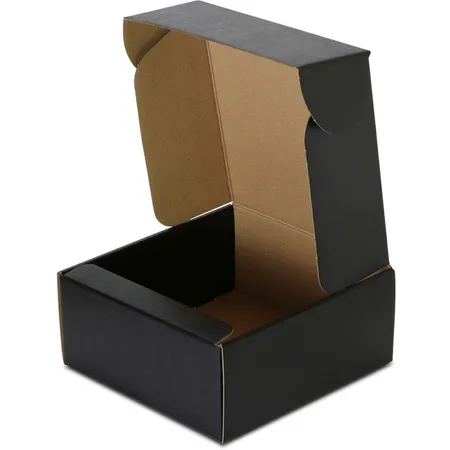
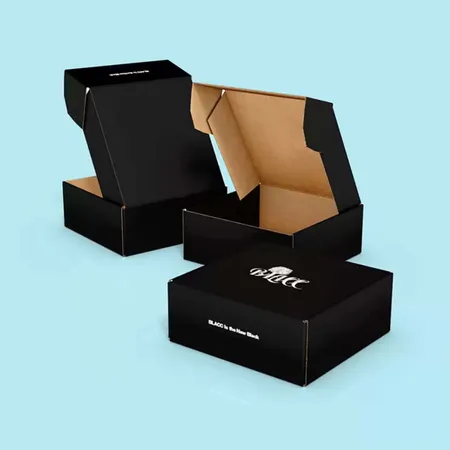
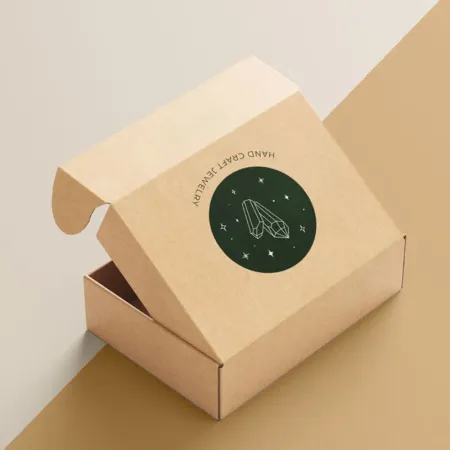
A corrugated mailer folds from one die-cut sheet into a box with a hinged lid. The front tucks into the base, and side dust flaps close the gaps that let dust and knocks in.
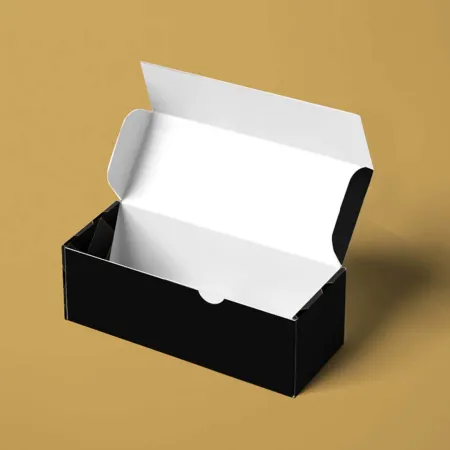
Paperboard mailers look similar but have no flute. They feel more like a retail carton and suit lighter goods. Picking between the two shapes what you can safely ship.
Corrugated mailers are also easy to reuse. Customers keep them for storage or send returns back in them, which keeps your logo in their home longer.
E-flute or B-flute for your mailer
This is the main decision on a corrugated mailer. Flute height sets wall thickness, strength and how sharp the print looks.
E-flute is thin and tight, so print sits flat and folds look crisp. B-flute is thicker and takes more weight, at the cost of a slightly softer print surface. Our board comparison guide for mailers covers paperboard as a third option.
If you are unsure, weigh a packed order. Light parcels nearly always suit E-flute, while dense or breakable contents point toward B-flute.
| Factor | E-flute (1.5 mm) | B-flute (3 mm) |
|---|---|---|
| Best for | Apparel, beauty, books, gifts | Heavier kits, glass, tools |
| Print sharpness | Very crisp, fine detail | Good, slightly softer |
| Crush resistance | Solid for light parcels | Higher for stacked loads |
| Fold look | Clean, tight corners | Rounder, chunkier edges |
| Flat storage | Takes less space | Thicker stack per bundle |
Who ships in corrugated mailers
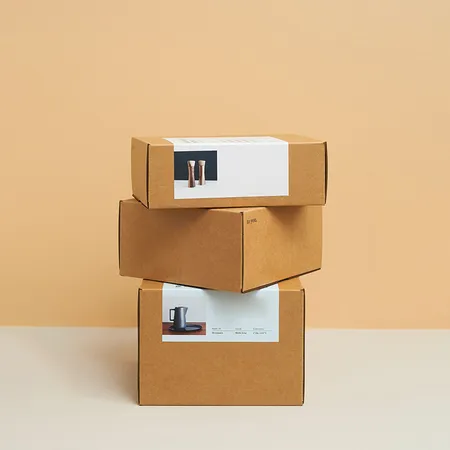
Online brands that want the box to be both shipper and presentation piece choose these. One printed box goes from the packing table to the customer without a second carton.
Apparel and accessory sellers use E-flute for folded clothing and small goods. Subscription brands use it for monthly kits where the box design is part of the product.
Sellers of candles, skincare sets, small tools and boxed tech accessories often move to B-flute. Those items weigh more and need firmer walls.
Makers who sell at markets and online often use one box for both. It works as a shipper for web orders and a carry box at a stall.
How the tuck-front design protects contents
The roll end tuck front has double-thick front and side walls. The board folds back on itself, so those panels resist bending far better than a single layer.
Dust flaps on each side of the lid tuck inside the walls. They block gaps where the lid meets the box and stop small items from sliding out.
The lid locks with two small ears. Under tape or a peel strip, the box stays shut through sorting while still opening cleanly by hand.
These features add strength without extra board on the base or lid. That keeps the box light, which matters when carriers price by weight and size.
- Double-wall front and sides from the rolled fold
- Dust flaps that close side gaps
- Locking ears that hold the lid in place
- Flat base that sits steady on a packing bench
- Optional tear strip for knife-free opening
Printing on corrugated board
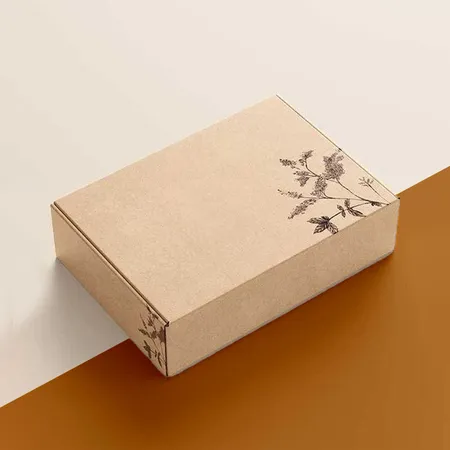
White liner gives the cleanest color and suits full photo artwork. Kraft liner gives a natural brown base that works with one or two ink colors.
Large solid floods can show faint lines from the flute below on thicker board. E-flute keeps these lines faint, which is one reason print-heavy brands favor it.
Fine lines and small type print best on white E-flute. On B-flute, keep text a little larger and avoid hairline rules.
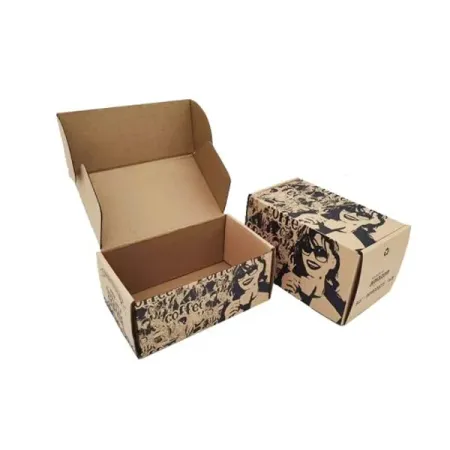
White ink on kraft lets a pale logo or pattern stand out on brown board. For a full comparison of inks and coatings, see our mailer print and finish options.
What to print on the inside panels
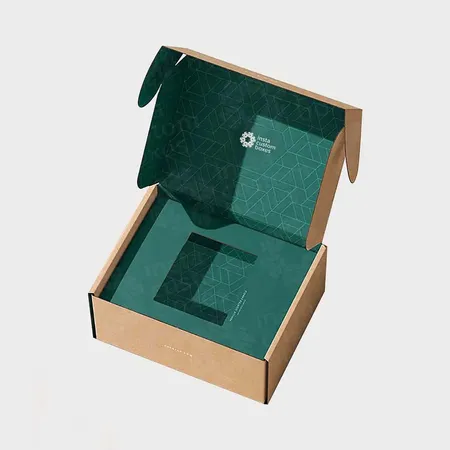
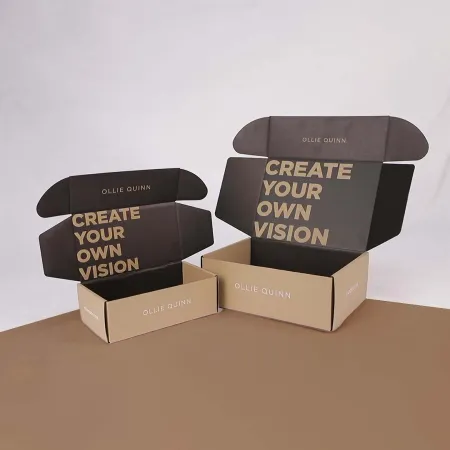
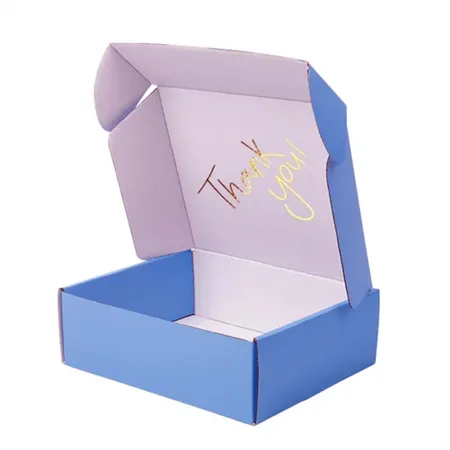
Corrugated mailers have generous inside panels. The inside lid is the first surface a customer sees once the box opens.
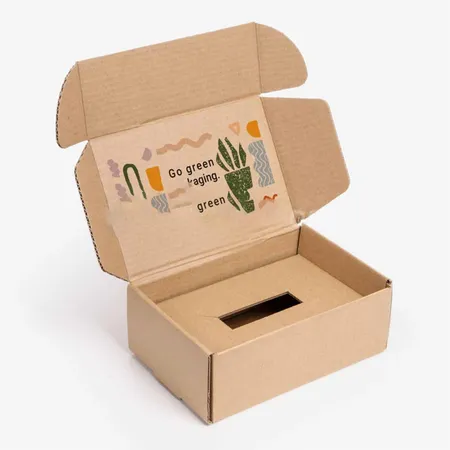
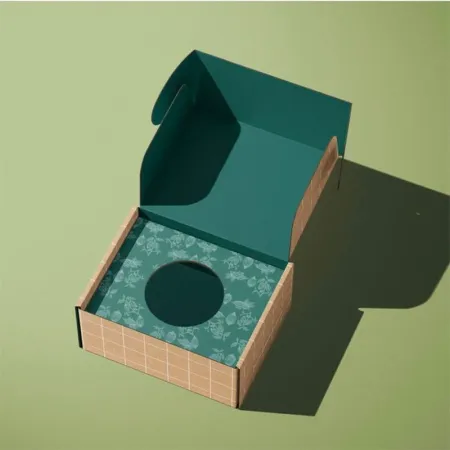
Brands print a thank-you line, care steps, a social handle or a full pattern there. Inside print on kraft with white ink gives a strong contrast for little cost.
Inside printing adds to the price, so keep it purposeful. A single line in the right spot often lands better than a full flood.
Inside print also helps with reuse. A box with a pleasant interior is more likely to stay on a shelf than go straight to recycling.
Inserts that keep goods in place
A strong box still fails if the contents slide around. Movement inside is the main cause of scuffed and broken goods.
Corrugated inserts hold heavier items in cut-outs or slots. Paperboard inserts suit lighter pieces and can be printed to match the box. Our page on mailer boxes fitted with custom inserts shows common layouts.
Send us the item sizes and how you want them to sit. We draw the insert on the same proof as the box.
Inserts also cut down on loose fill. That speeds up packing and gives the open box a tidy, planned look.
Ordering corrugated mailers, step by step
The process stays simple even on a first order. Starting with a rough idea? Try our online mailer design page to sketch your layout first.
Have one sample product ready to measure when you start. Accurate sizes on day one prevent a resize later in the proof stage.
- Measure your product and choose E-flute or B-flute.
- Send box size, quantity, liner color and your artwork.
- Receive a quote and a free digital proof on the real dieline.
- Ask for changes until every panel looks right, at no charge.
- Approve the proof, and production runs 4 to 6 business days.
- Boxes ship flat and arrive in 2 to 3 business days, free to the US, UK, Canada and Australia.
Corrugated mailer mistakes to avoid
These are the issues we catch most on corrugated proofs. Each is cheap to fix before printing begins.
Our proof notes point out any of these we spot. You decide whether to change the layout before production starts.
- Box sized to the outside of the product with no allowance for wall thickness
- B-flute chosen for light apparel, adding bulk and shipping weight
- Fine text placed on a fold or the tuck edge
- Heavy solid flood on B-flute where a pattern would hide flute lines
- No plain area for the shipping label on a fully printed lid
Cost, timing and reorders
Corrugated mailers start from $0.30 per box. Flute, size, print coverage, finish and quantity decide the figure on your quote.
E-flute in a plain kraft liner with one-color print is the leanest corrugated option. Full color on both sides with lamination sits at the other end.
Once approved, your dieline, board and colors stay on record. That makes reorders quick, and you can get a quote for corrugated mailers whenever stock runs low.