Sellers who outgrow padded envelopes
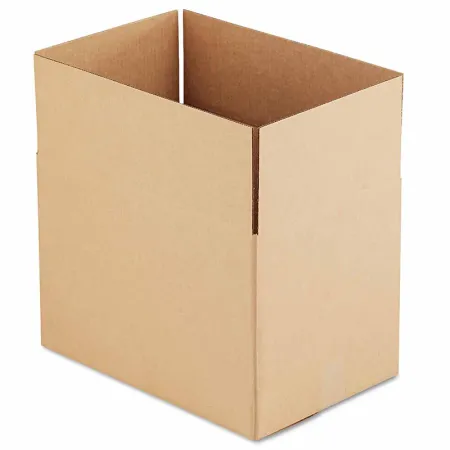
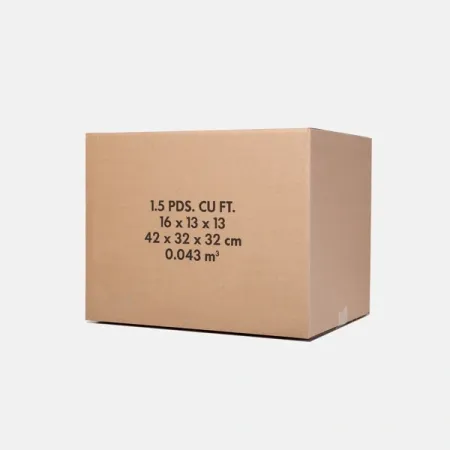
Most stores move to shipping boxes after a run of crushed parcels. Padded envelopes and thin mailers protect soft goods, but they fail with bottles, kits and anything with corners.
Home fragrance shops, supplement sellers, hobby kit brands and kitchenware stores are typical buyers. Their parcels weigh more and travel through more hands.
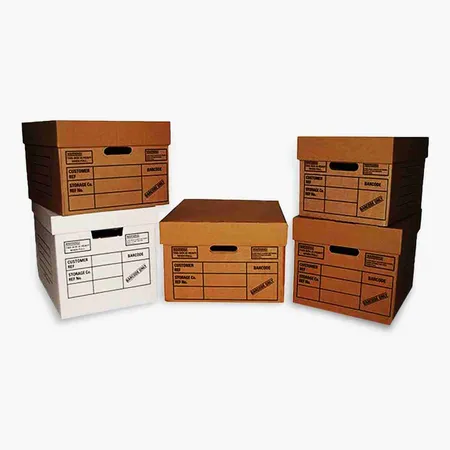
Fulfillment teams also prefer boxes because they stack. A pallet of square cartons loads into a truck faster than a cage of loose envelopes.
Stores that sell through marketplaces as well as their own site often need them too. Marketplace orders can travel further and change hands more often than local deliveries.
What happens to a parcel in transit
A parcel can be scanned, dropped down a chute, pushed along a belt and stacked several times before delivery. The bottom box in a cage carries the weight of everything above it.
That is why board strength matters more here than print. Corners and edges take the hits, so a carton with crisp, square folds holds its shape longer.
Moisture is the other risk. A parcel left on a wet porch softens, so the board needs enough body to keep the contents safe until someone brings it inside.
Temperature swings add stress as well. A carton that sits in a hot van and then a cold depot can flex at the seams, so tight folds and good glue lines count.
Choosing board by weight and value
We match board to what the box carries and how much a breakage would cost you. Use this as a guide, and we confirm the choice on your quote.
If you ship a mix, size the board to your heaviest common order. Using one stronger board across a size keeps stock simple and avoids mix-ups at packing.
High-value orders deserve the stronger board even when they are light. The extra cost per box is small compared with replacing a lost order.
| What you ship | Board | Inner support |
|---|---|---|
| Soft goods and apparel | E-flute (1.5 mm) | None needed |
| Boxed cosmetics and kits | E-flute (1.5 mm) | Corrugated pad on top |
| Glass bottles and jars | B-flute (3 mm) | Corrugated dividers |
| Kitchenware and tools | B-flute (3 mm) | Pads top and bottom |
| Multi-item bundles | B-flute (3 mm) | Divider or partition |
Setting up a fast packing station
A good shipping box speeds the packing line as well as protecting the order. This is the flow most of our fulfillment buyers settle on.
Time the flow with a sample carton before your first big sale. Small changes, like pre-folding inserts, often save more time than a faster tape gun.
- Fold a batch of cartons at the start of the shift.
- Place the bottom pad or divider in each one.
- Pick and drop items into their fixed positions.
- Add the packing slip on top of the contents.
- Close with the self seal strip or tape along the seam.
- Apply the shipping label to the plain label panel.
- Stack finished cartons by carrier for pickup.
Closures for sending and returning
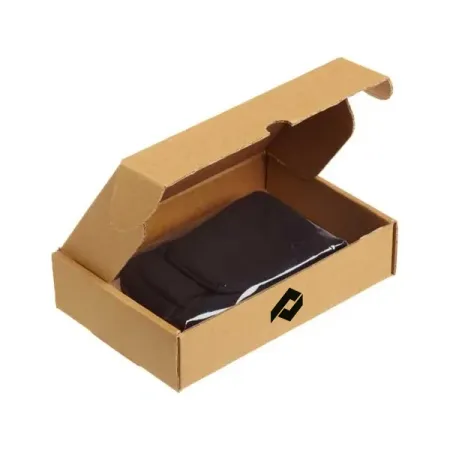
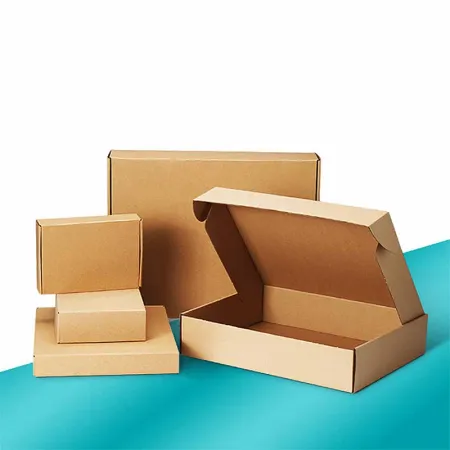
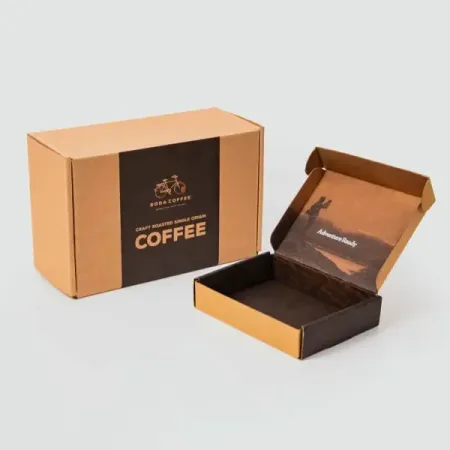
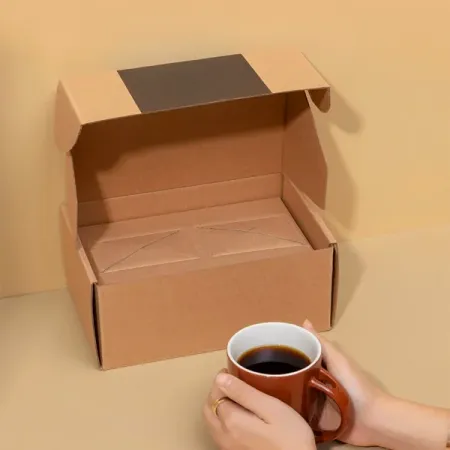
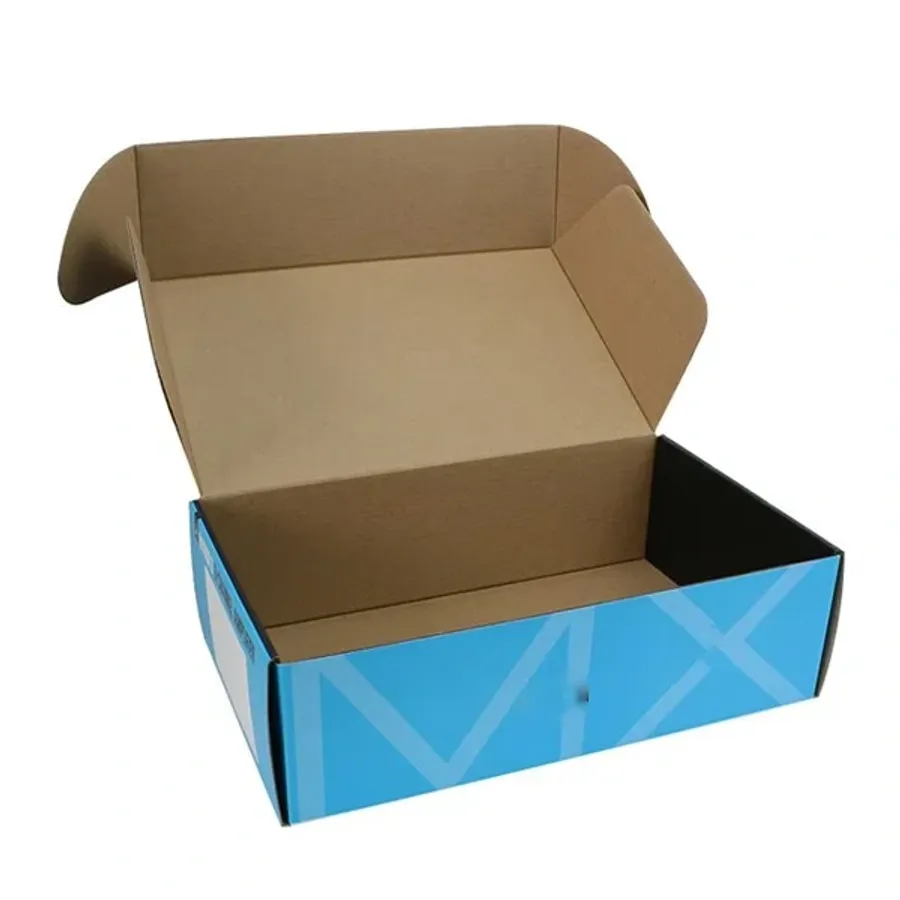
Tuck top cartons close with a locking flap and a strip of tape. They are simple and strong, and suit most heavier orders.
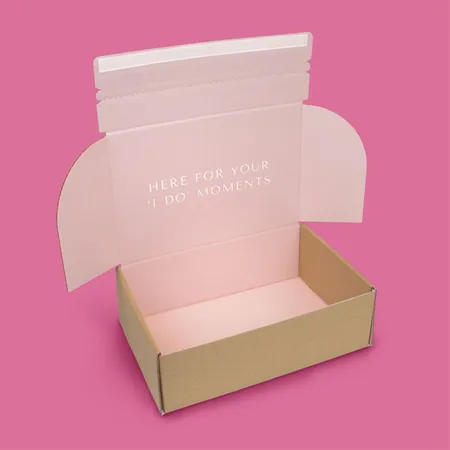
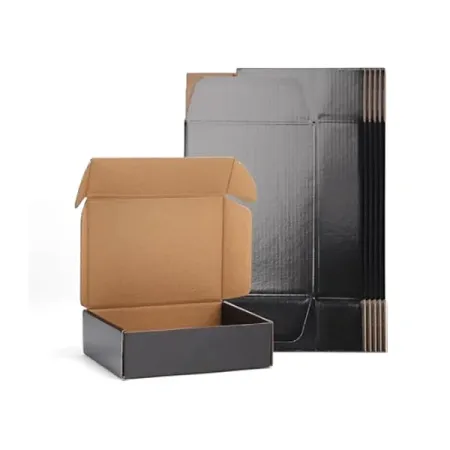
Self seal cartons use a peel-and-seal adhesive strip. A second strip lets the customer reseal the same box for a return. That saves them hunting for packaging and keeps your returns arriving in decent shape.
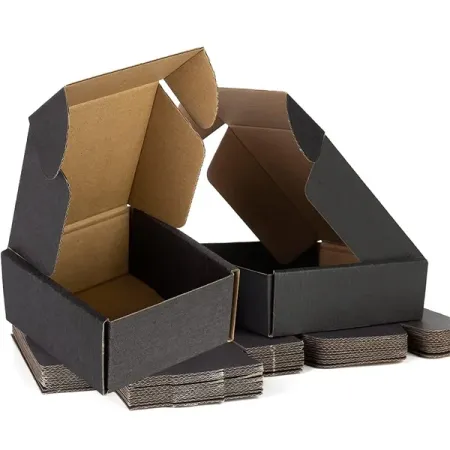
Pair it with a tear strip so the first opening does not ruin the box. Our peel and seal mailing boxes show how the two strips sit together.
For stores with few returns, a tuck top with tape is usually enough. Save the double-strip setup for categories like apparel and footwear where returns are routine.
What to print on a carton
A transit carton needs less decoration than a mailer, but a few things help every parcel. Plan these panels before you add any artwork.
Ask your carrier for their label size before we place the blank panel. A panel that fits the label exactly looks neater than one that leaves print showing around the edges.
- A flat, unprinted panel sized for your shipping labels
- Your logo on at least two sides for stacked visibility
- Handling arrows if the contents must stay upright
- A short opening guide near the tear strip
- Inside print for a thank-you or return note
Branding that survives scuffs
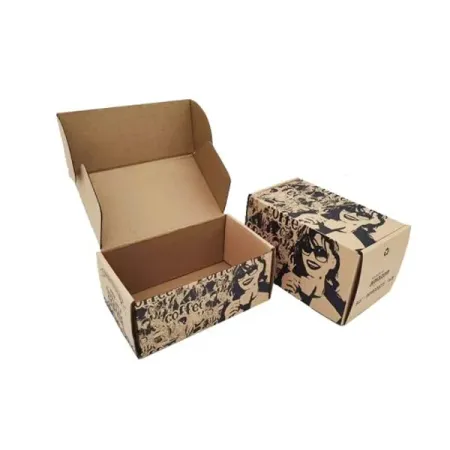
Large solid areas of ink show every scrape from a conveyor belt. A logo on natural kraft or white liner hides wear far better.
If you want color, consider printing inside. The outside stays clean and practical, while the customer still gets a branded moment on opening.
Our guide to printing and box finishes explains which coatings help resist rub marks on corrugated board.
White liner shows dirt sooner than kraft. If your cartons pass through busy depots, kraft with a dark one-color logo stays presentable longer.
Print your website on the side panels as well. Porch cameras and neighbors see the box long before the customer opens it.
Protecting fragile online orders
Breakages cost you a refund, a replacement and often a customer. For glass, ceramics or electronics, combine B-flute board with fitted dividers or pads.
Each item should sit still when you shake the closed box. If anything moves, add a pad or change the insert before you go live.
For lighter fragile goods that need a printed box, see our mailer boxes for fragile products. They balance protection with a nicer opening.
Track breakage claims for the first month on new cartons. If damage clusters around one product, we can adjust that insert on the next run.
Storing flat cartons in a warehouse
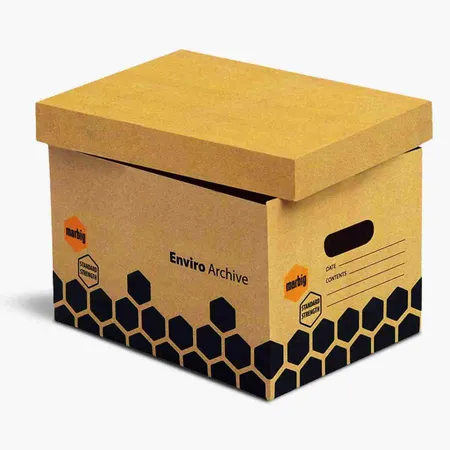
Cartons arrive flat and bundled. Keep the bundles off the floor on a pallet or shelf, away from roller doors and damp walls.
Rotate stock so older bundles get used first. Board stored for long periods in humid spaces can warp, which slows folding on the line.
Label each bundle with its size code. When staff can grab the right carton without measuring, packing errors drop.
Keep a running count of bundles per size. Restocking before you run low avoids the scramble of packing orders into the wrong box during a busy week.
Planning around a busy season? Our shipping policy for carton orders explains how deliveries to your warehouse are handled.
Proofs, lead times and getting started
We send a free digital proof with the dieline and label panel marked. Change it as many times as you need before approving.
Cartons are produced in 4–6 business days from approval and spend 2–3 business days in transit to your warehouse. Delivery to the US, UK, Canada and Australia is on us.
Ecommerce cartons start from $0.30 per unit, set by size, board, quantity and print. Start with the shipping box quote request and we reply with the exact price.