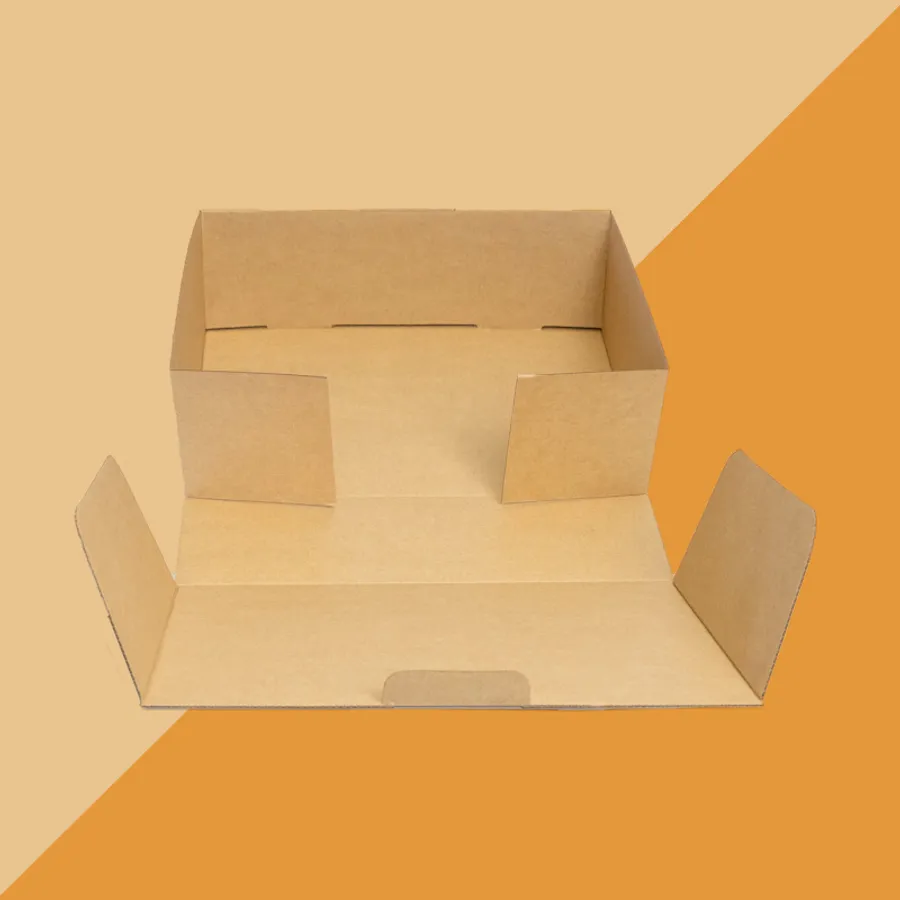
Paperboard or E-flute at this size
Paperboard at 18 to 24 pt suits very light items. It folds into crisp corners and prints with sharp detail.
E-flute corrugated at 1.5 mm adds crush strength. Pick it when the box travels without an outer bag or carries glass.
Kraft board gives a natural brown look. SBS board is bright white and shows color most accurately.
Want help weighing the two board types? Read our comparison of corrugated and paperboard mailer boards for a fuller picture.
| Item | Suggested board | Reason |
|---|---|---|
| Earrings on a card | 18 pt SBS | Very light, needs crisp print |
| Enamel pin bundle | 24 pt SBS or kraft | Some weight, flat profile |
| Mini candle in glass | E-flute corrugated | Glass needs crush protection |
| Rolled socks | 24 pt kraft | Soft goods, natural look |
| Skincare sample set | E-flute with insert | Several small bottles |
Designing artwork for small panels
A small lid has little room. One strong logo usually reads better than a crowded pattern with a tagline.
Keep text large enough to read at arm's length. Very fine type and thin lines can fill in on small panels.
Small panels also show print alignment more clearly. Patterns that run around the box should be simple, so small shifts are not noticed.
Spot UV or a foil logo stands out well on a small box. You can compare these options on our printing and finishes guide before deciding.
- Use one logo, centered, on the lid.
- Save fine detail for the inside of the lid.
- Pick high-contrast colors for any small text.
- Leave a plain panel for the shipping label.
Closures that suit a small box
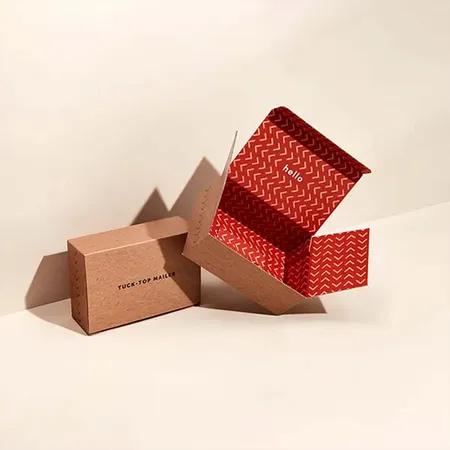
A tuck top is the simplest closure here. It opens from one end, and the item slides in and out easily.
An ear lock box folds fast and holds firm for flat products. If you prefer a lid that lifts, look at our tuck top mailer box style and the roll end options.
A peel-and-seal strip is worth adding for valuable items. It shows if the box was opened on the way.
Roll end tuck front is the sturdiest of the three. It has double walls on the front and back, which helps a small box keep its shape in a busy mailbag.
Using a small box as an add-on or gift wrap
A small mailer does not always travel alone. Many sellers drop one inside a larger parcel as a free gift or a sample.
Others sell it as a gift box option at checkout. The buyer gets the item already boxed and ready to hand over.
In both cases the outside matters more than usual. Keep the lid clean of labels and let the print do the work.
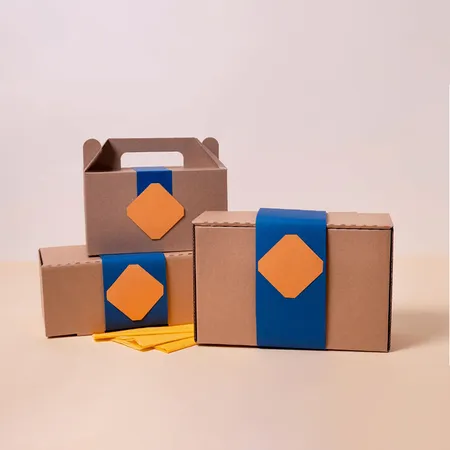
A matching sticker or ribbon can finish it off. Pick one that suits the box color so the set looks planned.
Keeping a single item centered
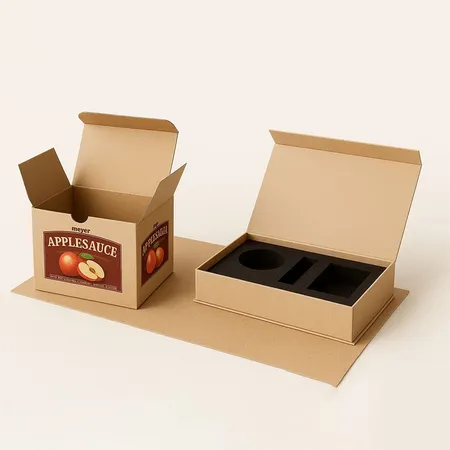
Even a well-sized box can let a ring or pin shift. A paperboard insert with a slot or cradle keeps it in the middle of the lid view.
Inserts are printed or plain and fold from the same board. Our mailer boxes with custom inserts page shows the common shapes.
Tissue or a small pouch works as well. Keep it thin so the lid still closes flat.
For sets of two or three items, a divided insert keeps each piece in its own space. Nothing rubs against anything else on the way.
Packing small orders step by step
A fixed routine keeps small orders consistent, which matters when several items look alike.
- Fold the box and check the lid closes without the product inside.
- Place the insert or tissue in the base.
- Add the product and any card or sticker.
- Close the lid and seal the strip if your box has one.
- Apply the label to the plain panel and send it out.
Mailing small boxes alone or in a bag
A corrugated small mailer can usually travel on its own with a label on the base. Paperboard boxes are lighter and often go inside a padded or poly mailer.
Ask your carrier about size rules for small parcels. Very small boxes can fall below the smallest parcel size a carrier accepts.
Some sellers send the printed box inside a plain outer bag. The customer still gets the branded box when they open it.
A small box inside a bag also works well for gifts. The buyer can hand the box over without any shipping label on it.
Mistakes with small box orders
The most common problem is sizing from the product listing instead of the real item. A listing rarely includes clasps, tags or backing cards.
Another is putting too much text on the lid. Small panels look cleaner with less.
Unsure what to do with a mistake you spot after delivery? Our return policy for misprinted boxes explains what we fix and how to report it.
- Forgetting the backing card when measuring jewelry.
- Choosing paperboard for glass items that ship unbagged.
- Placing fine text over a fold line.
- Leaving no space for a label on the outside.
Proof, production and delivery
Your free digital proof shows the small box flat and folded at true scale. Ask for changes until it looks right, with no limit on revisions.
Once you sign off, your small boxes go to press and are ready in 4 to 6 business days. They reach you 2 to 3 business days later, and we pay the freight to the US, UK, Canada and Australia.
Prices start from $0.30 per unit and the quote confirms your exact figure. You can sketch your idea first with our online box design page and send it with your request.