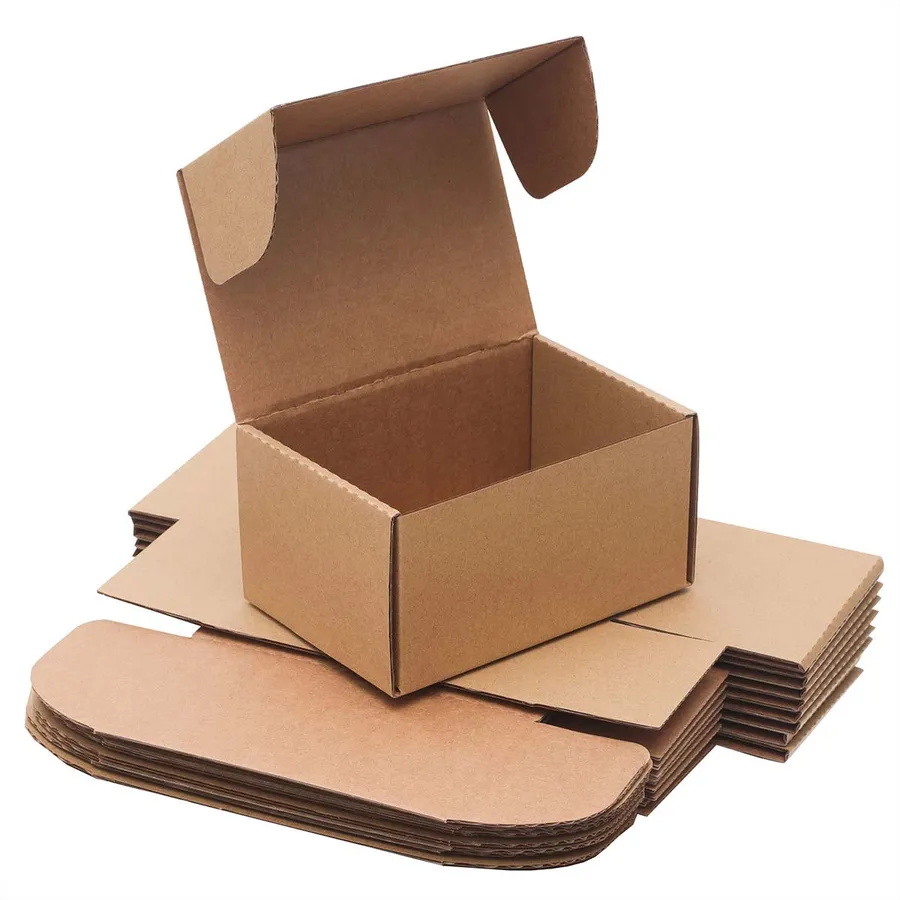
Why a small product needs a small box
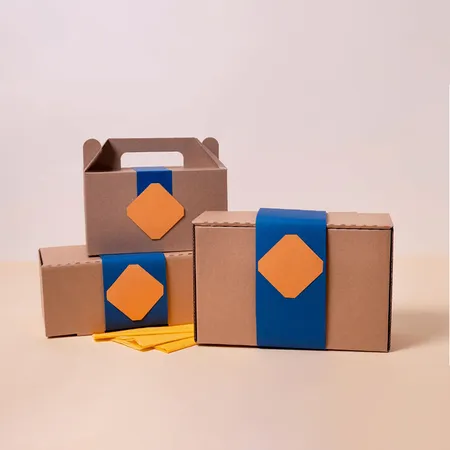
A pair of earrings in a shoebox-sized mailer looks like an afterthought. It also slides from wall to wall on every bump of the trip.
A small mailer cut to the product fixes both problems. The item sits where you placed it, and the box feels made for it.
Smaller boxes also use less board and less void fill. Your packing table stays tidy and parcels weigh less.
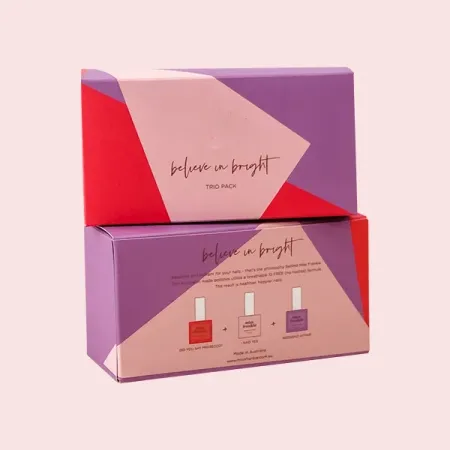
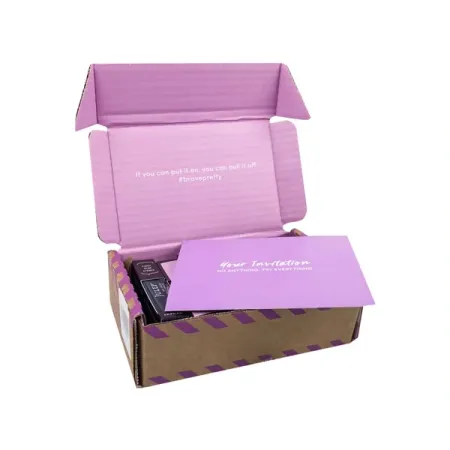
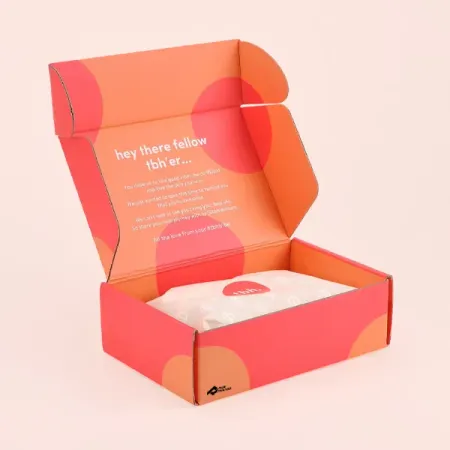
For many sellers, the bigger win is presentation. A compact box that opens to show one product feels like a gift rather than a shipment.
Small boxes also stack neatly on a shelf beside your packing station. A few hundred flat blanks take up less room than you might expect.
Products that ship well in small mailers
These are the items we see most on small box orders. If yours is not here, send its measurements and we will suggest a fit.
Most of them share one trait. They are light, valuable to the buyer and easy to lose inside oversized packaging.
Gift-ready items like these often get reshipped or handed over as presents. A box that looks good closed saves your customer from rewrapping it.
- Rings, earrings, pendants and bracelets
- Lip balm, mini serums and skincare samples
- Tea, coffee and spice sample packs
- Enamel pins, patches and keyrings
- Small candles and wax melts
- Phone accessories, cables and chargers
Choosing board for light items
Paperboard in 18–24 pt SBS or kraft is the usual pick for small mailers. It folds into crisp corners at small sizes and prints fine detail well.
Step up to 1.5 mm E-flute corrugated when a tiny product needs more crush resistance. That board suits small products made of glass, such as candle jars, or items that ship in mixed carrier sacks.
B-flute is rarely needed at this size. Its 3 mm thickness eats into the inside space of a box that is already tight.
Our boxboard mailer boxes page goes deeper on paperboard options for light products.
| Product | Suggested board | Why |
|---|---|---|
| Jewelry in a pouch | 18–24 pt SBS | Light item, sharp print |
| Skincare minis | 18–24 pt SBS or kraft | Low weight, clean finish |
| Small glass candle | E-flute corrugated | Better crush strength |
| Cables and chargers | Kraft paperboard | Simple, sturdy and light |
| Sample kits with several pieces | E-flute with insert | Holds each piece apart |
Planning a small box step by step
Small boxes leave little room for error. A few millimeters make a real difference to how the product sits.
Follow this order so the details fall into place before the proof arrives.
Have the actual product on the desk while you work. Photos and spec sheets often leave out the clasp, cap or pouch that changes the fit.
- Measure the product in any pouch or wrap it ships in.
- Decide whether it needs an insert to hold it in place.
- Pick the board, remembering that thicker board reduces inner space.
- List what else goes in, such as a card, sticker or sample.
- Send the sizes and your artwork for a free proof.
Inserts that stop tiny items moving
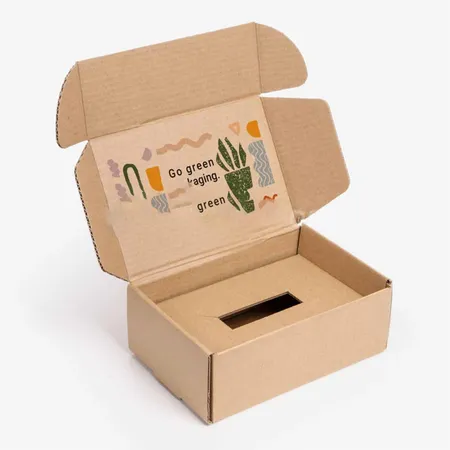
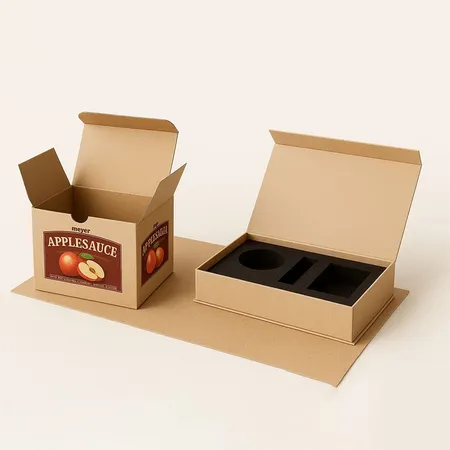
A ring or a lip balm can still shift in a box that measures right. An insert with a cut-out locks the item in one spot.
Paperboard inserts are thin and light, which keeps the box compact. Corrugated inserts add cushioning for glass and ceramics.
Inserts also help with multi-item kits. Each piece gets its own slot, so a sample set arrives in the order you packed it.
An insert can be printed as well. A short note or product name beside each slot helps customers find their way around a sample kit.
See our mailer boxes with custom inserts for the insert shapes we cut most often.
Designing artwork for small panels
A lid that measures a few inches across cannot hold everything a large box can. Pick one message and give it space.
A single logo, centered and sized well, reads better than a logo, tagline, website and social handles squeezed together.
Fine text needs care at this scale. Very thin fonts and small type can lose sharpness, especially on kraft board.
Our walkthrough on designing a mailer box covers layout and font choices that hold up on small panels.
Finishes that suit compact boxes
Small boxes are held close to the eye, so finishes get noticed. A foil logo or a patch of spot UV catches light every time the box turns in the hand.
Jewelry and skincare brands often choose soft-touch lamination for its suede-like hand feel. Matte lamination looks calm and hides fingerprints.
Embossing works on small lids too. Keep the raised area simple, since fine detail can soften at small sizes.
Pick one standout finish rather than three. On a small lid, foil plus spot UV plus embossing can crowd each other.
Compare the options in our guide to mailer box printing and finishes.
Packing and postage with small mailers
Small parcels move through carrier networks in sacks with many other items. A box that keeps its shape under that pressure protects what is inside.
Lighter, smaller parcels can also cost less to post with many carriers. Check your own carrier's size bands when you decide final dimensions.
Some sellers place the small mailer inside a padded envelope for the trip. Others send the printed box bare, labeled directly on its underside.
A peel-and-seal strip speeds up packing when you send many small orders a day.
Write the parcel label size into your plan as well. On a very small box, a standard label can cover most of the top panel. Many sellers print the logo on the lid and put the label on the base.
Common mistakes on small box orders
Errors at small sizes are easy to make and easy to avoid. Check these before approving your proof.
If more than one applies, fix the sizing first. Artwork changes are quick once the dieline is right.
- Measuring the bare product instead of the product in its pouch
- Packing too much text onto a tiny lid
- Choosing thick board that shrinks the inside space
- Skipping an insert for loose, rolling items
- Forgetting room for a thank-you card
Getting your small mailers made
Send your product sizes and artwork, and we return a free digital proof with your dieline and print layout. Unlimited revisions are included.
After approval, your small mailers take 4–6 business days to produce. Delivery then takes 2–3 business days, free to the US, UK, Canada and Australia.
Questions about a tricky fit? Contact our packaging team by phone, WhatsApp or email at info@shopmailerboxes.com.