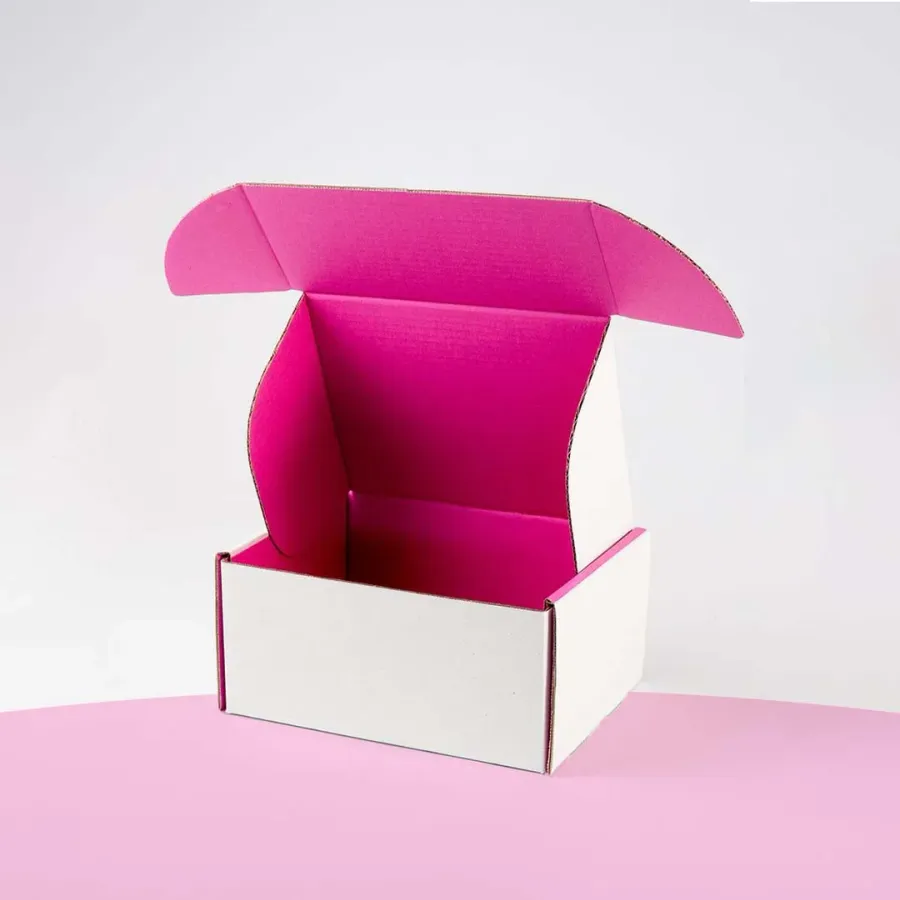
Anatomy of a roll end tuck front
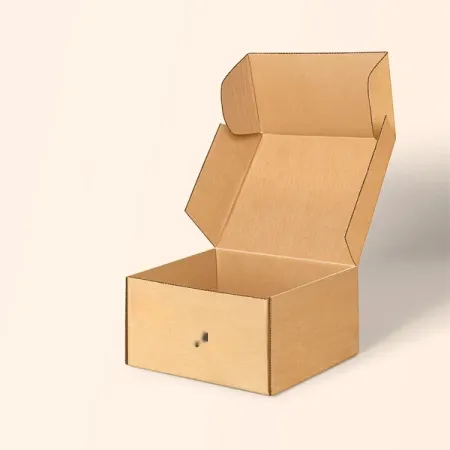
Lay a roll end mailer flat and you see one die cut sheet. The base sits in the middle, with the side walls, front wall, back wall and lid around it.
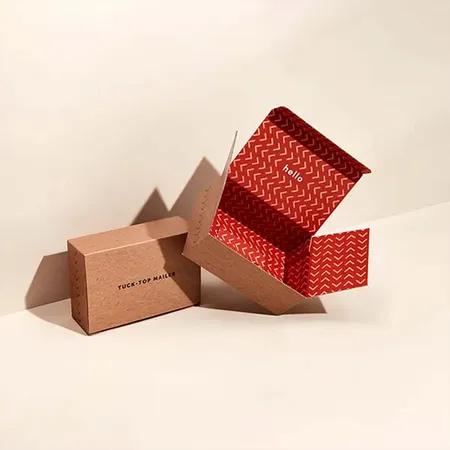
The side walls are the clever part. Each one folds up and then rolls over on itself, so the wall is two layers thick with a rounded top edge.
Small locking tabs at the end of each rolled wall push into slots in the base. That holds the box square without glue.
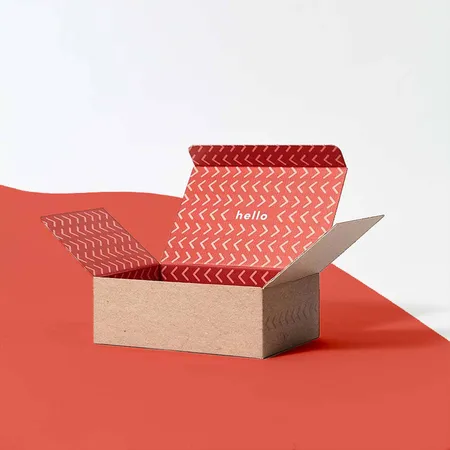
Dust flaps on the lid fold in over the side walls. The front tuck then slides down inside the front wall and locks the box shut.
Why the rolled walls matter
A double wall on each side gives the box much of its strength. The sides resist crushing better than a single layer of the same board.
The rolled edge also looks finished. There are no raw cut edges showing along the top of the walls when the lid opens.
The double wall also gives the lid a firm ledge to rest on. That is why a roll end mailer closes with a solid, square feel.
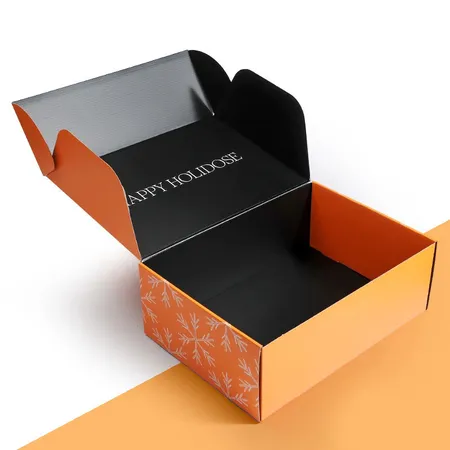
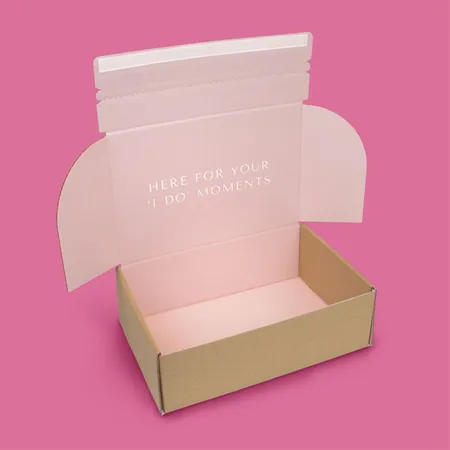
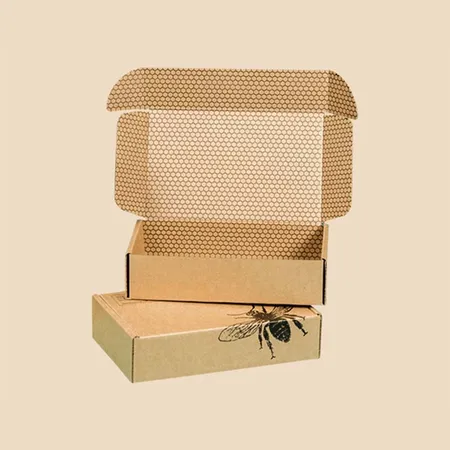
Because the walls fold in, the print on the inside panel shows on the top rim. Plan your inside artwork with that in mind.
A box with crisp, double walls also survives being reopened. Customers who keep the box for storage get a container that holds its shape.
If planning rim artwork feels tricky, our free box design help covers it. A designer can place the art across every panel for you.
Who this style suits
The roll end tuck front is the default for many brands, because it ships well and opens like a gift. It handles a wide range of products without special parts.
Subscription services pick it because it stacks and stores flat. Clothing brands pick it because a folded shirt or pair of leggings fits its shallow shape.
If your product line changes often, this style is a safe base. One shape in two or three sizes can cover most of a catalog.
Brands that pack apparel often pair this shape with tissue and a sticker seal, which fits neatly under the dust flaps.
- Monthly subscription boxes
- Apparel and folded textiles
- Beauty and skincare sets
- Books, notebooks and stationery kits
- Small electronics with their own retail pack
- Candles and home goods with inserts
Roll end tuck front compared with other styles
Several mailer styles look similar from the outside. The differences show up in strength, packing speed and how the box opens.
This comparison helps if you are deciding between the main fold-lock options. Our full range of mailer box styles covers each in more depth.
| Style | Side walls | How it closes | Good for |
|---|---|---|---|
| Roll end tuck front | Double, rolled over | Front tuck locks inside | Most mailed products, gifts |
| Tuck top | Single | Lid tucks into the back or front | Lighter items, retail display |
| Ear lock | Double | Side ears lock into the lid | Heavier items, extra hold |
| Side loading tab lock | Single | End flap tabs into a slot | Flat or long products |
Folding the box at your packing bench
Your boxes arrive flat, so they need folding before packing. After a few boxes, most packers can fold one in well under a minute.
Follow the same order each time. It keeps the corners square and the lid lined up.
If you pack in volume, fold a batch before you start filling. A stack of open boxes on the bench keeps the line moving.
- Lay the flat box print side down with the lid away from you.
- Fold the front wall up along its crease.
- Fold each side wall up, then roll it over toward the inside.
- Push the locking tabs at the end of each wall into the base slots.
- Place your product and any insert or tissue in the box.
- Fold the dust flaps in over the side walls.
- Close the lid and slide the front tuck down inside the front wall.
Choosing board for a roll end mailer
E-flute at 1.5 mm is the most common board for this style. It rolls neatly over the side walls and prints well.
B-flute at 3 mm suits heavier products. It is stiffer, so the rolled walls are thicker and the box takes more force to fold.
Paperboard at 18 to 24 pt works for small, light items. It gives a slim retail look but less crush protection in the mail.
If you are unsure, read corrugated or paperboard for your mailer before you choose.
Printing across folds and flaps
A roll end mailer has many visible panels. The lid top, front tuck, inside lid, inside walls and the rolled rim can all carry print.
Keep logos and text clear of fold lines. A word that runs over a crease will split or crack when the box is folded.
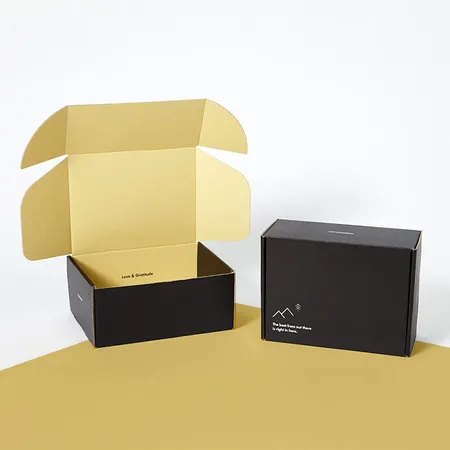
The inside lid is the panel customers see longest. It is a good spot for a message, a pattern or simple care steps.
Solid color across the rolled edge can show a thin pale line at the fold. A pattern or lighter shade hides it better.
The step-by-step mailer design guide explains safe zones and bleed for each panel.
Add-ons that change how it opens
The basic box closes by its tuck alone. That is enough for many products, especially if a label goes over the front edge.
A tear strip across the front lets customers open the box cleanly once it is taped or sealed. A peel-and-seal strip lets your packers close it without tape.
You can combine both on one box. Packers seal it fast, and customers tear it open along a neat line. See the self seal mailing box options for more.
Fold and print errors to avoid
Roll end mailers are forgiving, but a few mistakes come up often. Check for these on your proof.
Our team checks each of these before your file goes to press. If we spot one, we flag it on the proof with a note.
- Text placed across the rolled wall crease
- Inside art that ignores the rolled rim
- B-flute chosen for a very small box, which folds poorly
- Product height that leaves no room for the dust flaps
- No space planned for a shipping label on the lid
Quote and proof for roll end mailers
Tell us your inside size, board choice and any add-ons in your roll end mailer quote request. Roll end tuck front pricing starts from $0.30 per unit and depends on size, material, quantity and finish.
Your proof shows the full dieline with every panel labeled. You can move artwork between panels and ask for changes until it reads right folded.
Changes to the proof cost nothing, however many rounds it takes. Nothing is cut until you are happy with every panel.
Production, transit and storage
After you approve the dieline proof, your roll end mailers take 4 to 6 business days to print, cut and crease. They then travel 2 to 3 business days to reach you.
We pay the freight on orders to the US, UK, Canada and Australia. The boxes arrive flat, so a full run fits on a few shelves.
Keep cartons away from damp floors and heaters. Corrugated board takes on moisture, and damp boxes fold badly and lose crush strength.
Store them flat and dry, with the print side protected. Folding them only on packing day keeps the creases crisp and the rolled walls tight.