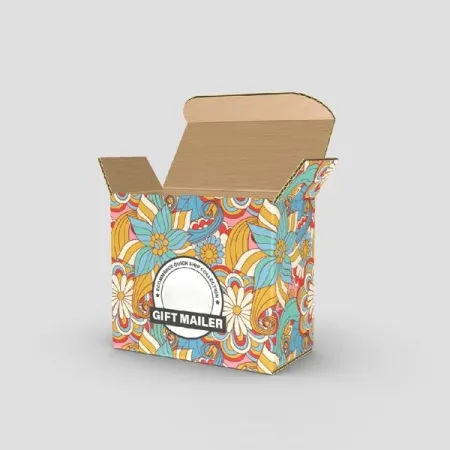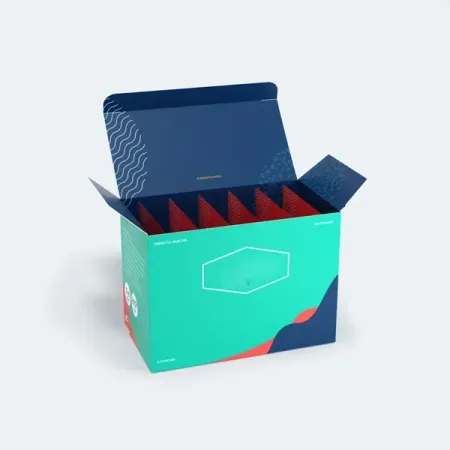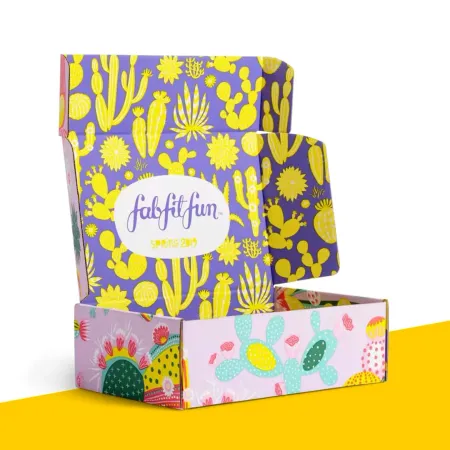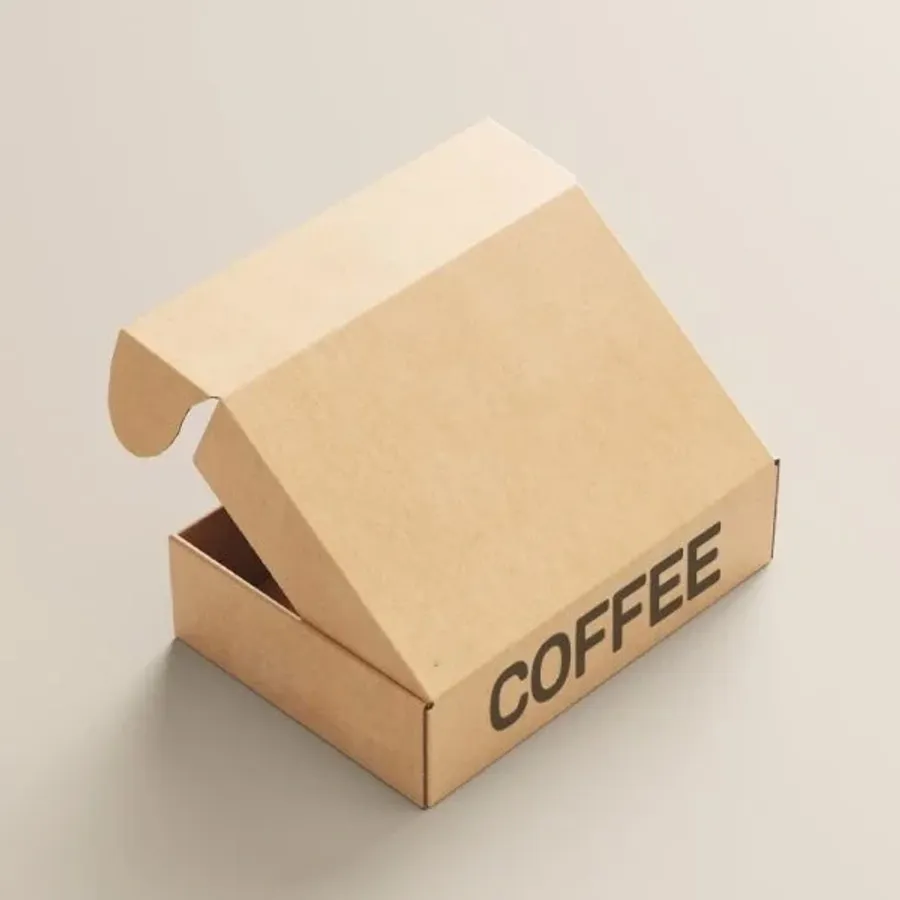
Roasters, cafes and coffee clubs that use them
Small-batch roasters are the main buyers. They sell bags online and want the parcel to feel as considered as the coffee.
Cafes with a web shop order them for retail bags and gift bundles. Coffee subscription clubs use them for monthly drops of one, two or three origins.
Brands selling brew gear also pick them. A grinder, a dripper and a bag of beans fit neatly in one printed tuck-front box with a divider.
Wholesale roasters sometimes order a small run too. They use it for sample boxes sent to cafes and grocers they hope to supply.
Board choice for bags, gear and pods
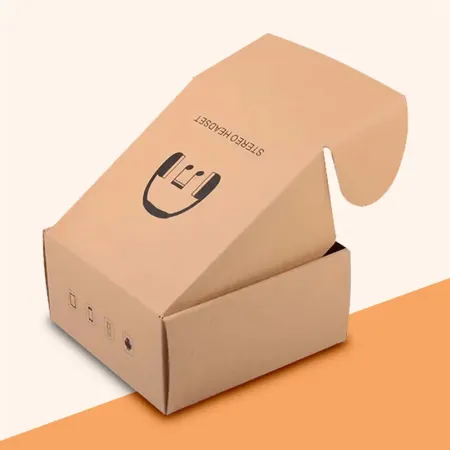
Bags of beans are light and forgiving. An E-flute corrugated mailer at 1.5 mm handles postal sorting with room to spare.
Paperboard at 18 to 24 pt works for single bags of ground coffee or drip bags. It feels more like a retail carton and costs less to ship.
When the box also carries a ceramic mug, step up the protection. Our page on boxes built for shipping mugs covers inserts for breakable drinkware.
Brew kits with a glass carafe need B-flute at 3 mm and a fitted insert. That extra wall thickness is worth it for anything that can shatter.
Printing that matches coffee branding
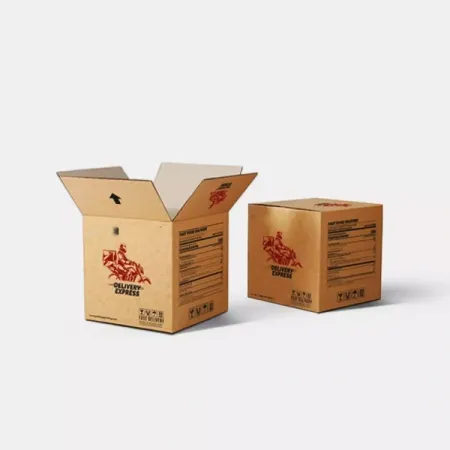
Many roasters lean toward kraft board. Its brown liner suits an origin-focused, craft look and needs only one or two ink colors.
White ink on kraft lets you print a light logo or map without a full color flood. White board is better if your bags use bright illustration and you want the box to match.
Ask yourself where the box will be seen most. If customers post it online, the lid matters most. If it sits in a cupboard, the side panels carry more weight.
These are the print features roasters ask about most often.
- Origin map or farm illustration across the lid
- Clear panel on one side for a roast-date or batch sticker
- Inside lid brew guide with ratio and grind notes
- Tasting notes card slot inside the box
- Small foil mark for limited or holiday roasts
One printed box, many different roasts
Most roasters rotate coffees every few weeks. Printing a new box for each origin makes no sense at small volumes.
The usual answer is one branded box for every roast, with a printed sticker or card for the coffee inside. We keep a clear zone on the lid or side for that label.
If you sell a fixed core range, you can print each of those separately. Seasonal or one-off lots then use the general box with a sticker.
Pantone matching keeps a signature color steady across the general box and any range-specific boxes. That helps when two designs sit side by side on a shelf.
Coffee subscriptions and repeat drops
A monthly coffee club ships the same box many times to the same person. The opening needs to stay pleasant on the tenth delivery as well as the first.
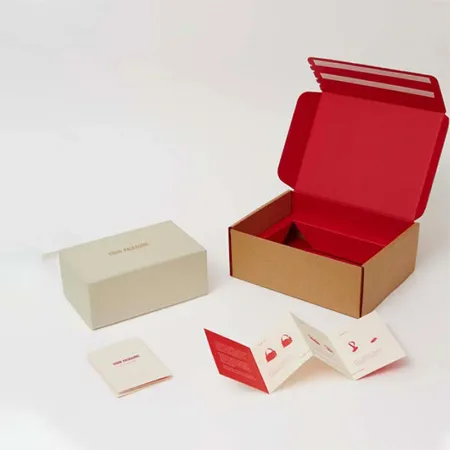
A self seal strip speeds up packing on drop day when hundreds of boxes go out at once. Inside print can hold a short note that never goes out of date.
Think about how the box is opened at home. A roll end tuck front lifts like a lid. Bags slide out easily, and the box is easy to reuse.
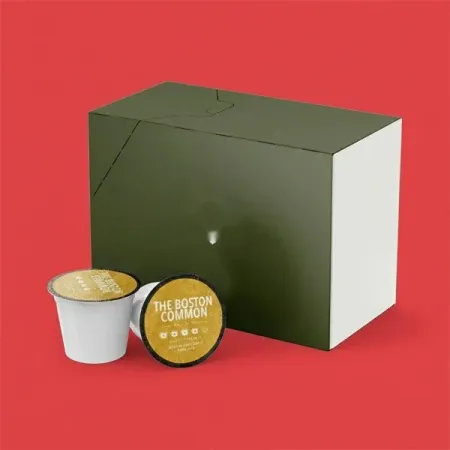
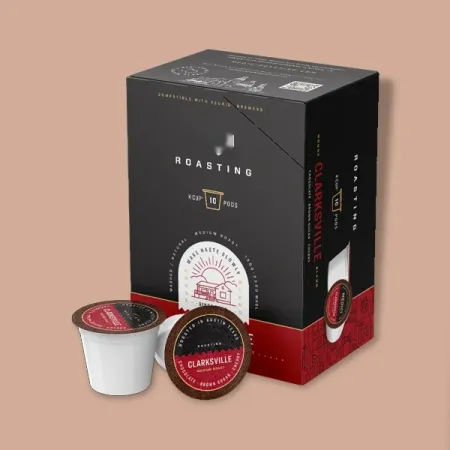
If you also send pods, our K-Cup subscription box options handle rows of capsules better than a bag mailer.
Keeping freshness and aroma in mind
The bag protects the coffee. The box protects the bag, so it should not crush the valve or crease the seal.
Avoid packing loose beans or unsealed samples directly into the mailer. Coffee oils mark paperboard, and the aroma lingers in the board.
Store your flat boxes away from the roaster. Heat and moisture near the drum can warp board before it is folded.
If you add a printed tasting card, keep it in a paper sleeve or slot. Cards pressed against a bag pick up coffee smell too.
From roast profile to printed proof
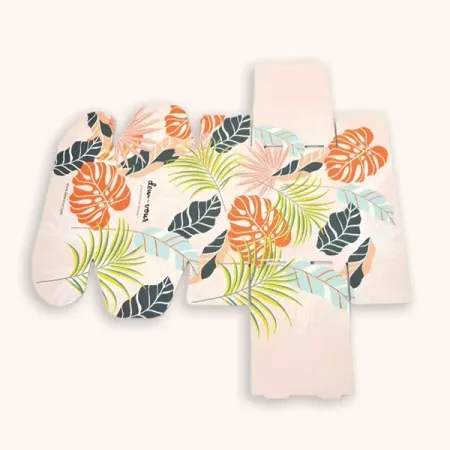
You do not need finished artwork to start. Our designers can place your logo and roast story on the dieline at no charge.
The steps are the same for a first order or a club refresh. You can sketch ideas first on our online box design page before sending files.
- Send the bag size, how many bags per box, and your quantity.
- Share your logo, colors and any origin art you already use.
- We return a quote and confirm board and print method.
- Check the free digital proof, then ask for edits until the layout feels right.
- Production runs 4 to 6 business days after your approval.
- Flat boxes reach you in 2 to 3 business days, with free delivery to the US, UK, Canada and Australia.
Coffee box mistakes worth avoiding
These come up on coffee proofs often. Each one costs little to fix before printing and a lot after.
Our team flags these on the proof, but catching them early saves you a revision round.
- Box measured from an empty bag, so a filled bag does not fit
- Roast date printed on the box, which locks it to one batch
- No space left for the shipping label on a fully printed lid
- Brew guide printed so small it cannot be read at the counter
- Mug and bag packed loose together without a divider
Finishes for gift sets and holiday roasts
Everyday coffee boxes rarely need a heavy finish. Aqueous coating keeps kraft from scuffing and keeps cost down.
Gift sets are different. Soft-touch lamination, a foil logo or an embossed origin name make a holiday bundle feel worth giving. Our guide to print finishes compares each option.
Embossing works well on kraft, because the raised shape catches light without any ink. Foil is better on dark printed board, where metallic contrast stands out.
Pricing and reorders for a growing roastery
Coffee mailers begin at $0.30 a unit. Bag count, board, print coverage and quantity set the final number on your quote.
Larger, regular runs usually bring the unit cost down. Planning two or three months of boxes at once often makes more sense than ordering every few weeks.
As your club grows, reorders print from the approved proof on file. The brown, the logo and the brew guide stay the same. You can request a coffee mailer quote with your current bag size and monthly volume.