Which bakers ship cakes in the mail
Most orders come from home bakers and small bakeries that have started selling online. A local customer base is no longer enough, so they post cakes to other states and cities.
Others send gifts. A customer orders a birthday loaf or a cake jar set for a relative far away, and the bakery handles the shipping.
Corporate gifting is the third group. Offices send dense cakes to clients over the holidays, often in batches of identical parcels addressed to many people.
Each group needs something slightly different. Online sellers want repeat sizes, gift senders want a nice reveal, and offices want identical parcels that pack fast.
Cakes that survive a few days in transit
Plan for your cake to spend two or three days in vans and depots. That rules out some cakes and suits others very well.
Dense, low cakes with a firm crumb travel best. Tall cakes with soft frosting, fresh cream or loose decorations rarely arrive the way they left.
If you are unsure, post one cake to a friend before you list it for sale. Ask them to photograph it as it comes out of the carton.
| Cake type | Ships well? | Packing note |
|---|---|---|
| Pound cake or loaf | Yes | Wrap tightly, then box |
| Bundt cake | Yes | Ship in its own tin or board |
| Cake jars | Yes | Insert holds each jar upright |
| Brownie or blondie slab | Yes | Cut, wrap, then layer |
| Fruit cake | Yes | Keeps well for longer trips |
| Buttercream layer cake | Risky | Chill hard and ship fastest |
| Fresh cream or mousse | No | Better for local pickup |
An outer carton around your bakery box
A shipping box for cake is an outer layer. It does not replace the bakery box or wrap that touches the cake.
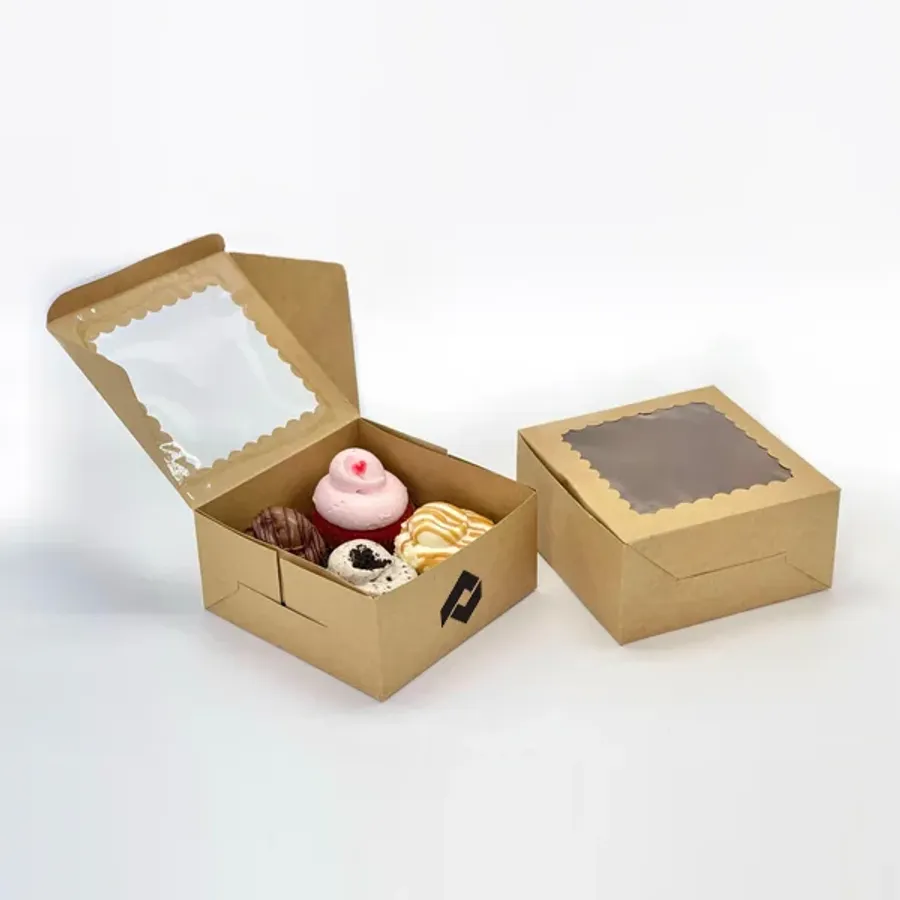
The usual setup is box-in-box. Your cake sits in its own wrapped tin, plastic dome or paperboard bakery box. That inner pack then sits inside our corrugated carton with an insert holding it in place.
This keeps the shipping carton away from food and gives two layers of protection. A printed inner box can come from our printed food mailer boxes range.
Picking the board for a heavy cake
A dense loaf or a fruit cake weighs more than it looks. Thin board flexes when a courier lifts it by one corner, and the cake shifts inside.
B-flute corrugated at 3 mm is our usual choice for cake. It resists crushing from boxes stacked on top in a van. E-flute at 1.5 mm suits single slices, small cake jars or very light cakes.
Ear lock and tuck top closures both hold well on B-flute. A self seal strip with a tear strip saves time when you pack dozens of cakes in an afternoon.
White liner shows a printed logo brightly. Kraft hides scuffs better on a carton that will be handled roughly. Our page on heavier corrugated shipping cartons covers board grades for larger loads.
Holding the cake still inside the carton
Movement is the main reason cakes arrive damaged. Even a well-wrapped cake breaks if it slides into a wall at every turn.
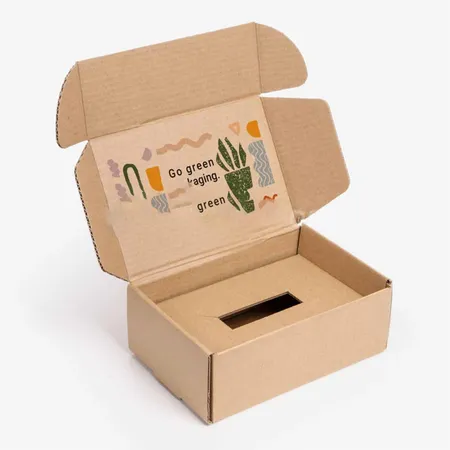
We size the carton so the inner pack has little room to move. Then we add an insert: a corrugated frame around the base, a collar around a tin, or a tray with cutouts for cake jars.
Test the fit with the real inner pack before you approve the proof. Tip the closed carton gently from side to side and listen for movement.
A small gap on top for an ice pack is fine. Gaps at the sides are not. Our page on boxes with custom inserts shows the insert shapes we can cut.
Shipping chilled or frozen cakes
Some cakes need to stay cold. Cheesecake and buttercream cakes are the usual examples.
For these, the corrugated carton holds an insulated liner and cold packs around the cake. The carton size must allow for that liner, so tell us its thickness when you ask for a quote.
Tell your customer the cake is coming and ask them to refrigerate it on arrival. A note printed inside the lid repeats that message at the right moment.
Ship cold cakes early in the week so they do not sit in a depot over a weekend. For fully frozen goods, our boxes for frozen food deliveries are built around liners and ice packs.
Packing a cake parcel in order
Follow the same order every time so each cake leaves the bakery packed the same way. A printed card taped near your packing bench helps new staff.
Once the routine is set, time it. Knowing how long one parcel takes helps you plan how many cake orders you can accept each day.
- Cool the cake fully, then chill it until firm.
- Wrap it tightly or place it in its sealed inner box.
- Set the insert into the empty carton.
- Lower the inner pack into the insert, keeping it level.
- Add a cold pack on top if the cake needs one.
- Close the carton and seal it with the peel strip or tape.
- Apply the label on the lid, beside the this-side-up mark.
Printing that helps couriers handle it right
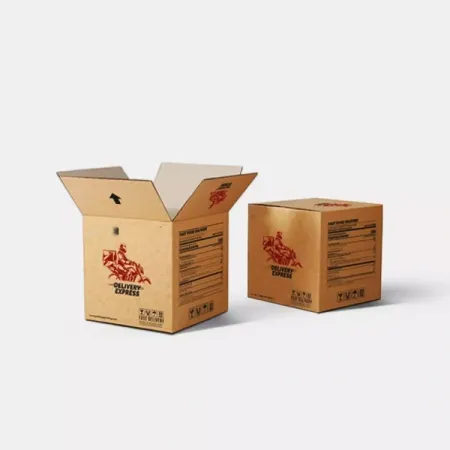
On a cake carton, some print does a job beyond branding. An arrow showing this side up and the word perishable tell handlers how to treat the box.
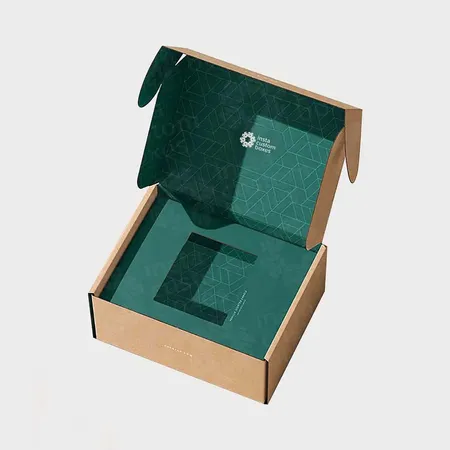
Your logo can go on the lid and sides. A short line inside the lid, such as storage advice or a happy birthday note, makes the opening feel like a gift.
A best-before line or a reheating tip can also go inside the lid. It saves you printing a separate card for every order.
Keep handling marks large and in a dark color. If the parcel tips onto its side, the marks should still be visible from above. Our fragile item mailer boxes use the same marking approach for breakable goods.
Common cake shipping mistakes
We see the same few problems from bakers new to posting cakes. Each one is cheap to avoid.
- Shipping a warm cake, which steams inside the wrap and goes soggy
- Choosing a carton far bigger than the cake and filling the gap with paper
- Using a thin paperboard box as the only layer
- Leaving off this-side-up marks on a tall cake
- Posting on a Thursday or Friday, so the parcel waits in a depot
- Forgetting to tell the customer when the cake will arrive
- Packing loose decorations that break off and scratch the frosting
Planning stock for busy baking weeks
Bakeries sell most around holidays, Mother's Day and the end of the year. Running out of shipping boxes in those weeks costs more than the boxes ever do.
Production takes 4 to 6 business days after proof approval, plus 2 to 3 days in transit. Order with that window in mind, and add a buffer before your busiest week.
If you sell two or three cake sizes, order cartons for each size in one run. Matching print across the set keeps your parcels consistent.
Flat cartons store under a bench or on a high shelf. When you know your sizes, you can ask for a cake carton quote and stock up before the rush.
If boxes arrive damaged or misprinted
Check your carton delivery when it lands. Look for crushed corners, wrong sizes or print faults before you start packing cakes into them.
Keep a few sample cartons from each delivery. They help when you reorder and want to compare board, print and fit.
Report any misprint or damage within 10 days and we reprint or refund. The full terms are on our reprint and refund policy.