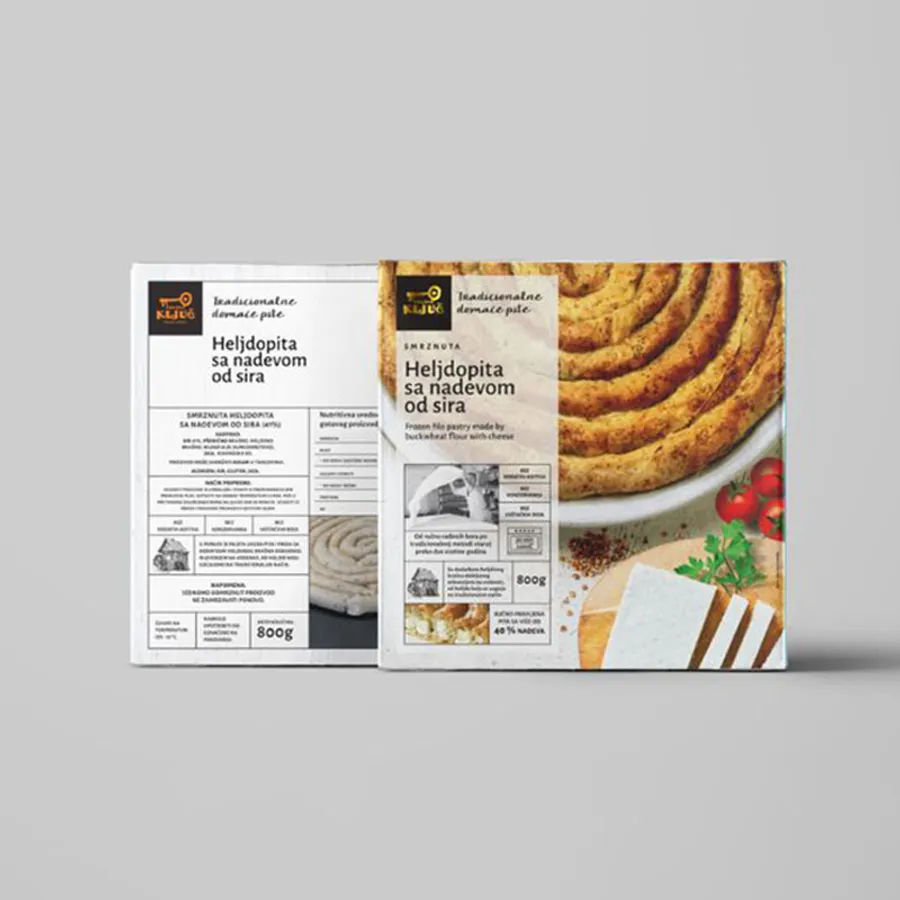
Brands that send frozen orders by mail
Meal kit companies are regular buyers. They send portioned frozen dinners to homes every week and want the carton to carry their brand.
Butchers and seafood sellers who ship direct also order them. So do ice cream makers, frozen dessert brands and pet food companies with frozen recipes.
Small producers starting a mail-order line come to us as well. They often have a liner supplier lined up and need a printed box to match.
In each case the carton is the face of the delivery. It is the first thing the buyer sees on the doorstep.
Plain brown cartons with a sticker are common in this trade. A fully printed carton helps a small brand stand apart on the porch.
What we print and what goes inside
We make the printed corrugated outer carton. That is the part we design, print and ship to you.
The insulation liner and the coolant are separate parts of the pack. We arrange those with you, either by sizing around a liner you already use or by talking through options at the quote stage.
We do not make claims about how long contents stay frozen. Cold-chain performance depends on your liner, coolant, route and packing, so test your full pack before you sell.
- Outer carton: printed corrugated, made by us
- Liner: chosen and arranged with you
- Coolant: chosen and arranged with you
- Packing and transit tests: run by you on the full pack
Working with your liner supplier
Many brands buy liners from one company and cartons from another. Getting the two to match takes a few clear steps.
We are glad to talk to your liner supplier directly if that helps. It saves passing measurements back and forth.
- Choose the liner type and size for your largest regular order.
- Ask the liner supplier for its outer dimensions with the lid on.
- Send those figures to us with a photo of a packed liner.
- Review the carton size and print layout on our free digital proof.
- Pack a sample order in a test carton before you approve a full run.
Board for heavy, cold parcels
Frozen orders are heavy. Dense food, coolant packs and a liner add up fast.
B-flute corrugated at 3 mm is our usual suggestion. It gives the carton more stacking strength for heavy loads.
E-flute at 1.5 mm suits small frozen orders, such as a few desserts in a slim liner. It also gives a sharper print surface.
For larger multi-day boxes, compare our heavier corrugated shipping box builds as well.
Coatings and print for a cold delivery
Cold parcels can pick up moisture on the outside when they meet warm air. An aqueous coating or lamination gives the printed surface a finished layer.
We do not describe these coatings as waterproof. They help the print look tidy, but your liner is what keeps contents apart from the outside world.
Bold, simple artwork tends to suit frozen cartons. Fine detail can look tired after a trip through a damp depot.
Large blocks of dark color show scuffs more than light ones. A pale base with strong logo color usually wears better.
White outer liners show bright food photos well. Our white shipping boxes page shows how clean a full-color print can look.
Handling marks for frozen parcels
Clear handling text helps the person who carries the box and the person who opens it. Keep it short and print it on more than one side.
Many brands also print opening steps inside the lid. A buyer who knows to unpack straight away is less likely to leave the box in a hallway.
Keep any wording on the carton factual. Describe what the buyer should do, and leave temperature promises out of the print.
- This way up arrows on two sides
- A short line asking for prompt unpacking
- Your customer service contact inside the lid
- A recycling note for the carton and liner
Planning delivery days around your carton
Frozen orders usually ship early in the week. That keeps parcels out of depots over a weekend.
Your carton supply should follow the same rhythm. Keep enough flat cartons for at least two weeks of orders, so a delayed reorder never stops a shipping day.
Flat cartons store easily in a dry room. Keep them away from freezer doors and loading bays where condensation forms.
Fold a day's cartons before the packing shift starts. Packers can then load liners, food and coolant without stopping to build boxes.
Common carton mistakes on frozen orders
The most frequent mistake is sizing the carton to the food and forgetting the liner. The liner then will not fit, and the run has to be redone.
Another is choosing a carton that is too large. Empty space inside the liner fills with warm air and needs more coolant.
A third is skipping a full pack test. If anything about your setup is unclear, ask us on the contact page for frozen packaging before you approve.
Meal kits and subscription frozen boxes
Weekly frozen deliveries need a carton that suits changing menus. Pick one liner and carton size that covers your most common order.
A printed menu card or a lid message can change each week while the carton stays the same. Our shipping and subscription box collection has more on running repeat drops.
Some brands offer two sizes, one for single households and one for families. Two liner sizes and two matching cartons keep that tidy.
Print the size name on a side panel. Packers can then grab the right carton at a glance during a busy morning.
Proof, print run and delivery to you
Our design team builds a free digital proof showing the carton flat and folded. You can ask for revisions as often as you need.
Frozen food cartons go to press after your sign-off and are ready in 4 to 6 business days. The flat cartons then take 2 to 3 business days to arrive, and freight to the US, UK, Canada and Australia is free.
Cartons are priced from $0.30 per unit, depending on size, board, run length and finish. Use the outer carton quote form to send your liner size.