Sellers who need a lid that stays shut
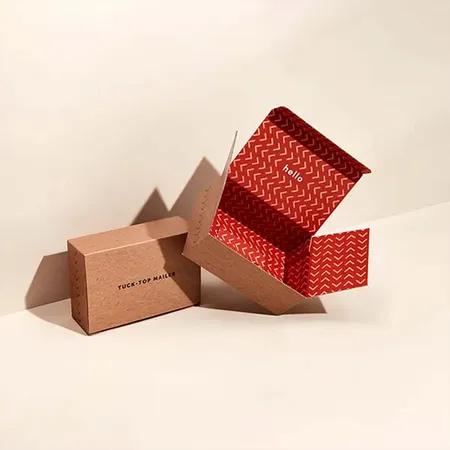
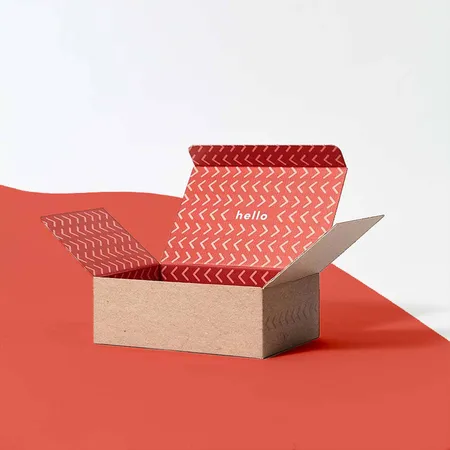
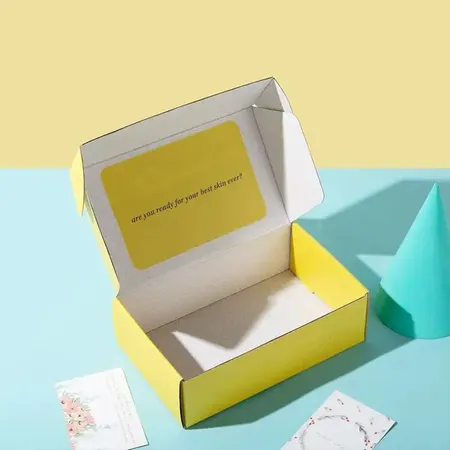
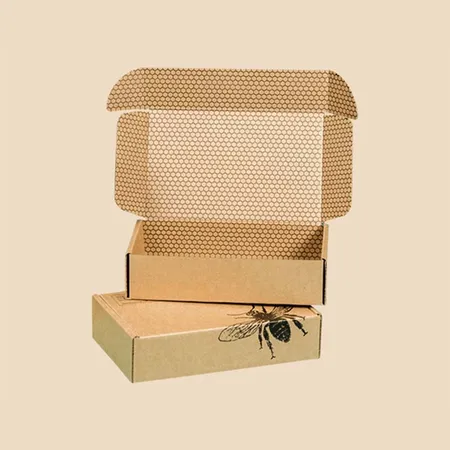
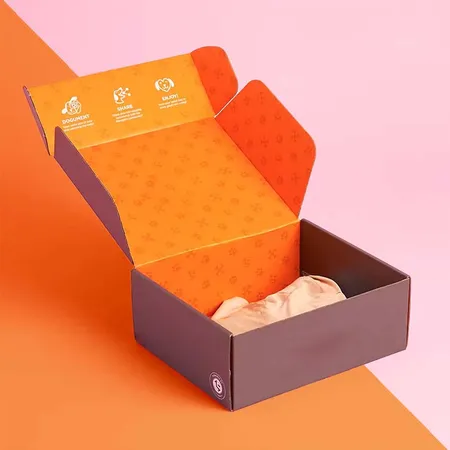
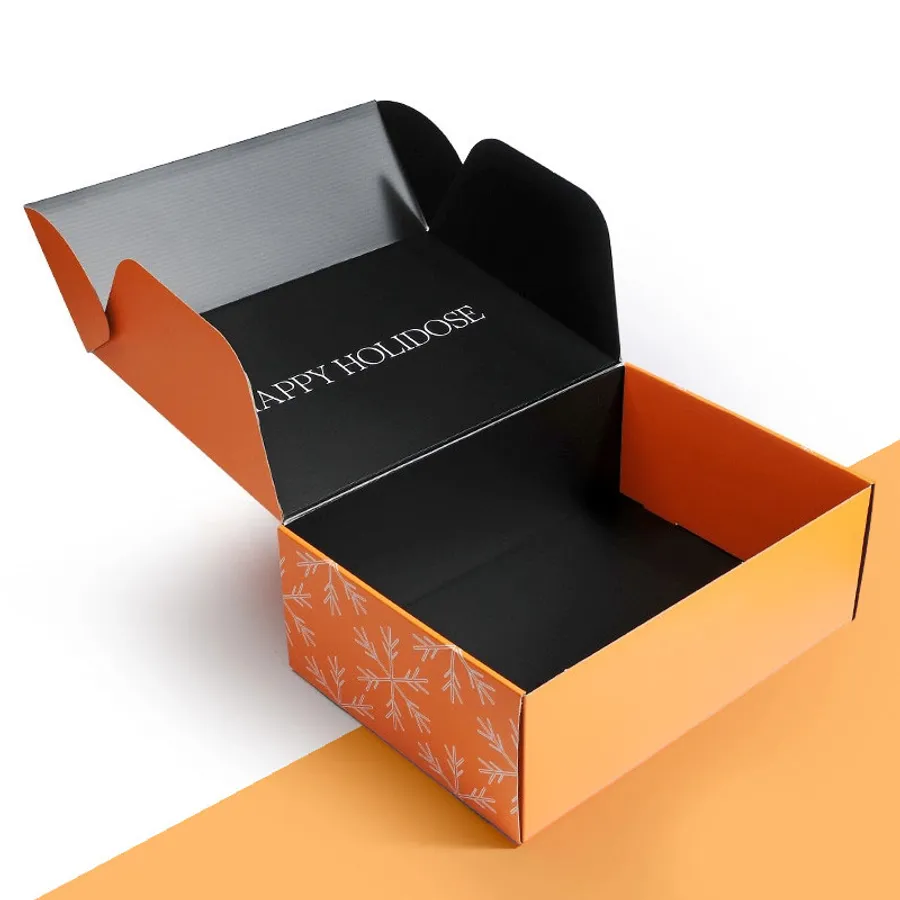
Ear lock mailers suit anyone tired of lids popping open in transit. Clothing brands, book sellers, cosmetic gift sets and accessory shops order them often.
They are popular with fulfillment teams because a box can be closed in one motion. There is no tape gun and no waiting for glue.
Customers like them too. The box opens without a knife and closes again, so it often gets reused for storage.
If you are still choosing a closure, our full range of mailer box styles lays out each option side by side.
- Folded apparel and knitwear
- Books, planners and notebooks
- Cosmetic and skincare sets
- Small electronics accessories
- Monthly kits customers keep
How the ear lock holds the lid
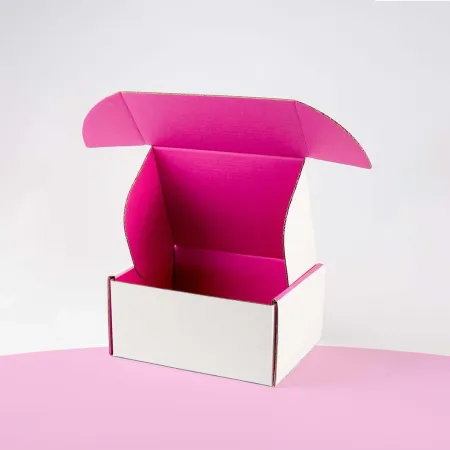
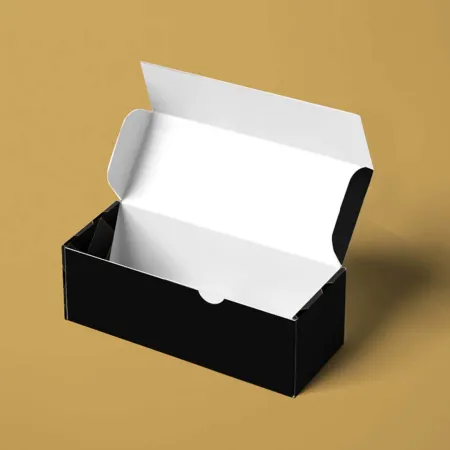
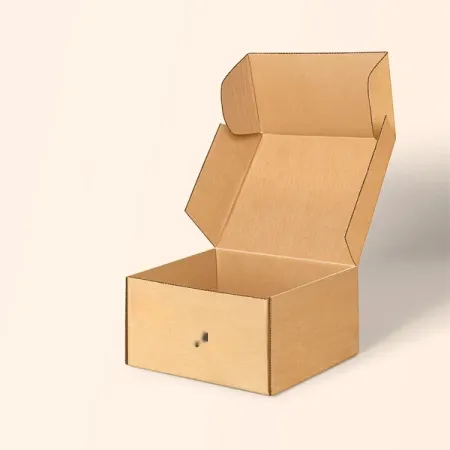
The lid ends in a front tuck flap. On each side of that flap is a small shaped tab, the ear.
When you push the tuck into the front of the box, the ears slide inside the double side walls. They catch behind the inner wall and resist being pulled back out.
To open, the customer lifts the front of the lid firmly. The ears flex and release without tearing, so the box can be closed again.
Because the lock relies on shape rather than adhesive, it holds just as well on later openings. Humidity and dust do not weaken it the way they weaken tape.
Ear lock compared with other closures
Every mailer style closes a little differently. The table compares the ear lock with the closures buyers usually weigh it against.
If you mainly want a classic look with a simple front tuck, compare our classic roll end mailer style. The ear lock adds the side tabs on top of that basic shape.
| Closure | How it holds | Can it reclose |
|---|---|---|
| Ear lock | Side ears catch inside double walls | Yes, many times |
| Roll end tuck front | Tuck flap friction only | Yes, may loosen with use |
| Tuck top | Long lid flap tucks into the front | Yes, by hand |
| Self seal strip | Adhesive strip on the flap | No, once sealed |
| Tear strip | Perforated strip to open | No, once torn |
Folding an ear lock mailer by hand
Ear lock mailers arrive flat and fold up with no glue. After a few boxes, most packers can build one quickly.
Here is the usual sequence. We can send a short folding diagram with your proof if your team is new to the style.
The rolled side walls are what make the lock possible. Rolling them fully, so the edge sits flat on the base, gives the ears a firm wall to catch against.
- Lay the flat box printed side down.
- Fold the side walls up and roll their top edge inward.
- Tuck the rolled edges into the base slots to lock the walls.
- Place the product and any insert inside.
- Close the lid and push the tuck and ears into the front.
Picking board thickness for the ears
The ears need to flex as they go in and stay stiff once locked. Board choice affects both.
E-flute corrugated is the most common choice. It is stiff enough to hold the lid but thin enough for the ears to tuck smoothly.
B-flute suits heavier products, but the thicker ears need a firmer push. Paperboard ear locks suit light items such as cards, socks or small cosmetics.
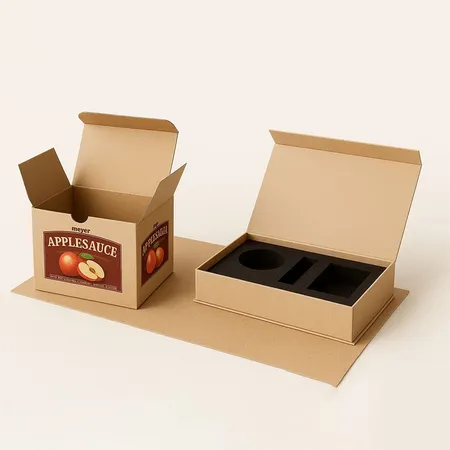
Most brands start with E-flute corrugated mailer boxes and only move up if the product is heavy. We can advise once we know the packed weight.
Adding a tear strip or seal
An ear lock keeps the lid closed, but it does not show whether a box has been opened. For tamper evidence, add a tear strip or a self seal strip.
A self seal strip is useful for returns-heavy stores. Some brands add a second strip so the customer can reseal the box and send it back.
How that adhesive strip behaves on its own is shown on our peel and seal mailing box page.
A tear strip sits just below the lid edge. Once pulled, the lid still closes with the ears, so the customer can keep using the box.
Where to put artwork on an ear lock box
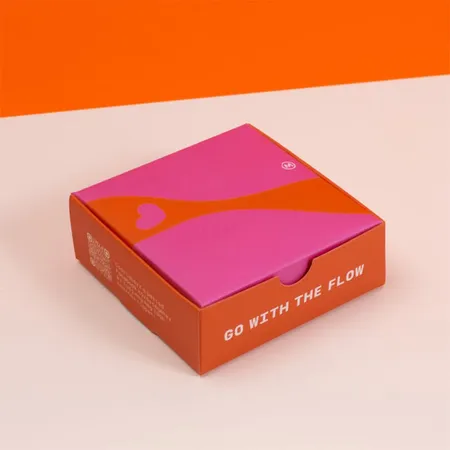
The lid top and front panel carry most of the branding. The ears and inner wall folds are rarely seen, so keep artwork simple there.
The rolled side walls show a printed edge when the box is open. A band of brand color along that edge looks neat and costs nothing extra to design.
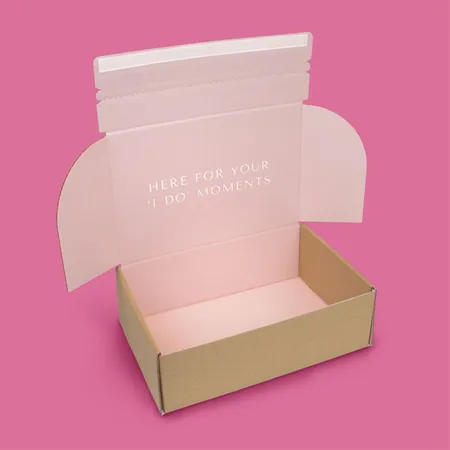
If you want a full reveal inside, the inside lid is the best panel. Our mailers printed on both faces show how that works.
Leave the small area behind the ears free of key text. Customers see it only briefly when the lid lifts.
Ear lock mistakes we see
Most ear lock problems come from fit, not from the design of the lock itself. A few are worth checking before you order.
Overfilled boxes are the biggest one. If your product varies in size, size the box for the largest item.
Another is choosing B-flute for a light product. The thicker ears are harder to tuck and slow down packing for no real benefit.
Finally, watch the print near the ear slots. Fine text there can crack as the walls roll, so keep it clear.
Reuse, returns and storage
Because the lid opens and recloses cleanly, many customers keep ear lock boxes. Printing your logo inside the lid keeps your brand on their shelf.
For returns, the same box can go back to you if it arrived undamaged. Add a short note telling customers to keep the box.
Kept boxes often end up holding cables, cosmetics or craft supplies. A sturdy lid that closes firmly is the reason they get a second life.
Store flat boxes in a dry place. Damp board softens the ears, and soft ears do not lock as firmly.
A reused box keeps showing your logo long after delivery. That is a quiet reason many branded mailer boxes use the ear lock style.
Ordering your ear lock mailers
Send the size, board, quantity and artwork. Ear lock mailers are priced from $0.30 per unit, with size, material, quantity and finish shaping the quote.
Your free digital proof covers the full dieline with the ears drawn in, and revisions are unlimited. Ready to price a run? Request an ear lock mailer quote today.
Your ear lock boxes are made within 4–6 business days of approval. We pay delivery to the US, UK, Canada and Australia, and the flat boxes take 2–3 business days to arrive.