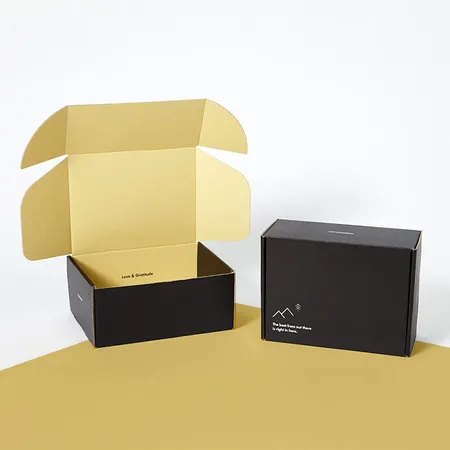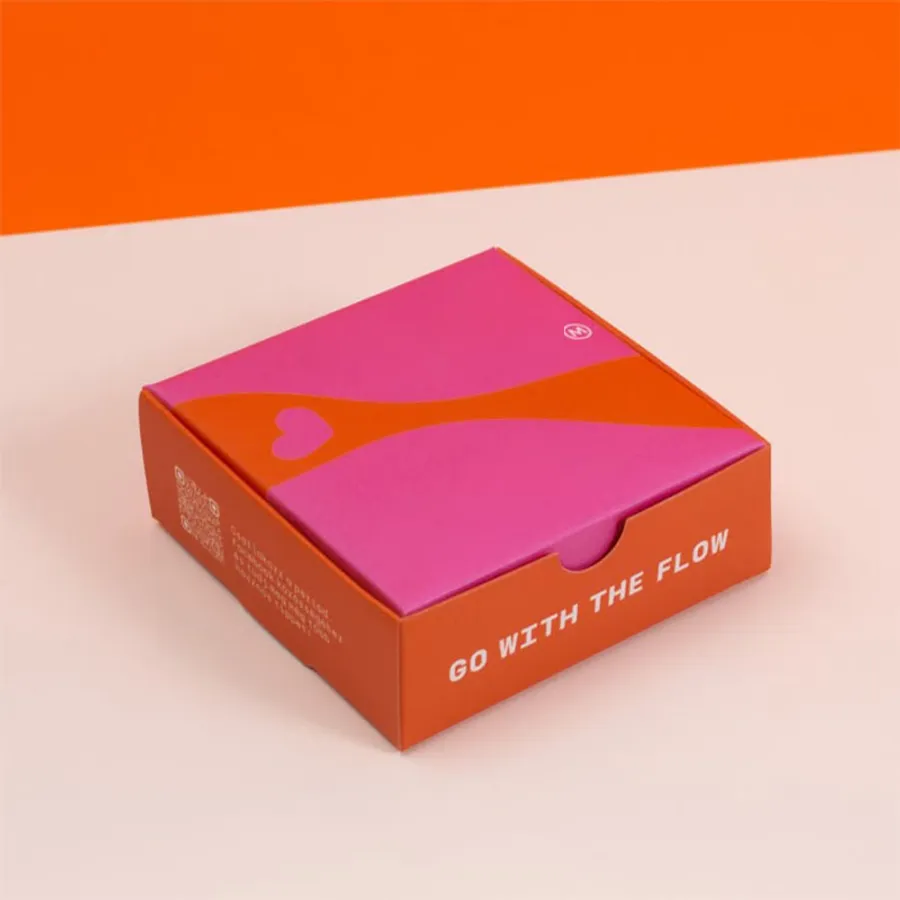
How the peel and seal strip works
A band of adhesive is applied along the inside edge of the closing flap during production. A paper or film liner covers it so the boxes do not stick together in storage.
At packing time, the packer pulls the liner off and folds the flap down. Firm pressure along the strip bonds it to the box wall.
Most self seal mailers also have a tear strip. It is a perforated band near the seal that the customer pulls to open the box cleanly.
Nothing about the outside of the box changes. The strip sits on the inside of the flap, so your printed lid looks exactly as it would on a tuck-only mailer.
Businesses that pack faster with self seal
Self seal boxes earn their keep where packing speed matters. Every order skips the tape gun, which saves seconds that add up across a busy day.
They also help small teams that pack at home or at a market stall. There is no tape dispenser to find, refill or fix.
Fulfillment partners like them too. A box that seals the same way every time is easy to train new staff on, and it looks the same on every doorstep. For stores comparing shipper formats, our ecommerce box options page sets out the alternatives.
- Ecommerce stores packing many orders daily
- Subscription boxes sent in one big monthly run
- Sellers packing at home without bench equipment
- Brands that want a tamper-evident closure
- Stores that want clean, tape-free branding
Tape, self seal or both
Self seal is not the right answer for every box. This comparison sets out what changes when you move away from tape.
Heavier parcels may still need a strip of tape over the seal. We will mention it on your quote if the load looks high for the strip.
Brands that care about the doorstep look often drop tape for this reason alone. A tape-free lid keeps your print clean and uninterrupted.
| Closing method | Packing speed | Customer opening | Visible if opened |
|---|---|---|---|
| Packing tape | Slower, needs a dispenser | Knife or scissors | Partly |
| Peel-and-seal strip | Fast, peel and press | Pull the flap or cut | Yes, the seal tears |
| Peel-and-seal plus tear strip | Fast, peel and press | Pull the tear strip | Yes, strip is removed |
| Tuck closure only | Fast | Lift the tuck | No |
Opening with a tear strip
A sealed box is only half the job. The customer also needs a clean, easy way in.
The tear strip runs along a perforated line near the seal. The customer pulls a small tab, and the strip comes away to free the lid.
That avoids knives near the product, which matters for clothing, soft goods and anything with a printed surface inside.
Print a small arrow or the words Pull to open on the tab. People find it faster and are less likely to rip the box in the wrong place.
Place the tab at the front center where the hand naturally goes. A tab tucked in a corner is easy to miss.
A closure that shows if the box was opened
Once the adhesive bonds, the flap cannot be lifted without tearing the board or the strip. That gives the customer a quick visual check on arrival.
It suits products where buyers expect a sealed box. Supplements, personal care items and electronics accessories are common examples.
Tell customers about it on the lid or in your order email. A short line saying the box ships sealed sets the right expectation.
If sealed packaging matters for your product line, read about supplement mailing boxes with sealed closures as well.
Packing a self seal mailer the right way
The strip only holds as well as it is pressed. These steps give a full bond on every box.
Train every packer on the same routine. A seal that is pressed at one end only can lift in transit, even when the strip itself is sound.
- Fold the box and set it on a flat surface.
- Place the product and any filler so nothing sits above the walls.
- Check that the closing flap lines up with the front wall.
- Peel the liner off in one smooth pull.
- Fold the flap down and press firmly along the full strip.
- Run your hand along the seal a second time before labeling.
Storing boxes with adhesive strips
Adhesive likes cool, dry conditions. Heat and damp can weaken the bond before you ever use the box.
Keep the flat boxes in their cartons, away from windows, heaters and damp floors. Leave the liner in place until the moment you pack.
Use older stock first. Rotating your boxes keeps every seal fresh and reliable.
Cold storage is less of a worry than heat. Let boxes reach room temperature before packing, because a chilled strip bonds more slowly.
If your storage space gets warm in summer, order closer to when you need the boxes. The shipping times for box orders help you plan reorder dates.
Choosing the base style and board
The seal and tear strip can be added to several mailer shapes. The roll end tuck front is the most common base, with the strip on the front tuck.
Corrugated board in E-flute or B-flute gives the adhesive a firm surface to grip. It also handles the pull of the tear strip without splitting.
Paperboard is less suited to a self seal closure. The thinner sheet can pull apart at the strip when the customer opens it.
Tell us the weight of your heaviest packed order. We use it to choose the board and confirm that the strip is a good match for the load. Our roll end tuck front mailers page explains the base shape in detail.
Seal and print problems to avoid
Most self seal failures trace back to packing or artwork, not the strip itself. Watch for these.
We flag strip and tab positions on the dieline. That makes the last two problems easy to avoid at proof stage.
- Product or filler sitting above the wall line
- Liner removed hours before the box is closed
- Boxes stored in a hot room or near a heater
- Key art printed across the tear strip path
- A shipping label stuck over the tear tab
Can customers reuse the box for a return?
After the tear strip is pulled, the original seal is used up. The box can still close by its tuck and travel back with a strip of tape.
If your store handles many returns, print short return steps inside the lid. Customers then know exactly how to repack it.
A sturdy corrugated mailer usually survives the trip back in good shape. That saves you buying a separate returns bag for many products.
For more on that experience, see our guide to the customer unboxing moment.
Quote, proof and timing
Ask for self seal and tear strip in your self seal mailer quote request. We price the box with both features included, with unit pricing from $0.30 depending on size, material, quantity and finish.
Your proof marks the strip positions and the tear path, so you can keep artwork clear of them. Once you approve it, allow 4 to 6 business days to produce the boxes.
Transit takes a further 2 to 3 business days. Boxes travel free of charge to the US, UK, Canada and Australia, still flat and with the liners in place.