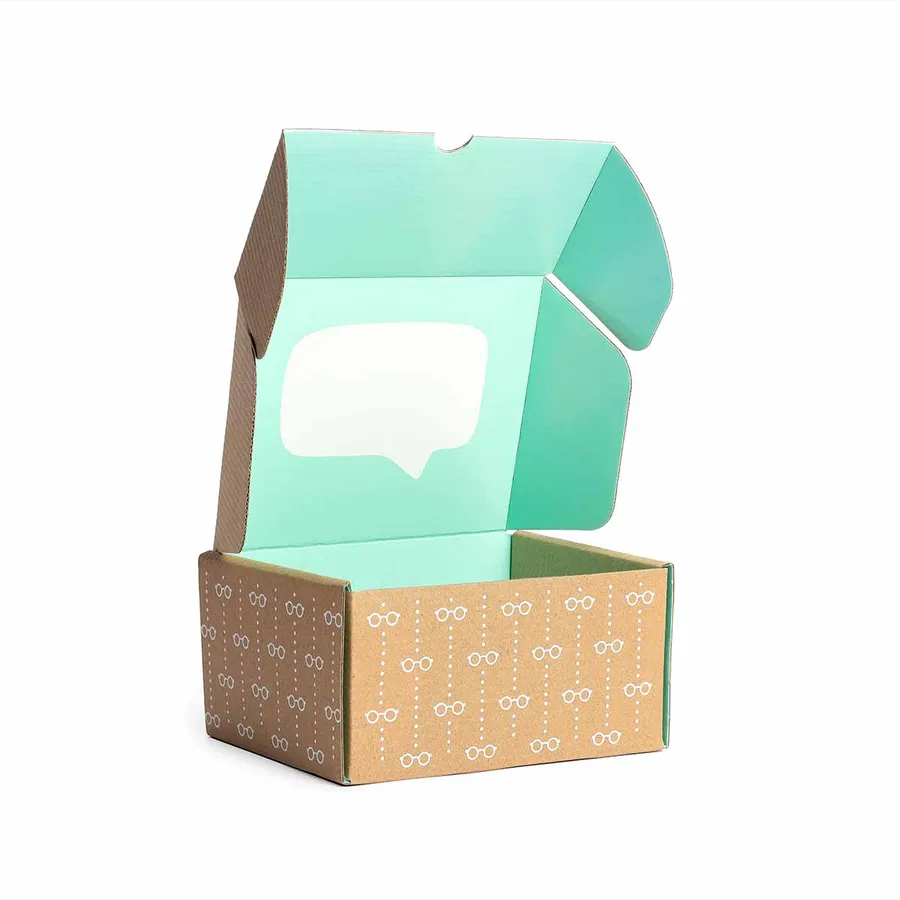
Brands that switch to a paper-based mailer
Refill and zero-waste shops order these first. Their customers notice plastic in a parcel and often write in about it. A paper-only mailer removes that complaint before it starts.
Natural skincare lines, loose-leaf tea sellers and slow-fashion labels follow close behind. For them, the box has to match the promise printed on the product label. A glossy plastic-coated mailer would undercut the message on the first touch.
Some buyers come to us after customers asked how to dispose of the old packaging. A paper-based box gives a short answer. Flatten it and put it in the paper bin where the local program takes it.
Handmade candle and soap makers also ask for this spec. Their products already sit in paper wraps, so the mailer simply continues the same material story.
What makes this mailer easier to recycle
The box itself is paper fiber from liner to flute. Corrugated and paperboard are both widely collected in curbside programs. Acceptance still depends on the local facility, so we never promise more than that.
Trouble usually comes from what gets added to the board. Plastic film lamination, clear windows and foam trays all make sorting harder at the plant. Each one turns a single-material box into a mixed one.
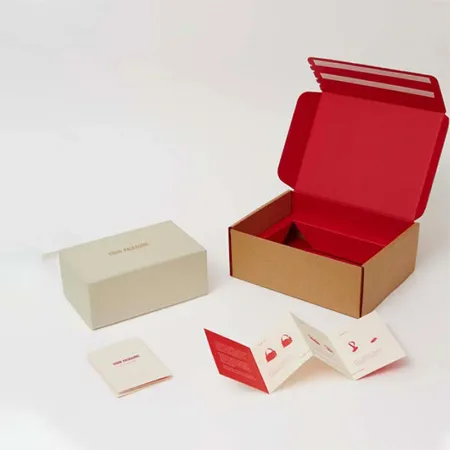
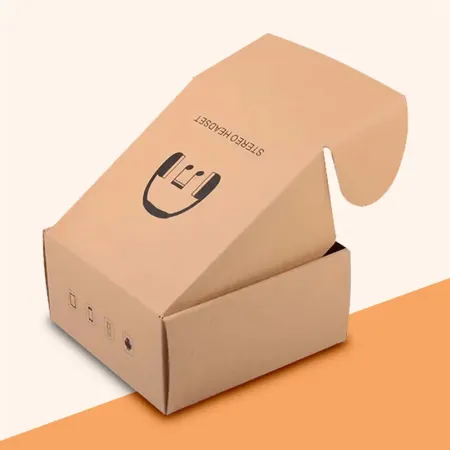
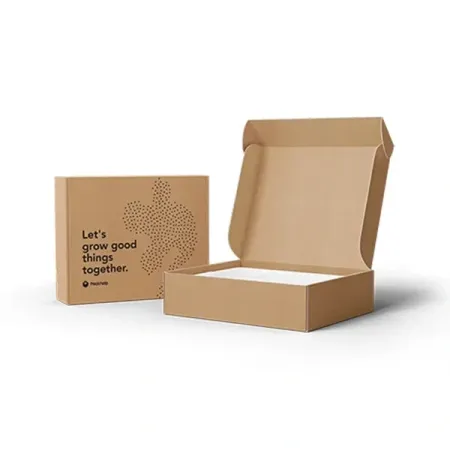
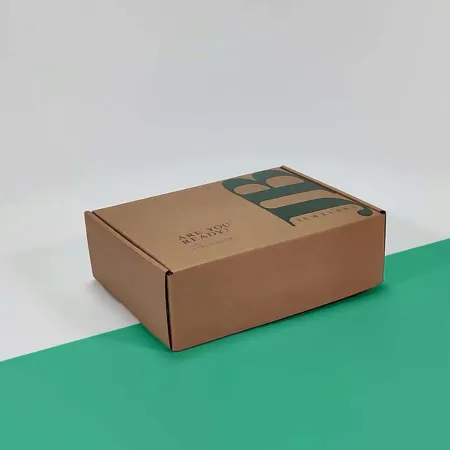
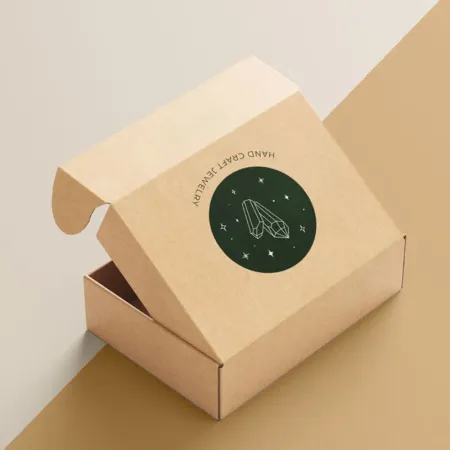
So we steer your spec toward paper wherever we can. A natural kraft mailer box with printed branding is the simplest version. It still looks finished and deliberate when the lid opens.
Finish choices and how they affect the box
Every finish changes how the board behaves once it reaches a paper stream. Some add nothing but ink, while others bond a film to the surface. Use this table to weigh looks against simplicity before you send your artwork.
| Finish | What it adds | Effect on a paper-only box |
|---|---|---|
| Uncoated kraft | Nothing beyond ink | Simplest option |
| Aqueous coating | Thin water-based layer | Stays close to plain paper |
| Matte or gloss lamination | Plastic film over the print | Adds a non-paper layer |
| Soft-touch lamination | Velvet-feel plastic film | Adds a non-paper layer |
| Foil stamping | Metallic film on the logo | Small non-paper area |
| Embossing or debossing | Raised or pressed board | No added material |
Kraft or white liner on a green spec
Kraft liner shows the brown fiber, which most shoppers read as natural at a glance. It also hides small scuffs from sorting machines and delivery vans. That makes it forgiving for brands that ship in volume.
White liner gives cleaner, brighter color. Pick it if your palette relies on pastels, exact skin tones or product photography. Both liners are paper, so the choice is mostly about appearance.
On kraft, we can lay down white ink first so a colored logo stays true. Our guide on choosing corrugated or paperboard for mailers explains how each board takes ink and folds.
Ask for a printed sample on both liners if you cannot decide. The same logo can feel rustic on kraft and crisp on white, and seeing both side by side settles it quickly.
Keeping ink coverage light on purpose
You do not need to flood the box with color to look branded. A single bold logo on kraft often reads stronger than a full wrap. Restraint is part of the look this audience expects.
Lighter coverage also leaves the natural board visible. Shoppers can see what the box is made from without reading a label. Many of our eco buyers settle on one ink color plus white.
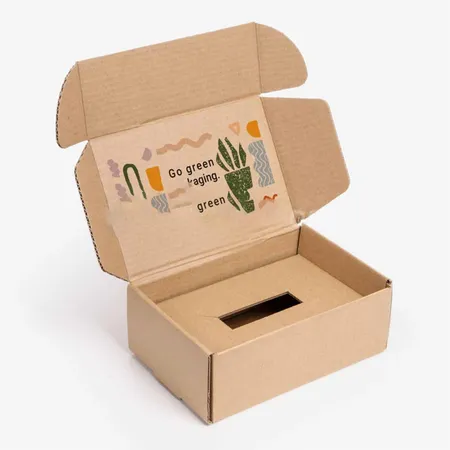
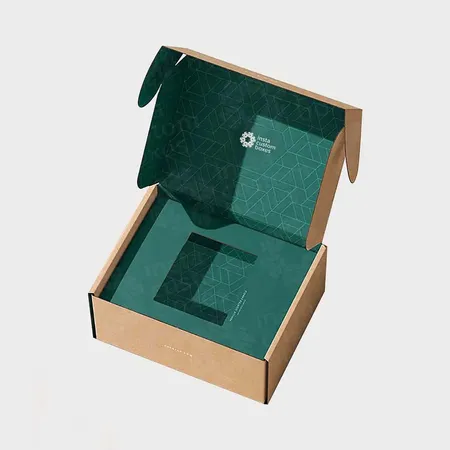
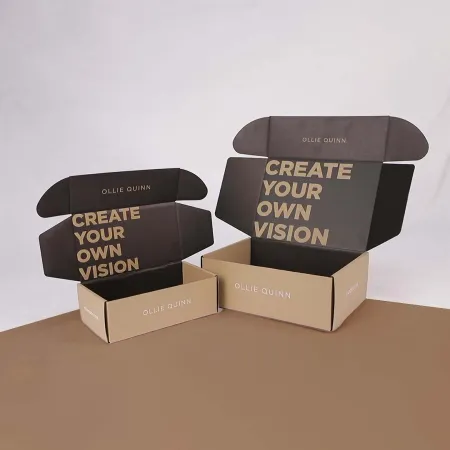
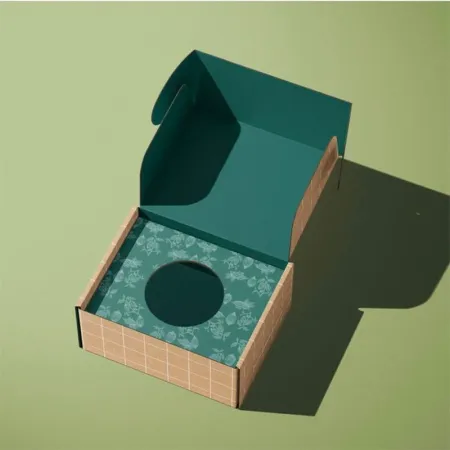
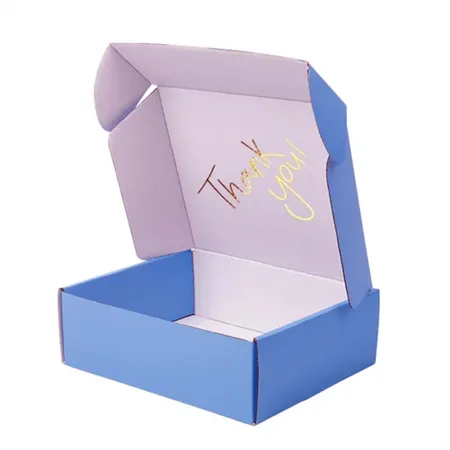
If you want more color, move it inside. A printed lid interior surprises the customer while the outside stays quiet. The printing and finishing guide for mailers shows how inside print is set up.
Steps to spec an eco friendly mailer
Most of our paper-first orders follow the same path. Working through it in this order saves a round of proof changes later. It also keeps the conversation focused on fit before decoration.
- Measure the product and decide how much empty space you can remove.
- Pick E-flute corrugated for heavier goods or kraft paperboard for light items.
- Choose kraft or white outer liner.
- Limit outside print to a logo and one short message.
- Pick aqueous coating or leave the board uncoated.
- Swap any foam or plastic tray for a paperboard insert.
- Approve the free digital proof once layout and wording are right.
Paper inserts that replace foam trays
Foam holds products well, but it rarely belongs in the same bin as the box. A die-cut paperboard or corrugated insert does the same job for most goods. The whole parcel then goes into one recycling stream.
Inserts matter most for glass jars, refill pouches and gift sets that would knock together in transit. We cut each slot to your product so nothing rattles. A snug insert also means you can drop loose paper fill entirely.
If you have not used inserts before, our page on mailer boxes fitted with custom inserts shows the common layouts. Send product samples or exact dimensions and we draw the cutouts on your proof.
Paper inserts also flatten with the box after use. Customers can recycle the whole set in one go, with nothing left over for the general bin.
Honest recycling messages to print
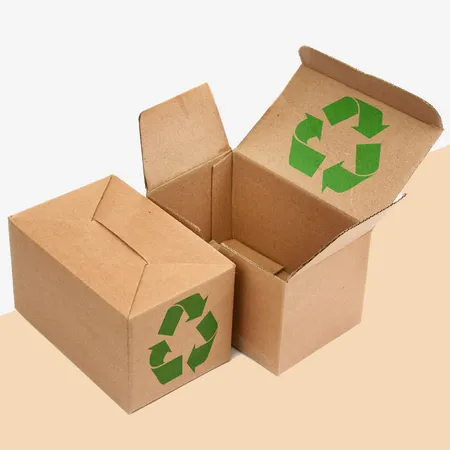
Customers want to know what to do with the box after unboxing. Clear wording on a side panel or under the lid helps, as long as it stays accurate. Avoid symbols or claims you cannot back up.
These are short lines our eco buyers print most often:
- Please flatten this box before recycling
- Made from paper-based board
- Recyclable curbside where paper is accepted
- Remove any tape or labels first
- Keep this box for storage or returns
When the order needs an outer carton
A mailer is designed to be opened and enjoyed. Some orders, such as multi-box bundles or heavy glass, need another layer outside it. That layer should be paper too, or the effort inside is lost.
In those cases, pair your mailer with our paper-based eco friendly shipping boxes as the transit layer. Both can be printed on kraft so the parcel looks consistent from doorstep to lid.
Keep the mailer and the outer carton close in size. A mailer sliding around inside a big carton gets crushed at the corners, which defeats the point of both boxes.
Proofs, production and delivery for eco orders
Design help is free, and so is the digital proof. You can ask for as many revisions as you need before anything prints. We flag any finish on the proof that would add a non-paper layer.
Your eco mailers go into production for 4–6 business days once the proof is approved. Cartons then spend 2–3 business days on the road to you, with free shipping to the US, UK, Canada and Australia.
Eco mailers start from $0.30 per unit, with the final figure set by size, board, quantity and finish. Send your dimensions through our free mailer box quote form and we will confirm the exact figure.