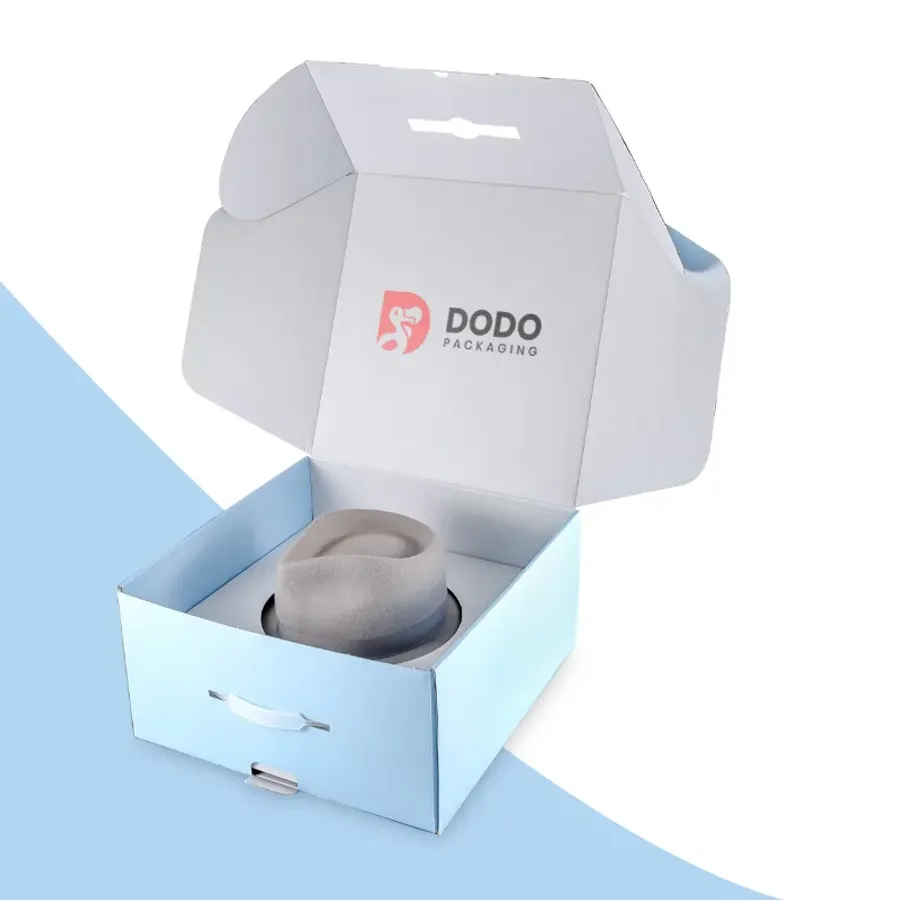
Headwear brands that order hat mailers
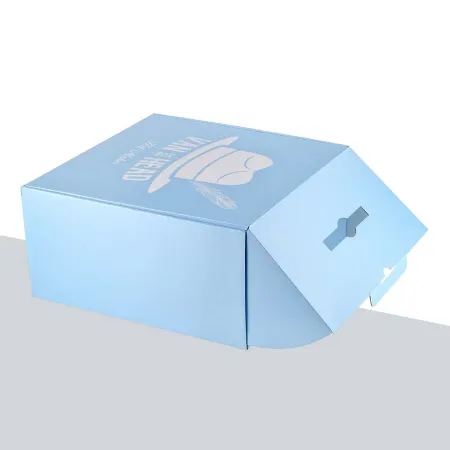
Streetwear labels selling limited cap drops are the most common buyers. Their customers film the unboxing, so the box carries as much weight as the hat.
Embroidery shops and custom patch makers use them for one-off orders. A printed mailer makes a single personalized cap feel like a finished product.
Knitwear makers ship beanies in them through autumn and winter. Teams, clubs and breweries selling merch caps order a run for their online store.
Golf and outdoor brands round out the list. They sell sun hats and performance caps online and want a parcel that looks as considered as the product.
Box depth for each hat style
A structured six-panel cap needs real height. A beanie folds almost flat and can travel in a shallow mailer.
Bucket hats sit in between. Their soft crown flexes, but the brim runs all the way around and needs width on every side.
Foam-front trucker caps need the most care. The foam panel creases if the lid presses on it, so leave a little extra height above the crown.
If you are unsure which shape suits your range, send measurements for your two most different caps. We compare them and suggest the size that covers each.
| Hat style | How it sits | Box shape |
|---|---|---|
| Structured snapback or fitted | Upright, brim forward | Deep, nearly square footprint |
| Unstructured dad cap | Upright or lightly pressed | Medium depth |
| Trucker cap with mesh back | Upright, foam front up | Deep, protect the foam panel |
| Beanie or knit cuff hat | Folded flat | Shallow mailer, paperboard is fine |
| Bucket hat | Flat, brim all around | Wide and medium depth |
Inserts that hold the crown
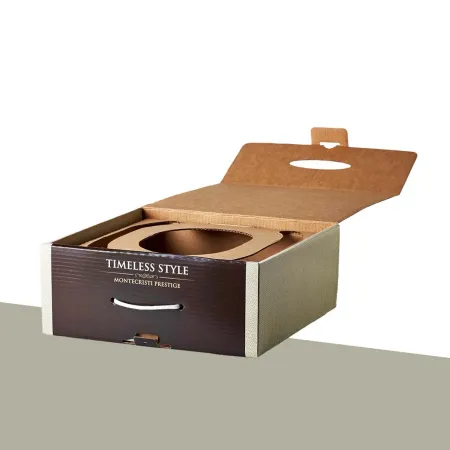
A rigid crown can still dent if the cap shifts and the corner of the box hits it. A paperboard cradle under the brim stops that slide.
Some brands add a domed paperboard form inside the crown. It keeps the front panel standing through rough sorting.
Inserts also make the hat look placed rather than dropped in. That small detail shows up clearly in unboxing photos.
Ask for the insert in the same board color as the box. A kraft cradle in a kraft box looks tidy, while white on white feels crisp and bright.
For flat beanies, an insert is rarely needed. A sheet of printed tissue folded over the hat does the same job and adds color.
Single caps, pairs and stacked bundles
Caps nest inside each other, which makes bundles easier than most apparel. Two or three caps of the same style stack in a box only slightly deeper than one.
Mixed bundles are trickier. A cap plus a beanie plus a tee needs a wider footprint, so plan the layout before choosing a size.
If you sell sets as gifts, a divider keeps the knit item from crushing the structured one.
Nesting also cuts the number of boxes you keep on hand. One deeper size can cover single caps and small bundles with a bit of tissue for the gap.
- Single cap: one box sized close to the crown
- Two to three nested caps: add depth, keep footprint
- Cap and beanie set: wider box with a divider
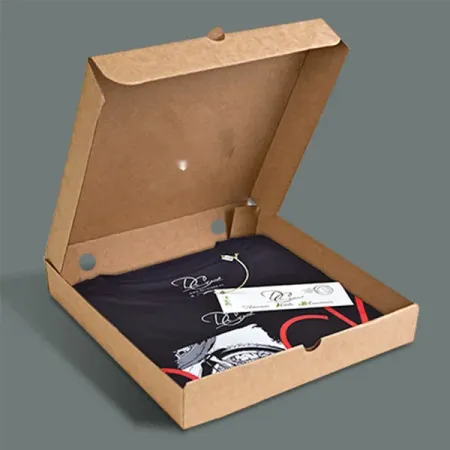
- Cap with apparel: fold the shirt under the brim cradle
Board choice for hats that travel light
Hats are light, so heavy board is rarely needed. E-flute corrugated gives the walls enough stiffness to resist pressure from other parcels.
For beanies and folded knits, 18 to 24 pt SBS paperboard keeps the box slim and cuts bulk in your packing area.
If you plan to ship caps in bulk to stores, the outer case is a different job. We cover that on our page for heavier hat shipping cartons.
White-lined board suits bright, full color art. Kraft-lined board suits earthy, outdoor and vintage-inspired labels that want a raw look.
Printing that matches the embroidery
Many cap brands use one or two thread colors. Matching those with Pantone spot inks ties the box to the hat inside.
Embossing your logo on the lid echoes raised embroidery. Foil can mirror metal hardware or a woven label.
On kraft board, white ink gives clean contrast for simple marks. See how these options compare in our colors and finishes collection.
What to print inside the lid
Headwear buyers often worry about fit. A short sizing note or strap tip inside the lid heads off return requests.
Care instructions matter for wool, suede brims and patches. A line telling customers to spot clean and air dry protects the shape you worked to preserve.
A small thank-you and your social handle round it off without crowding the panel.
Some labels print the drop name and number inside. It turns the box into part of the collection and gives collectors a reason to keep it.
For more ideas on layering tissue, cards and print, read our guide to planning an unboxing before you finalize the art.
Mistakes headwear sellers make with packaging
The most common error is sizing from a flat sketch. Real caps vary by maker and even by batch, so measure a finished sample.
Another is choosing a box for a beanie and then launching caps in it. The crown gets squashed and the brim bends.
Sellers also forget the hang tag and sticker. Leave room for them so the lid closes without pressing on the front panel.
A last one is skipping the test pack. Fold a sample, place a real cap inside and close it before you approve the size, since that is when problems show up.
If something arrives misprinted or crushed, report it within 10 days. Our reprint and refund policy covers both cases.
From cap sample to printed proof
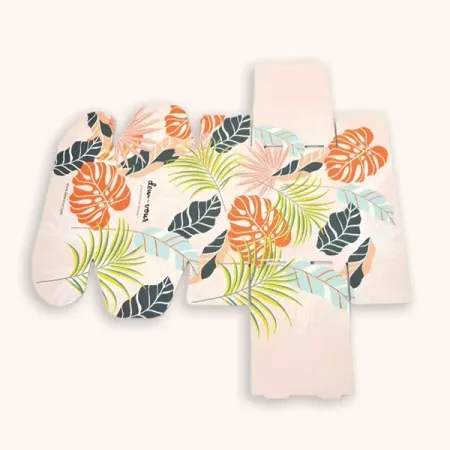
Send your style list and logo files, and our team lays the art on a dieline at no charge. Start with the hat mailer quote form to share sizes and quantities.
You get a digital proof and can request changes as many times as you need. Nothing prints until you approve it.
Your cap boxes are printed in 4 to 6 business days after you approve. Delivery to you is free in the US, UK, Canada and Australia and takes 2 to 3 business days.
Tell us your launch date when you send art. We can then flag whether the schedule is tight before you approve anything.
Planning reorders around drops
Cap brands work in drops, and drops sell out fast. Keep enough boxes on hand for the next release before the current one ends.
Store flat boxes away from heat and damp so they stay square. Warped panels make tuck flaps harder to close on packing day.
Unit pricing starts from $0.30 and depends on the size, board, quantity and finish you choose. Your quote shows the exact number.
If you change styles between drops, ask whether one box size can cover both. It keeps stock simple. For a broader look at apparel packaging, our printed shirt mailer boxes pair well with caps.