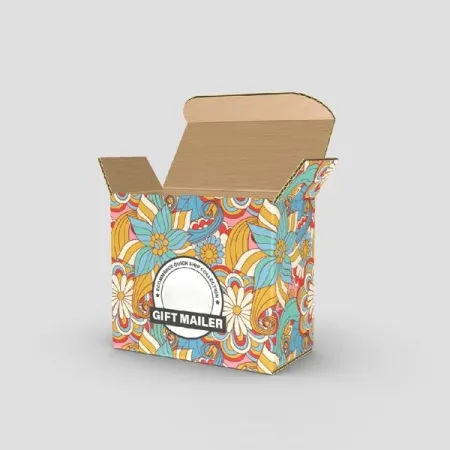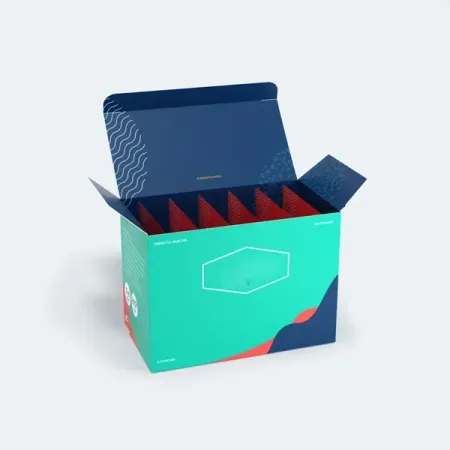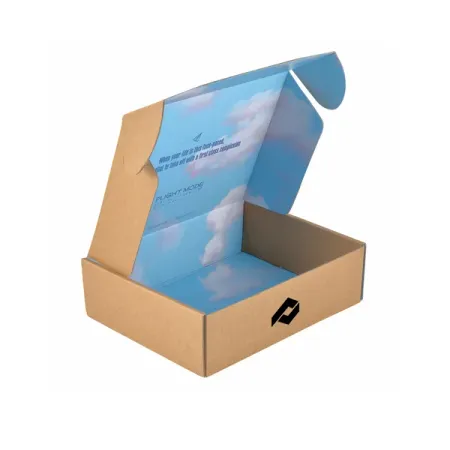
Game designers and publishers who use them
Independent game designers are our main buyers. Many fulfill their own crowdfunding pledges from a garage or a small unit.
Small publishers order them for web store sales and for sample copies sent to players and content creators.
Card game makers and puzzle brands use smaller sizes. Dice makers and accessory shops send sets in shallow boxes.
Some game cafes and shops order them for their own mail-order sales. A printed box makes a small shop look established.
Party game brands and family game makers join them around the holidays. Their orders often go out as gifts, so the mailer is the first thing the recipient sees.
Why the retail game box needs its own mailer
Players care about the condition of the game box. A crushed corner or a scuffed lid can feel like damage, even if every piece inside is fine.
Collectors are even more particular. A dented box can lower the value of a game they plan to keep sealed.
A close-fitting mailer stops the retail box sliding and shields the corners. It also keeps the shrink wrap from tearing in transit.
Shipping in a plain brown carton protects the game but wastes the moment. A printed mailer protects it and shows your brand at the same time.
Toy makers face the same problem with retail boxes. Our toy shipping boxes for retail packs take a similar approach for younger buyers.
Fulfilling crowdfunding pledges
Pledge fulfillment is where these boxes earn their keep. You may ship a base game to some backers and a base game plus expansions to others.
Plan your mailer sizes around your pledge levels before the campaign ends. Two or three sizes usually cover every tier.
Late add-ons can change a tier's size. Lock your add-on list before you approve the final box sizes.
Order early enough to pack before your promised date. Backers notice when a project ships late.
Print the tier name or a small code on a side panel if you like. It helps packers check each box before it is sealed.
- List every pledge tier and what it contains.
- Group tiers that fit the same box size.
- Measure a packed sample for each group.
- Send us the sizes and your artwork.
- Approve the proof and set a packing date.
- Pack and label one tier at a time to avoid mix-ups.
Matching the mailer to your game art
Your game already has a strong visual identity. The mailer is a chance to carry it from the box art to the doorstep.
Many publishers print the game logo on the lid and a scene or pattern inside. Opening the mailer then feels like the start of the game.
Send layered art files with fonts outlined if you have them. Our designers can then move characters and logos around the die line without losing quality.
Spot UV on a logo or a soft-touch finish suits darker game art. You can plan the layout with our step by step mailer design guide before you send files.
- Use the game logo on the lid.
- Print key art or a pattern on the inside.
- Add a short line for backers or buyers.
- Keep spoilers off the outside of the box.
Corners, weight and board choice
Game boxes are rigid but their corners crush easily. Most damage happens when a parcel is dropped on a corner.
E-flute corrugated suits card games, puzzles and most standard board games. B-flute is better for big box games and bundles with expansions.
A snug fit does more than thick board alone. If the game cannot move, its corners stay away from the outer walls.
Heavy games also need a strong closure. A roll end tuck front with a peel-and-seal strip holds the lid shut under weight.
Kraft board hides scuffs from sorting belts better than a bright white lid. White shows game colors more accurately, so weigh the look against the wear.
Room for expansions, promos and extras
Many orders include more than one item. A base game might travel with an expansion, a playmat and a promo card.
A corrugated divider keeps smaller items from sliding onto the game box and scratching it.
Playmats are a special case. Roll them and lay them along one side, or pick a mailer deep enough to hold a folded mat flat.
For more complex bundles, our insert and divider options for mailers page shows how compartments are laid out.
Packing mistakes that damage games
Using one large box for every order is the most common mistake. A single game rattles around and arrives with soft corners.
Another is packing heavy accessories on top of the game box. Dice towers and metal coins can dent a lid.
Labels can also cause trouble. Never stick a shipping label directly on the retail game box.
Last, some publishers print box art that reveals a secret in the game. Keep surprises inside the lid, where only the buyer sees them.
Using game mailers at conventions and events
Some publishers take mailers to conventions. Buyers who travel home by air can carry their game in a protective box.
A printed mailer also works as a takeaway bag at a booth. It keeps the game clean and carries your brand around the hall.
Booth staff can fold them on the spot from flat stock. A small pile beside the till is usually enough for a busy day.
Event stock is easy to transport flat. You can read our shipping policy and delivery details to plan delivery before a show.
From artwork to boxes at your door
You send the game box sizes and your art. Our team returns a free digital proof, with no limit on rounds of changes.
Send a photo of the game box beside a ruler if you can. It helps us check the shape and any lid overhang.
Game mailers are printed in 4 to 6 business days once you sign off. Delivery to you then takes 2 to 3 business days, and we pay freight to the US, UK, Canada and Australia.
Pricing starts from $0.30 per unit and depends on size, board, run length and finish. Our frequently asked questions page covers more about the ordering steps.