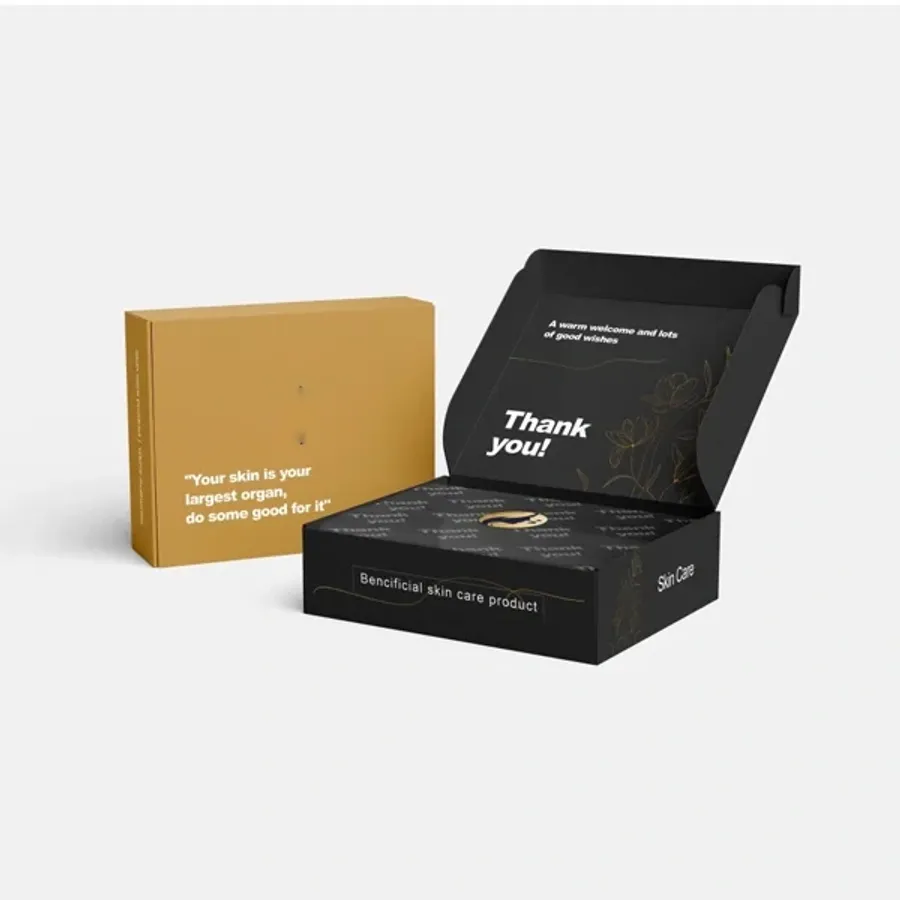
Start with the item, then draw the box
Stock mailers are made for averages. Your product is a fixed shape, so in a stock box it slides, tips over or gets pressed by the lid.
A product mailer reverses the order. You give us the item's size and weight, and we set the inside dimensions around it.
The box then holds one thing well. It also looks planned when the lid lifts, because there is no dead space for the eye to land on.
It also shapes how the parcel is priced. A box that tracks the product closely keeps both board use and postage to what the item really needs.
This page is about that single-item fit. The choices below all come back to one question: what does this exact product need to arrive as it left you?
Sellers who order a box for each product
These mailers suit brands with a hero product or a short, stable line. Think a single serum bottle, a ceramic mug, a planner or a pair of earbuds in their case.
Makers launching a first product use them to look settled from order one. Larger brands use them when a new release deserves its own box.
What these sellers share is a predictable order. The same item goes out again and again, so a box built for it pays back on every parcel.
- A founder launching one flagship item
- Makers selling three or four fixed products
- Stores mailing samples to wholesale buyers
- Brands sending a new release to press or creators
- Gift sets that always ship the same pieces together
Inserts that hold the product still
An insert turns a box into a cradle. Movement inside the box causes most scuffs, chipped corners and loose parts, so stopping it matters more than thick walls.
Paperboard inserts suit light items and print cleanly. Corrugated inserts add give around glass, ceramics and small electronics.
For sets, one insert can hold two or three pieces in separate pockets. Each piece then has its own space, so nothing knocks against its neighbor.
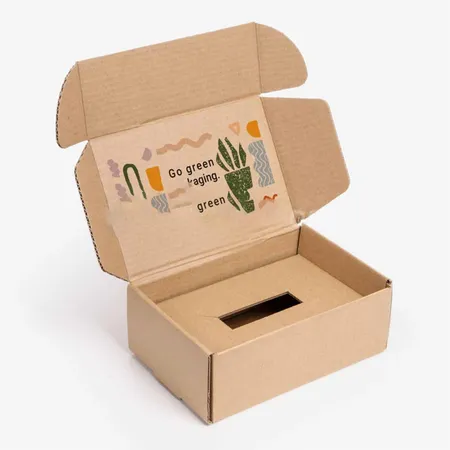
A cutout can also present the product the moment the lid opens. See mailer boxes with fitted inserts for cutout shapes and layouts.
Matching board strength to product weight
Light items often travel well in 18 to 24 pt paperboard. It prints sharply and folds into a neat, thin-walled box that feels like retail packaging.
Heavier or breakable products need E-flute corrugated at 1.5 mm. It resists crushing on carrier belts and still takes full color print.
Weight is only half the story. A light item with a fragile edge, such as a framed print, may still need corrugated board.
Dense goods such as stoneware or tools can call for B-flute at 3 mm. The corrugated versus paperboard comparison sets out where each one stops making sense.
Printing that frames the product
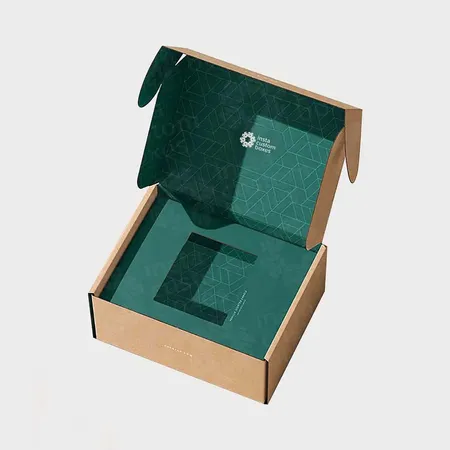
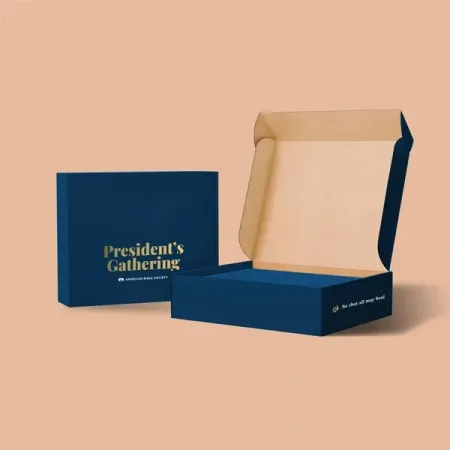
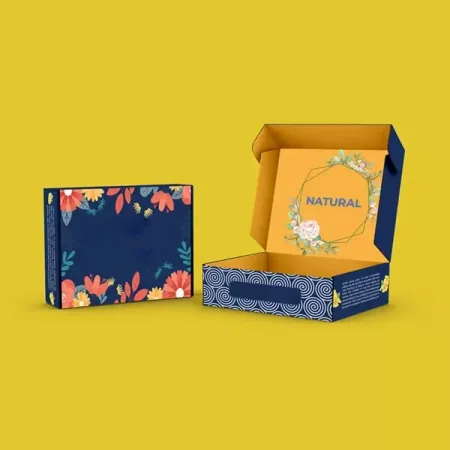
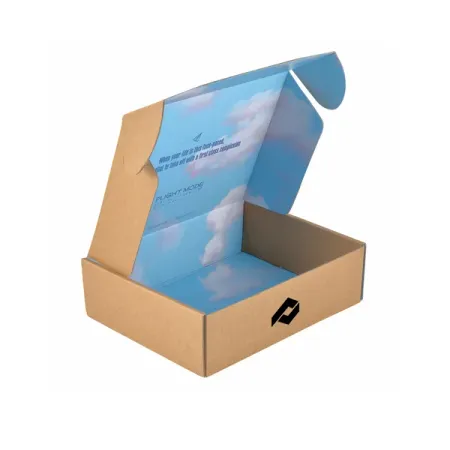
Outside print carries your logo through the mail. Inside print is where a product box earns its place, because it surrounds the item when the lid comes up.
Some brands print setup steps under the lid. Others repeat a pattern from the product's own label, so box and item feel like one piece.
Keep the inside art lighter than the outside. A busy lid can compete with the product, which should stay the first thing the customer sees.
- Logo and pattern on the outer panels
- Setup or care steps printed under the lid
- A short founder note on the base panel
- A QR code linking to a how-to video
- White ink on kraft for a natural finish
One box for the line or one per item
If you sell three items of similar size, one box can serve all of them with a different insert in each. You keep a single print run and simpler stock.
If sizes differ a lot, one box per item looks better and ships cheaper. A slim bottle in a wide box pays for air and invites damage.
Think about storage too. Every extra size takes shelf space in your packing area, and small brands often run short of room before they run short of boxes.
A common middle path is one printed design in two sizes. Ask for both options in the same free quote for your boxes and compare.
Fit mistakes we catch at proof stage
Most problems with product mailers come from the measurements, not the printing. These are the ones we see most.
We check the dieline against your numbers before anything is printed. If something looks off, we ask before we cut a single sheet.
- Measuring the bottle but not its pump or cap
- Forgetting the thank-you card when setting height
- Choosing paperboard for a heavy glass item
- Placing key art where the tuck flap covers it
- Sizing for the product but not its protective sleeve
Finishes that suit a product launch
Soft-touch lamination gives a velvet feel that suits beauty and gift items. Gloss makes photos and bright brand colors stand out.
Foil on the logo or spot UV on one element adds contrast without busy artwork. Embossing works well on a lid that holds a single mark.
Our printing and finishes guide explains how each finish looks in hand and what artwork it needs.
From your measurements to your packing table
Your quote prices this product's box from its size, board, quantity and finish, starting from $0.30 per unit. Nothing is printed until you sign off the proof.
That proof shows the dieline with your art placed around the product's footprint. Change it as many times as you need at no cost.
Once approved, your product boxes take 4 to 6 business days to make and roughly 2 to 3 more in transit. We cover delivery to addresses in the US, UK, Canada and Australia.
The mailer box sizes guide is worth a read before you send numbers. Boxes arrive flat, so keep them dry and stacked level until packing day.