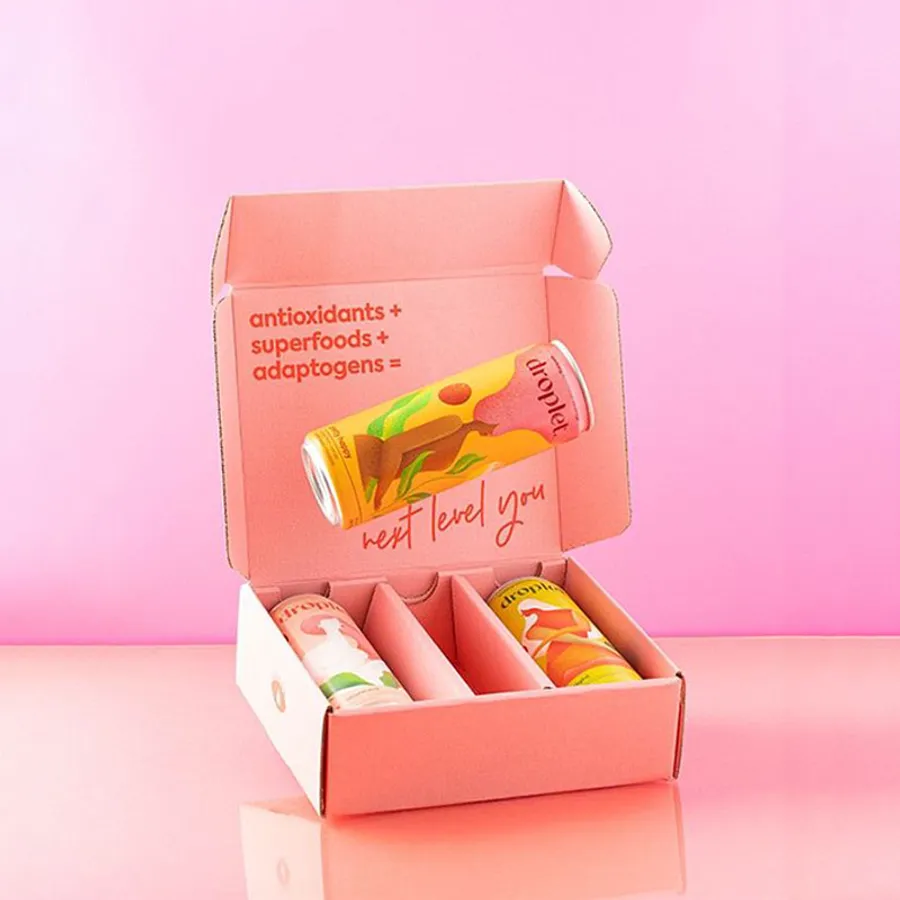
Who needs a box that becomes a display
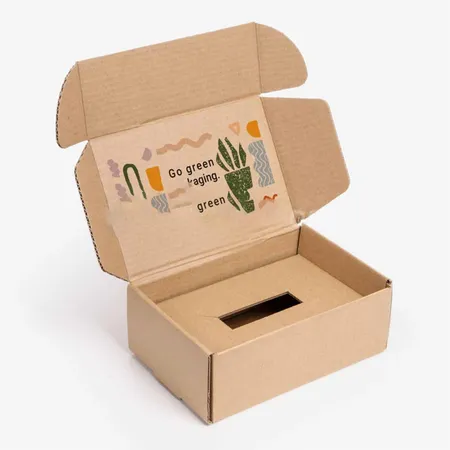
Display mailers are built for brands selling through other people's shops. You ship one carton to a boutique, cafe or pharmacy. The carton itself then becomes the point of sale.
Snack makers, skincare brands and candle makers use them most. Sock labels, accessory brands and small gadget sellers order them too. They are also handy at craft fairs, pop-up markets and trade shows.
Subscription and gift brands sometimes use the format too. The customer opens the box and gets a neat tray that stays on a desk or dresser.
Not sure the format fits your trade? Browse our mailer boxes grouped by industry to see how similar products are packed.
Two ways the box opens up
Most display mailers convert in one of two ways. Both start as a closed mailer, so carriers handle them like any other parcel.
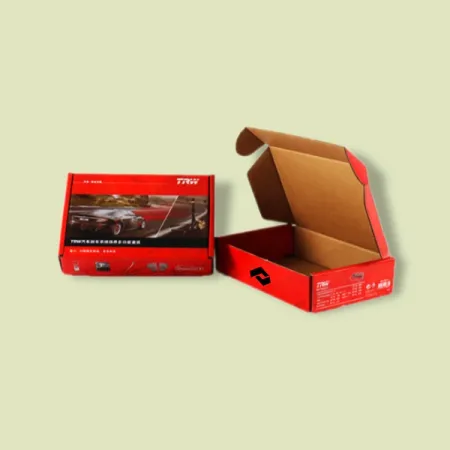
A tear strip front lets the shop owner pull a perforated strip and lift away the upper front panel. What remains is an open tray with a low front lip.
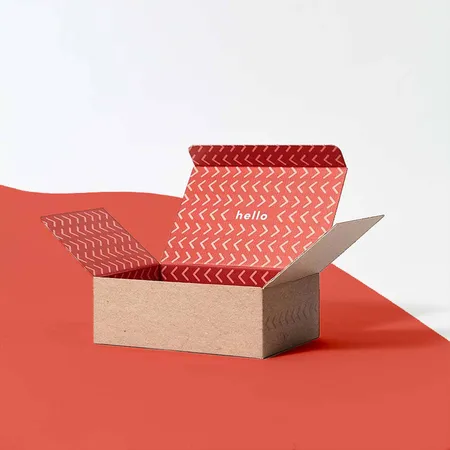
A fold-back lid header works differently. The lid folds behind the box and tucks in, standing upright as a printed sign above the products.
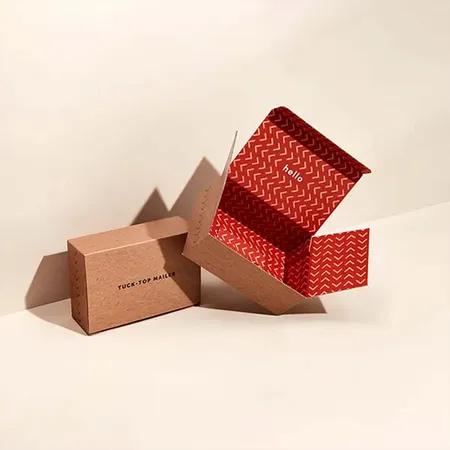
The header version is usually built on a tuck top base, because the lid is long enough to stand. Our tuck top mailer box style shows that base on its own.
| Opening method | How it converts | Best fit |
|---|---|---|
| Tear strip front | Pull the strip, remove front panel | Low trays of small items |
| Fold-back lid header | Lid folds back and stands as a sign | Brands that want a big header |
| Tear strip plus header | Front comes off, lid stands up | Busy counters with competition |
| Lift-off lid | Lid removed, base used as a tray | Subscription and gift trays |
Designing two faces for one box
A display mailer has two jobs, so it needs two sets of artwork thinking. The closed box needs a shipping label space and simple branding.
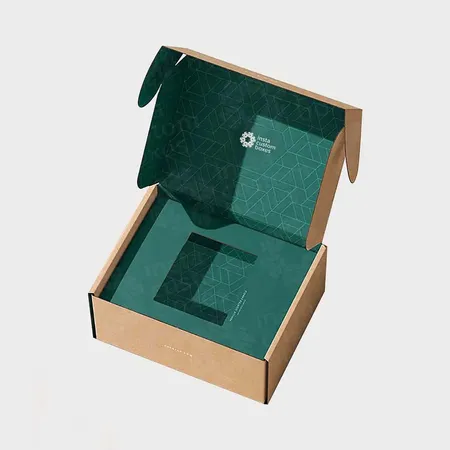
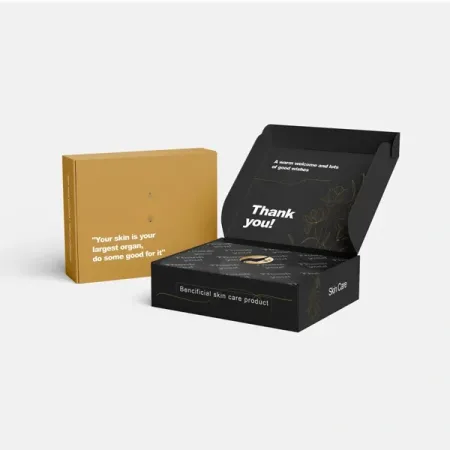
The open display needs bold product messaging that reads from a few steps away. The inside of the lid and the inside back wall often carry the main display art.
That means inside printing is not optional here. The shopper sees the inside surfaces, not the outer panels you would normally decorate.
A common split is a calm outer with a logo and return address. The inside then gets product photos and a bright headline. The shopper never sees the shipping side once the tray is set up.
Planning the header and front lip
The header is your shelf sign. Keep it to a product name, a short benefit line and a logo that can be read across a counter.
The front lip is the edge between the shopper and the product. A low lip shows more of each item, while a taller lip holds rounder products from rolling out.
Price stickers often go on the front lip, so leave a clear area for them. A busy pattern there makes a sticker hard to read.
Think about the height of the counter too. A tray at hip height is seen from above. The header can lean back slightly and still read well.
Keeping single units upright
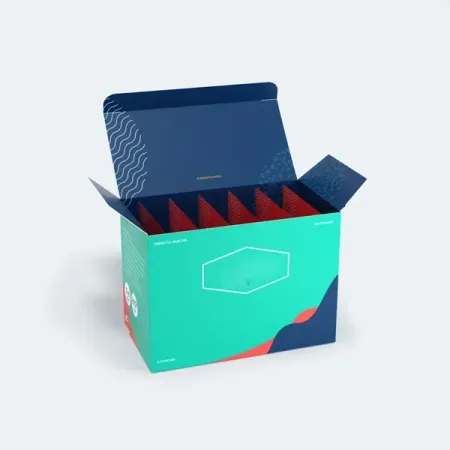
Loose products slide forward when a tray is tilted on a crowded counter. An insert with slots or dividers keeps each unit standing in its place.
Inserts also protect stock in transit, since each item is held apart from its neighbors. Our mailer boxes with custom inserts show the slot and divider styles we can make.
Tell us the exact dimensions of a single unit and how many should sit in each tray. We plan the slot grid around those numbers.
Setting up a display mailer order
Display mailers take a little more planning than a plain mailer. Following these steps keeps the first proof close to final.
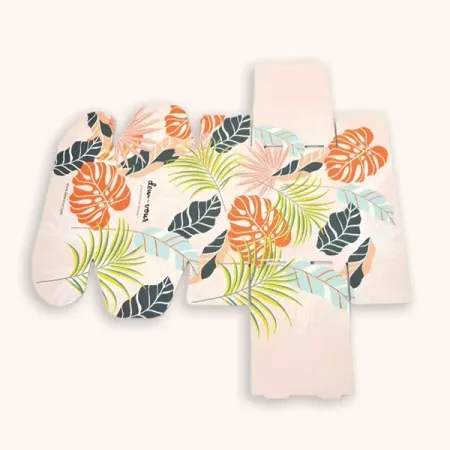
If you only have a rough idea, our team can lay out your display artwork on the dieline for you.
- Measure one product unit and decide how many fit per tray.
- Choose a tear strip front, a lid header or both.
- Pick the board based on the total weight of a filled box.
- Send artwork for the outside and the display surfaces.
- Check the folded mockup on your proof, both closed and open.
Board strength for a full tray
A filled display box is heavier than a single retail item. It needs to survive transit, then hold its shape on a counter for weeks.
E-flute corrugated suits light items such as balms, cards and small accessories. B-flute adds stiffness for heavier jars, snacks or gadgets and keeps the header from leaning.
White liner gives the brightest display print. Kraft liner suits natural and handmade brands. White ink lets logos stand out on the brown surface.
Weigh a full tray of product before you choose. If the number surprises you, B-flute is the safer pick even for small items.
Shipping to retailers and events
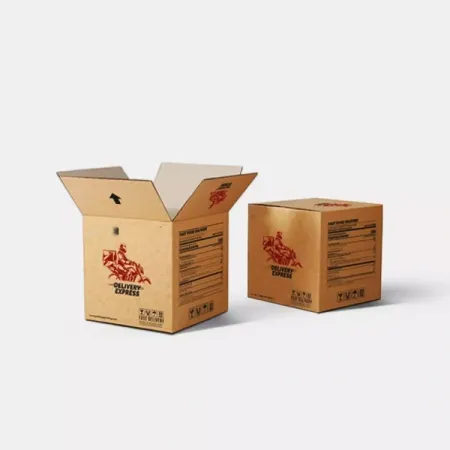
Display mailers usually ship packed with stock, closed and taped. The tear strip stays intact until the box reaches its final counter.
When sending several display boxes to one shop, pack them in a plain outer carton. That keeps the printed surfaces clean for setup day.
Include a short note on how to open the display. Shop staff unpack many brands a week, and a clear instruction keeps your header from being torn off by mistake.
Transit times and carrier details for wholesale drops are on our shipping policy for every order. Shipping is free to all four countries we serve.
Common display mailer mistakes
Some issues only appear once the box is opened on a real counter. These are the ones we check for on every display proof.
Each fix is quick at proof stage. Changing a die after production is a full reorder.
- Main branding printed only on the outside, hidden once opened
- A header too tall for shelves with low clearance
- Tear strip placed where it cuts through the logo
- No space left on the front lip for price stickers
- Slots sized to the product without room for fingers
Display mailer or a standard product mailer
If your boxes go straight to end customers and never sit on a counter, you do not need the display features. Our custom product mailer boxes are simpler and quicker to pack.
A display mailer pays off when retailers stock your line. It saves them building a stand, and your branding arrives ready to sell.
You can also mix the two. Many brands order display trays for wholesale accounts and a standard mailer for online orders in matching artwork.
Pricing, proof and delivery
Send your unit size, units per tray, preferred opening style and artwork. Display trays are priced from $0.30 per unit, and size, board, quantity and finish shape your quote.
The free digital proof shows the box closed and opened, with every printed surface marked. You can request a display mailer quote and revise the proof as often as you need.
Production runs 4–6 business days after you approve. Finished trays arrive 2–3 business days later, and we cover shipping to the US, UK, Canada and Australia.