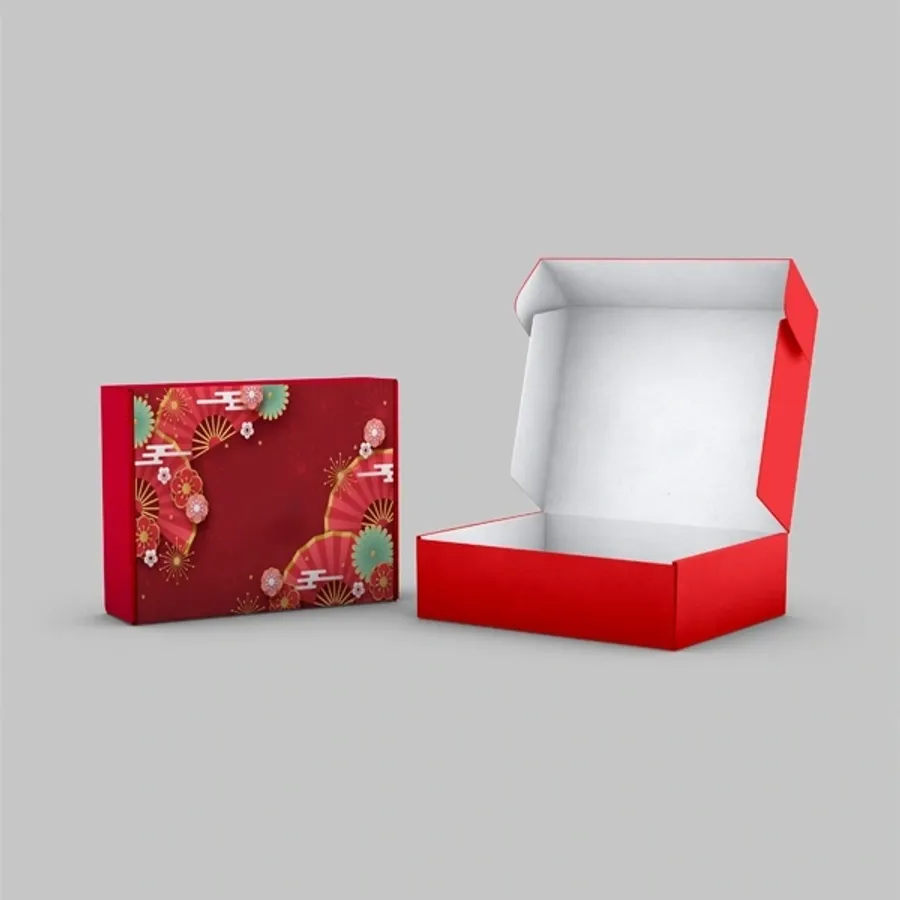
A box for the season, not a single date
Your customers celebrate different holidays, and orders arrive from late November into the first days of January. A design tied to one day leaves many of them out.
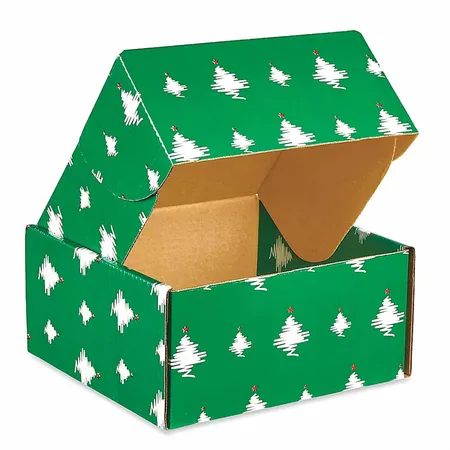
A holiday mailer uses winter colors, warm messages and seasonal patterns that fit any celebration. It also keeps working for New Year orders after the main rush.
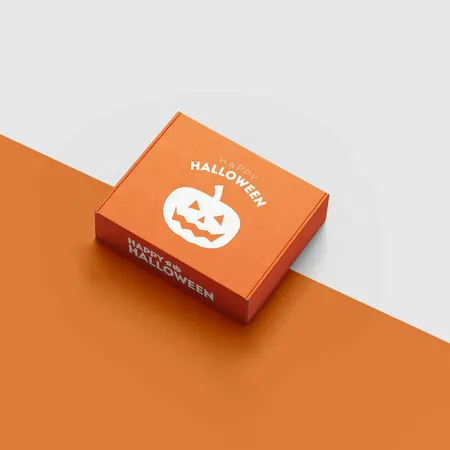
If your audience mostly shops for one day, a dedicated design may still be better. Our page on Christmas themed mailer boxes covers that route.
Neutral designs also help shops that sell to schools, offices and community groups. Those buyers often prefer a greeting everyone can share.
Brands and teams that order for the holidays
Gift shops, chocolatiers and skincare brands are the core buyers. Their sales spike for six weeks and a festive parcel lifts every order.
Companies sending client and staff gifts order them as well. A box with the company mark and a warm message feels personal across a whole client list.
Gift box curators who assemble sets of products from several makers rely on them. So do subscription programs that send a special year-end edition.
Bakeries shipping cookie tins and stollen loaves order them too. A festive box gives a simple baked gift the presence of a boutique purchase.
- Retail gift sets sold online
- Corporate client and employee gifts
- Curated gift boxes from local makers
- Year-end editions of a subscription
- Holiday markets and pop-up order pickup
Designs that cover several celebrations
Snowflakes, evergreen sprigs, stars and candlelight read as seasonal without pointing to one holiday. Deep green, navy, burgundy, gold and cream are safe, warm palettes.
Wording matters too. Season's greetings, warm wishes and happy holidays travel well. Specific greetings can go on a printed card you swap per customer.
Keep your logo prominent. The box should still say who it came from after the wrapping paper is gone.
If you sell in more than one country, check that your colors and symbols translate. A design that feels warm in one market can feel odd in another.
| Design route | Works for | Watch out for |
|---|---|---|
| Winter pattern, neutral greeting | All holiday orders and New Year | Can feel generic without your brand colors |
| Brand colors plus gold foil | Corporate gifts and premium sets | Foil adds cost to large runs |
| Single holiday theme | Audiences focused on one day | Unused stock after that day passes |
| Plain outside, festive inside | Brands with a strict look | Less impact before opening |
Gift-ready means no wrapping needed
Many buyers send a holiday order straight to the person receiving it. The box is the wrapping, so it has to look like a gift on the doorstep.
A tear strip makes opening feel like pulling a ribbon. Soft-touch lamination or foil gives the lid the feel of a wrapped present.
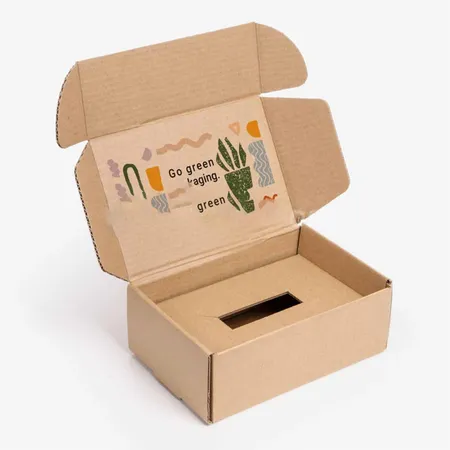
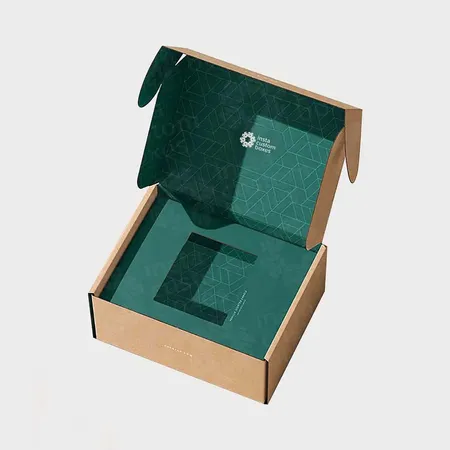
Inside, printed tissue and a fitted tray make the reveal neat. The person opening it should see the products arranged, not tumbled.
Think through each layer the recipient touches, from the seal to the last item. Our step-by-step unboxing planning guide covers tissue, cards and reveal order.
Ask whether the shipping label will cover your art. Leave a plain label zone on one side so the front stays clean for the recipient.
Writing the inside gift message
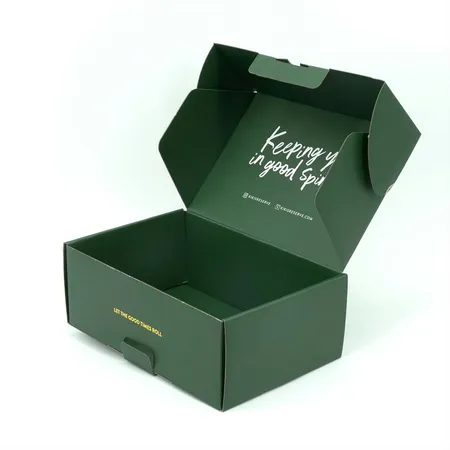
The inside lid is the best spot for a message. It is the first thing the recipient reads, and nothing else competes with it.
For retail, print a short general greeting and leave a card slot for personal notes. For corporate gifts, print the company's message directly under the lid.
Keep it to two or three lines. Large type with plenty of space looks warmer than a crowded paragraph.
Read the message aloud before you approve the proof. If it sounds like an advert, cut it back until it sounds like a note from a person.
Our article on how to lay out a mailer box design shows where text sits best on each panel.
Finishes that feel like a present
Gold and silver foil are the classic holiday accents. A foiled star or logo catches light under a tree or on an office desk.
Embossed snowflakes or a debossed logo add texture that people run their fingers over. Spot UV gives a gloss highlight to a pattern on matte stock.
You can compare each option side by side in our printing and finishing guide before choosing what fits your budget.
Use one standout finish rather than stacking several. A single foil logo on soft-touch looks more refined than foil, embossing and gloss together.
Holding gift sets in place
Holiday orders are often sets: a candle and a mug, three skincare minis, or chocolates with a card. Loose items shift and the first impression is lost.
A paperboard insert with shaped cutouts keeps each piece in position. It also tells your packing team exactly where everything goes during a busy week.
Glass and ceramic items need a firmer wall. Choose E-flute corrugated for those and ask about a corrugated insert for heavy pieces.
Browse shaped trays and dividers on our page for mailer boxes with custom inserts to see what suits your set.
Test the insert with your heaviest set first. If it holds that one, lighter sets will travel without trouble.
Your holiday packaging calendar
Peak season leaves no slack. Plan the box before your holiday product photos, since many shops show the packaging in their gift guides.
Printing takes 4 to 6 business days from the moment you sign off the proof. Transit adds 2 to 3 business days, and delivery to the US, UK, Canada and Australia costs nothing.
Carriers slow down in December as volume climbs. Ship your own orders early in the season to give them a buffer.
- Decide which gift sets you will sell and measure each one.
- Choose a design route that covers your whole season.
- Send artwork or ask our team to design it for free.
- Approve the proof after checking greetings and spelling.
- Receive boxes and photograph a packed set for promotion.
- Start shipping before the busiest carrier weeks.
Shipping straight to gift recipients
Corporate senders often ship to dozens of addresses. A self seal strip makes packing faster and gives every box the same clean close.
Leave out pricing and invoices when a box goes to a recipient. Print a gift note slot inside instead.
If a box will be posted overseas, choose corrugated over paperboard. Longer routes mean more handling. Our delivery and shipping details explain how your own box order reaches you.
Keep a printed list of which set goes to which address. Gift boxes look alike once sealed, and a mix-up spoils the surprise.
Mistakes to avoid with seasonal boxes
Printing a specific year on the box locks it to one season. Leave the year off so leftovers can be used next winter.
Choosing dark red or green full flood without a matte finish shows every scuff after transit. Lamination protects heavy ink.
Ordering one size for every gift set is tempting. It usually means some sets rattle and need extra filler, so match two or three sizes to your main sets.
Leaving greetings to the last proof round is another trap. Spelling slips in a greeting are easy to miss when everyone is busy.
Quantities, pricing and getting started
Base your quantity on last season's orders plus any corporate gift lists already confirmed. Neutral designs carry over to next year, so a small surplus is less of a risk.
Prices start from $0.30 per unit, and the quote sets the exact amount once size, board, finish and quantity are known.
Send your details through the holiday box quote form, call or WhatsApp (503) 461-4788, or email info@shopmailerboxes.com.